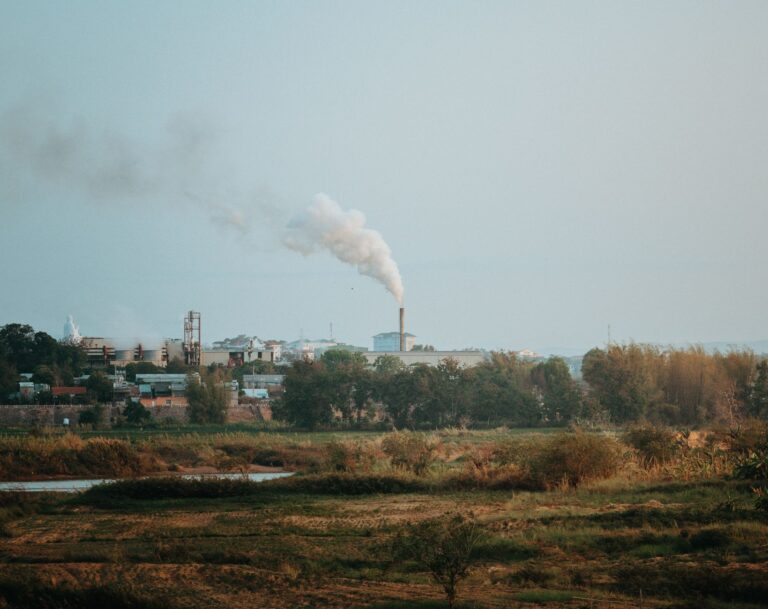
When you breathe polluted air, you’re not just inhaling particles into your lungs. Fine particulate matter—particles so small they’re measured in micrometers—travels directly into your brain, where it activates microglia, the brain’s immune cells, to attack healthy neural tissue. This isn’t metaphorical. When researchers exposed cultured human microglia to pollution from wildfire smoke and diesel exhaust in late 2024, the cells mounted a measurable inflammatory response within hours, releasing pro-inflammatory molecules that damage neurons.
In cities where air quality consistently ranks poor, residents show measurably impeded cognitive performance on both verbal and mathematical tests compared to those in cleaner areas. Microglia normally serve as cleanup crews—they remove dead cells, pathogens, and debris. But chronic air pollution overstimulates them into a hyperactive state where they begin attacking the synapses that connect neurons, accumulate toxic proteins like phosphorylated tau, and ultimately cause neuronal death. This process is a major pathway to cognitive decline and dementia. For anyone concerned about brain health or caring for someone with dementia, understanding how air pollution triggers this cascade of inflammation is essential to the conversation about risk factors you can actually modify.
Table of Contents
- What Are Microglia and How Does Pollution Flip Them Into Attack Mode?
- How Does Polluted Air Actually Penetrate the Brain’s Defenses?
- The Cascade from Microglial Activation to Neuronal Damage
- Air Pollution as a Proven Risk Factor for Dementia
- Vulnerability: Age, Genetics, and Individual Risk Factors
- Where Pollution Levels Are Highest and Why
- Practical Actions for Reducing Personal Exposure and Supporting Brain Health
What Are Microglia and How Does Pollution Flip Them Into Attack Mode?
Microglia are immune cells that make up about 10% of the brain’s total cell population. In their resting state, they continuously survey the brain for damage, infections, or waste products. When they detect a threat, they shift into an activated state and release chemical signals—cytokines and chemokines—that recruit other immune cells and start an inflammatory response. Normally, this response clears the problem and then stands down.
air pollution disrupts this normal on-off cycle. When PM2.5 particles reach the brain, they trigger microglia to remain in a chronic state of activation. Research has documented that this pollution exposure increases production of pro-inflammatory markers: interleukin-1β (IL-1β), interleukin-6 (IL-6), tumor necrosis factor-α (TNF-α), inducible nitric oxide synthase (iNOS), and cyclooxygenase-2 (COX-2). These are the chemical signals that keep microglia in attack mode. In a person living in a chronically polluted city, microglia never fully return to their housekeeping role—they’re essentially on alert all the time, eroding brain tissue even when there’s no actual threat to fight.
How Does Polluted Air Actually Penetrate the Brain’s Defenses?
The blood-brain barrier (BBB) is designed to keep harmful substances out of the brain. Yet PM2.5 particles bypass this protective wall through two distinct routes. The first is direct: ultrafine particles can cross from the nose directly into the brain via the olfactory nerve, which connects nasal tissue to the olfactory bulb deep in the brain. The second route is through disruption of the BBB itself—chronic pollution exposure weakens the tight junctions that hold the barrier together, allowing particles and inflammatory molecules to seep into brain tissue.
A 2025 study of traffic-related air pollution found that chronic exposure to car exhaust compromises BBB integrity and increases neuroinflammation risk, particularly in people who do not carry the APOE4 gene variant (a finding that challenges the assumption that APOE4 status is always protective against pollution-related cognitive decline). Once inside the brain, PM2.5 particles persist and continue triggering immune activation. Unlike pollutants that pass through the lungs and clear from the body within days or weeks, particles that reach the brain can accumulate there. This is why living in a polluted area creates a chronic, cumulative problem—each day of exposure adds to the inflammatory burden already present in the brain.
The Cascade from Microglial Activation to Neuronal Damage
When microglia enter a prolonged activated state in response to pollution, they adopt what researchers call an M1 pro-inflammatory phenotype. In this state, they release a flood of damaging molecules that attack the very neurons they’re supposed to protect. The damage cascade unfolds in stages: first, activated microglia attack the synapses—the connection points between neurons where information is transmitted. Synaptic loss is one of the earliest markers of cognitive decline and appears in Alzheimer’s disease brains years before plaques and tangles become prominent.
Simultaneously, microglia-driven inflammation promotes the accumulation of phosphorylated tau, a twisted protein that aggregates inside neurons and disrupts their internal structure. Finally, sustained inflammation leads to direct neuronal death through both necrosis and apoptosis, progressively shrinking the brain’s functional capacity. This three-step pathway—synaptic impairment, tau accumulation, neuronal death—is not unique to pollution-driven neuroinflammation, but pollution accelerates it. In aging brains already dealing with some degree of normal wear, pollution acts as an accelerant. A December 2024 study examining inflammatory responses in aging human microglia exposed to wildfire smoke and diesel exhaust found that older microglia mount an exaggerated response compared to younger cells, suggesting that age and air pollution exposure interact to amplify brain damage.
Air Pollution as a Proven Risk Factor for Dementia
The link between air pollution and dementia risk is no longer theoretical. Air pollution is now recognized as the second leading risk factor for death globally, ahead of tobacco and poor diet. Of the 8.1 million deaths attributed to air pollution in 2021, a significant portion involved neurological disease.
A recent study tracking nearly 32,000 participants across Chinese cities found that individuals living in high-pollution areas showed measurably impeded cognitive performance on both verbal and mathematical tests—a direct association between air quality and brain function in living people. Researchers have confirmed that PM2.5 exposure is linked to increased risk of Alzheimer’s disease, Parkinson’s disease, and other forms of dementia, with the risk dose-dependent: worse air quality correlates with steeper cognitive decline. The risk extends even to children, though their neuroinflammation often manifests as developmental delays or behavioral issues rather than immediate dementia diagnosis. Over 700,000 deaths in children under 5 in 2021 were linked to air pollution, and while many involved respiratory infection, emerging evidence suggests prenatal and early-childhood pollution exposure alters brain development in ways that increase dementia risk across the lifespan.
Vulnerability: Age, Genetics, and Individual Risk Factors
Not everyone exposed to the same air pollution experiences the same degree of cognitive decline. Age is a major vulnerability factor—aging microglia respond more aggressively to pollution than younger microglia, releasing more inflammatory molecules and causing more neuronal damage per unit of exposure. This is why people over 65 living in polluted areas face higher dementia risk than younger residents breathing the same air. Genetic factors also matter: a person’s APOE4 status (a genetic variant linked to Alzheimer’s risk) was long assumed to be the primary genetic determinant of pollution-related cognitive decline, but recent research complicates this picture.
Some evidence suggests that people without APOE4 who are chronically exposed to traffic pollution may actually face greater BBB disruption and dementia risk than previously thought, indicating that the protective or harmful effect of genetics varies by pollution type and exposure pattern. Pre-existing conditions amplify vulnerability. People with existing hypertension, diabetes, or cardiovascular disease show greater susceptibility to pollution-induced brain damage. People with genetic variations affecting their ability to clear oxidative stress (the cellular damage caused by free radicals) also show accelerated cognitive decline when exposed to chronic air pollution. This means two people living on the same polluted street can experience very different neurological outcomes depending on age, genetics, and metabolic health.
Where Pollution Levels Are Highest and Why
Air pollution is not evenly distributed. Cities in South Asia, particularly India and Pakistan, experience some of the world’s highest PM2.5 levels, often exceeding 150 micrograms per cubic meter during winter months—six to ten times higher than levels considered safe by the World Health Organization. Major Chinese cities, especially during industrial seasons, routinely see similar spikes. In developed nations, highways and urban centers with heavy traffic generate pollution hot zones.
A person living within a half-mile of a major highway faces substantially higher PM2.5 exposure than someone living just a few miles away—the pollution gradient is steep. Diesel traffic generates ultrafine particles that penetrate deeper into the lungs and cross more readily into the brain than larger particulates from other sources. People in industrial areas, near ports, or downwind of manufacturing facilities face chronic exposure that dwarfs typical urban background pollution levels. This geographic variation means that dementia risk is partly determined by where you live. Someone born and raised in a heavily polluted city faces cumulative brain damage that someone in a cleaner region does not, even if they’re otherwise genetically identical.
Practical Actions for Reducing Personal Exposure and Supporting Brain Health
Reducing personal PM2.5 exposure requires both individual actions and larger systemic changes. Individual measures include using high-efficiency particulate air (HEPA) filters in home spaces where you spend the most time, as HEPA filters can remove up to 99.97% of airborne PM2.5. N95 or P100 respirators provide significant protection during outdoor activities on high-pollution days, though they are uncomfortable for extended wear and not practical for constant daily use. Monitoring air quality indices (available through most weather services and dedicated apps) and staying indoors during pollution peaks is evidence-based but limited—someone who works outdoors or relies on public transit cannot avoid exposure through behavior alone.
Systemic change—shifting away from fossil fuel combustion, tightening vehicle emission standards, and reducing industrial pollution—is necessary to meaningfully reduce population-level dementia risk from air pollution. A person cannot reduce their dementia risk through individual action if they live in a region with no meaningful air quality regulations. This is why the health impact of air pollution is fundamentally a public health and policy issue, not merely an individual responsibility problem. Supporting cleaner air standards in your community, voting for climate and environmental policies, and advocating for emissions reductions are actions that address the root cause rather than just managing personal exposure.
- —