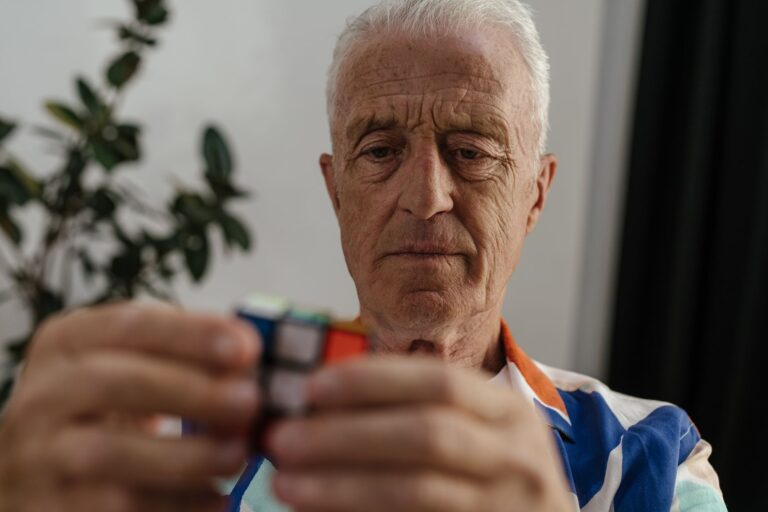
Mentally active sits at the center of this dementia and brain health question.
Yes, mentally active hobbies can meaningfully protect your brain even when you spend most of your day sitting down. Research shows that people who regularly engage in cognitively stimulating activities like reading, writing, board games, knitting, or learning languages have a 38% lower risk of developing dementia compared to those who don’t engage in such pursuits. This protection isn’t theoretical—in studies tracking older adults over many years, those with the highest lifetime cognitive enrichment actually develop Alzheimer’s disease symptoms about 5 years later than those with the lowest enrichment, and they experience mild cognitive decline 7 years later. The key insight is that what you do while sitting matters as much as whether you’re sitting, and simply replacing an hour of passive watching (like television) with mentally active sitting (like reading or office work) can decrease your dementia risk by 7 percent.
This article explores which hobbies offer the strongest protection, how they work in your brain, and how to build a sustainable routine that keeps your mind sharp as you age. The protective effect of these hobbies isn’t dependent on physical fitness or being highly active. While combining mentally active sitting with physical activity offers the greatest benefit—decreasing dementia risk by 11 percent—the mental engagement alone provides significant protection. Even people with mobility limitations, chronic pain, or other conditions that make exercise difficult can still build a powerful dementia-fighting routine around cognitive hobbies. The evidence comes from large studies spanning decades and includes diverse populations, making these findings relevant to most older adults regardless of their starting fitness level.
Table of Contents
- How Do Mentally Active Hobbies Reduce Dementia Risk?
- Which Seated Activities Offer the Strongest Brain Protection?
- The Science of Cognitive Reserve and Brain Aging
- Building a Practical Hobby Routine That Sticks
- When Cognitive Hobbies May Not Be Enough
- Creative Hobbies and Sustained Mental Engagement
- The Future of Cognitive Activity and Dementia Prevention
- Conclusion
How Do Mentally Active Hobbies Reduce Dementia Risk?
The mechanism behind cognitive protection relates to what neuroscientists call “cognitive reserve”—essentially, building up a mental buffer against brain damage. When you engage in mentally challenging activities throughout your life, your brain strengthens neural connections and develops alternative pathways for processing information. This extra resilience means that even if disease-related changes begin accumulating in your brain (amyloid plaques, tau tangles), you can tolerate more damage before you notice symptoms. Research shows this effect with remarkable precision: people in the top 10 percent for cognitive activity develop Alzheimer’s disease at an average age of 93.6 years, while those in the bottom 10 percent develop it at 88.6 years. That five-year difference represents five additional years of independent living, clear thinking, and engagement with life. Hobby engagement itself is particularly powerful.
A Japanese cohort study found that simply having one hobby is associated with an 18 percent reduction in dementia risk, while having multiple hobbies boosts that protection to 22 percent. This suggests that the diversity of mental challenge matters—trying different activities that stretch different cognitive muscles may offer more protection than becoming expert at a single pursuit. The protective effect applies specifically to mentally active forms of sitting, which include office work, attending meetings, knitting, sewing, board games, reading, playing musical instruments, and working crossword puzzles. Each of these activities engages different aspects of cognition: memory, problem-solving, fine motor planning, pattern recognition, and sustained attention. The strength of this evidence comes from rigorous meta-analyses combining multiple large studies. Researchers found a hazard ratio of 0.91 (with a 95% confidence interval of 0.86–0.97), meaning that cognitive activity reduces your hazard of dementia by approximately 9 percent per study-averaged unit of activity. This level of protection rivals that of some medications used to slow cognitive decline, yet it comes from everyday hobbies that most people can pursue regardless of age, income, or prior education.

Which Seated Activities Offer the Strongest Brain Protection?
Different hobbies protect your brain in different ways. Reading and writing engage language processing, memory retrieval, and comprehension. Board games and puzzles exercise strategic thinking, visual-spatial reasoning, and planning. Musical instruments demand complex coordination between sight, hearing, and motor control—engaging multiple brain regions simultaneously. Knitting and sewing combine fine motor control with spatial visualization and repetitive attention that produces a meditative focus. Each activity offers distinct cognitive challenges, which is why variety in your hobby choices amplifies protection. Creative hobbies deserve particular mention because they combine cognitive engagement with emotional expression.
Painting, quilting, pottery, and woodworking all require planning, problem-solving, visual-spatial skills, and the integration of multiple sensory inputs. These activities may offer additional protective benefits beyond pure cognition. A notable caveat: the protection from hobbies depends partly on maintaining sufficient cognitive challenge. If you’ve played the same card game thousands of times and can do it on autopilot, the protective benefit diminishes. The brain adapts to routine, so periodic novelty—learning new games, new knitting patterns, new subjects to read about—helps sustain the protective effect. Dancing represents a special case with remarkable research support. A 2026 study found that dancing may reduce dementia risk by 76 percent, likely because it uniquely combines cognitive engagement (learning patterns, following music) with physical activity (coordination, balance, cardiovascular work). Even if you can only dance while sitting—chair dancing, for instance—the combination of attention to rhythm, music, and movement offers powerful stimulation.
The Science of Cognitive Reserve and Brain Aging
Your brain doesn’t deteriorate in isolation; dementia develops through the accumulation of pathological changes alongside natural aging. Most people don’t notice cognitive decline until these changes reach a threshold—the point at which remaining healthy brain tissue can no longer compensate. Cognitive reserve theory suggests that mentally active people develop more robust neural networks and stronger connections between different brain regions, allowing them to tolerate more pathology before crossing that threshold. Brain imaging studies of cognitively active older adults show that they maintain better structural integrity in key memory regions and demonstrate more efficient neural connectivity than less active peers of the same age. This protective mechanism activates throughout your lifetime, not just in older age. People who were cognitively engaged at younger ages continue to benefit decades later, even if they become less active.
However, continuing cognitive engagement in later years appears to provide ongoing protection—there’s no point at which you can rest on your prior mental accomplishments. The good news is that it’s never too late to start. Studies tracking people who took up cognitively demanding hobbies after retirement found measurable benefits within months, suggesting that your brain retains substantial neuroplasticity even in advanced age. The timeline of protection is slow and cumulative, which means you won’t notice your brain getting sharper after two weeks of crossword puzzles. Protection develops over years and decades of consistent engagement, but the investment compounds over time. This is why starting a hobby today matters even if you don’t notice immediate cognitive changes.

Building a Practical Hobby Routine That Sticks
The best hobby for dementia protection is one you’ll actually maintain. Consistency matters more than intensity—someone who reads 30 minutes daily for years derives more protection than someone who completes a marathon reading challenge once and then stops. When choosing hobbies, consider what naturally holds your attention and what’s accessible given your current abilities and resources. If arthritis makes fine needlework painful, knitting might frustrate rather than benefit you; large-print books or digital readers might suit you better. If you live in an urban area with access to cultural institutions, museum visits and attending lectures might be feasible; in rural areas, community colleges or online learning platforms offer similar cognitive engagement. The comparison between solitary hobbies and social ones reveals an interesting dynamic.
Puzzles and reading can be done alone, but they can also be shared—puzzle clubs, book clubs, and knitting circles combine cognitive engagement with social interaction, which itself offers additional dementia protection. Research suggests that combining cognitive activity with social engagement may amplify benefits beyond either alone. A practical approach: start with one hobby that genuinely interests you, establish it as routine, and then consider whether adding a second or third hobby is feasible. The 22 percent risk reduction for multiple hobbies shouldn’t pressure you to overcommit; one sustained hobby beats three abandoned ones. Time commitment matters less than consistency. An hour daily offers more protection than occasional marathons, but even 20-30 minutes regularly contributes. The key is building it into your routine—scheduling it like an appointment, keeping supplies accessible, or joining a class that meets at set times creates structural support for consistency.
When Cognitive Hobbies May Not Be Enough
While cognitively stimulating hobbies offer substantial protection, they’re not a complete dementia prevention strategy. Someone with significant genetic risk for Alzheimer’s disease (such as carrying the APOE4 gene variant) cannot rely on crossword puzzles alone. Additionally, certain modifiable dementia risk factors exist outside the scope of hobbies: untreated hypertension, hearing loss, depression, and poor sleep all accelerate cognitive decline independent of how mentally active you are. A person with untreated high blood pressure who plays chess daily may still have less dementia protection than someone with controlled blood pressure who reads occasionally. The protective effect of cognitive hobbies is robust but measurable in percentages of risk reduction, not elimination of risk.
A 38 percent reduction in dementia risk means that if baseline risk were 25 percent over a lifetime, cognitive enrichment might lower it to about 15-16 percent—a meaningful improvement but not a guarantee. This is why the strongest approach combines cognitive engagement with management of cardiovascular risk factors, adequate sleep, social connection, and physical activity when possible. There’s also individual variation in how much a given hobby protects any particular person. Some people may derive more benefit from learning a new language than others, perhaps because their brain is particularly responsive to linguistic challenges. This argues for trying multiple hobbies and continuing with those that feel genuinely engaging rather than treating hobby selection like a prescription where everyone needs the same medicine.

Creative Hobbies and Sustained Mental Engagement
Creative pursuits like painting, quilting, pottery, and woodworking stand out because they combine multiple cognitive demands simultaneously. You’re engaged in planning (deciding what to create), visual-spatial reasoning (imagining the finished piece), problem-solving (adapting when materials don’t cooperate), and fine motor control (executing the work). The emotional and aesthetic components also matter—the activation of reward centers in your brain when creating something you find beautiful appears to contribute to the protective effect.
Creative hobbies often provide immediate, tangible results—a finished quilt, a painted canvas, a wooden box—which sustains motivation and maintains the habit. This tangibility distinguishes them from some other cognitive activities. Someone might abandon crossword puzzles because they feel rote, but someone who started pottery might be motivated to continue by the satisfaction of holding something they created with their hands.
The Future of Cognitive Activity and Dementia Prevention
Emerging research is beginning to map which specific cognitive demands offer the most protection and whether certain combinations of activities provide synergistic benefits. Studies are also exploring whether cognitive hobbies might help people with mild cognitive impairment—not yet full dementia, but noticeable memory problems—stabilize or even improve.
Preliminary evidence suggests that intensive cognitive training can slow decline in people with early cognitive symptoms, though the long-term benefits remain under study. Technology is changing how people can engage in cognitive hobbies, with online communities supporting knitting, gaming, writing, and learning. While concerns exist about screen time and passive internet use, platforms that facilitate active engagement—collaborative games, creative communities, skill-building courses—can extend access to cognitive activities for people with mobility limitations or geographic isolation.
Conclusion
Mentally active hobbies are among the most accessible and evidence-supported tools for dementia protection available. The research is clear: a 38 percent risk reduction from cognitive enrichment, five years of delayed Alzheimer’s symptoms, and seven years of delayed mild cognitive decline represent substantial improvements in brain health that translate into years of preserved independence and cognitive function. These benefits don’t require intensive training, expensive equipment, or athletic ability—they’re available through reading, games, crafts, music, languages, and countless other pursuits that fit into sedentary living.
Starting today matters. Begin with a hobby that genuinely interests you, prioritize consistency over intensity, and consider adding a second hobby if your schedule allows. Pair cognitive engagement with attention to cardiovascular health, sleep, and social connection, and you’ve built a comprehensive dementia prevention strategy grounded in decades of research. The evidence shows that what you do while sitting down shapes your brain’s resilience for decades to come.
You Might Also Like
- How Keeping Your Brain Active While Sedentary Could Still Protect You From Dementia
- How Learning a New Skill After Age 50 Could Be the Best Thing You Do for Dementia Prevention
- Dementia Care Took All Funds Now Funeral Costs Are Too High
For more, see Alzheimer’s Association — clinical trials.