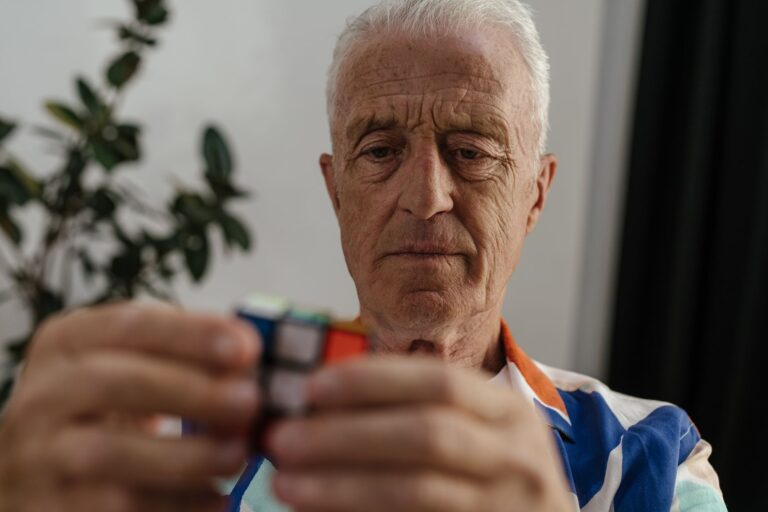
New skill sits at the center of this dementia and brain health question.
Yes. Learning new skills after age 50 is one of the most concrete, evidence-backed strategies you can implement to reduce your dementia risk. A landmark 20-year study found that adults over 65 who completed adaptive cognitive training—specifically speed-of-processing exercises conducted over just 5-6 weeks with follow-up booster sessions—showed a 25% reduction in dementia risk compared to those who did no training. This isn’t theoretical. This is a quantifiable drop in the likelihood of cognitive decline across two decades of aging. Unlike so many brain-health promises, this one has the research to back it.
This article walks through what that research actually shows, which types of learning matter most, how to sustain the benefits, and practical steps to build brain-protective habits into your life. The science is clear on one point: passive brain aging is not inevitable. The brain remains malleable into our later years. When you challenge it to learn something new—whether that’s a language, a musical instrument, a craft, or even a specific type of cognitive training software—you’re not just keeping busy. You’re activating neural pathways, strengthening connections between brain cells, and triggering the biological mechanisms that defend against cognitive decline. The catch is that this protection requires the right *type* of learning, and it requires consistency.
Table of Contents
- What Does the Science Say About Learning and Dementia Prevention After 50?
- Brain Training Isn’t One-Size-Fits-All: Which Approaches Actually Work?
- How Digital Brain Training Reverses Cognitive Aging
- The Proven Path: What a Comprehensive Brain Health Program Looks Like
- The Maintenance Challenge: Why Brain Training Requires Ongoing Engagement
- Who Benefits Most: Why Dementia Prevention Through Learning Works for Everyone
- What WHO’s Latest Guidance Means for Your Brain Health Strategy
- Conclusion
- Frequently Asked Questions
What Does the Science Say About Learning and Dementia Prevention After 50?
The evidence for cognitive training and dementia prevention came from a major study published in 2024 but tracking participants over 20 years. Researchers at Johns Hopkins and other institutions followed older adults who participated in what’s called speed-of-processing training—a structured program where participants practice tasks that require them to quickly identify and process visual or mental information. After just 5 to 6 weeks of training, plus periodic booster sessions, participants showed a 25% lower risk of developing dementia compared to control groups. That 25% figure represents a meaningful clinical outcome: if 100 people in their 60s received this training, roughly 25 fewer of them would develop dementia over the next two decades. The power of this research lies not just in the effect size but in the durability. Twenty years is a long time to follow a research cohort. Most brain-training studies last months or at most a few years, too short to measure whether cognitive gains translate to real dementia prevention.
This study tracked far enough into the future to capture actual dementia diagnoses. What made the difference? Structured, goal-directed learning—not passive entertainment or casual crossword puzzles. Speed-of-processing training works because it creates a specific cognitive demand: the brain must process information quickly and accurately, a skill that tends to decline with age but can be restored with practice. One important distinction: not all cognitive training works equally. Participants who received memory training or reasoning training did not show statistically significant reductions in dementia risk. This matters. It means that learning to remember shopping lists or solve logic puzzles, while potentially valuable, does not appear to provide the same dementia-protective benefit. The specificity suggests that dementia prevention isn’t about “exercising your brain” in any random way—it’s about the type of exercise.

Brain Training Isn’t One-Size-Fits-All: Which Approaches Actually Work?
This is where honest assessment becomes important. The Alzheimer’s Society has reviewed the literature and found that general brain training—crossword puzzles, Sudoku, online puzzle games—lacks strong evidence of dementia-prevention benefits. Most studies on general cognitive training have been too small or too short to reliably measure dementia incidence. The hype around brain games has far outpaced the evidence. However, the research on speed-of-processing training stands apart. It emerged from the active trial (Advanced Cognitive Training for Independent and Vital Elderly), a rigorous multi-site study that met the scientific bar for long-term effectiveness. Why does speed-of-processing training work when other cognitive activities don’t? One hypothesis is that processing speed is a fundamental capacity that influences how well other cognitive abilities function.
When you decline in processing speed, your brain compensates by reducing effort in other areas—thinking ahead, planning, problem-solving. Restore processing speed, and you restore the foundation for broader cognitive reserve. In contrast, memory exercises train a single domain; they improve memory but don’t necessarily strengthen the underlying processing machinery. The WHO’s Lancet Commission acknowledged this distinction in 2024, tentatively recommending cognitive training for dementia risk reduction—but notably, the commission made no recommendation for cognitive stimulation. The careful language matters: they’re not endorsing casual brain games. They’re endorsing structured, evidence-based interventions. This creates a practical challenge for anyone trying to prevent dementia: you can’t just buy a brain-training app and assume it will work. You need the right program, sustained over weeks, with booster sessions to maintain the effect.
How Digital Brain Training Reverses Cognitive Aging
One of the most striking findings from recent research involves digital brain training and what’s happening at the cellular level. A 2025 study used specialized brain imaging to examine the cholinergic system—a network of brain pathways essential to memory and learning that typically deteriorates with age. Adults over 60 who completed 10 weeks of digital brain exercises (using a program called BrainHQ) showed restored cholinergic function. The effect was equivalent to reversing 10 years of cognitive aging in the brain systems responsible for memory and learning. They weren’t just scoring higher on tests. The actual biological markers of brain aging shifted backward. This is not brain training as a metaphor. It’s a measurable physiological change.
The cholinergic system is involved in attention, memory consolidation, and the formation of new neural connections. When it declines, learning becomes harder, memory feels fuzzier, and the brain’s capacity to adapt diminishes. By targeting this system through structured, adaptive exercises—tasks that automatically adjust in difficulty to keep you at the edge of your ability—research shows you can partially restore it. The exercises work because they’re challenging enough to drive neural adaptation but not so difficult that they become frustrating. The fact that this reversal happens at the cellular level suggests that the benefits aren’t just subjective. A person doesn’t just *feel* sharper; the brain actually is sharper. This matters for dementia prevention because early cognitive decline often begins with subtle losses in processing speed and attention before progressing to memory loss and diagnosis. By restoring cholinergic function, you’re addressing a potential driver of that early decline.

The Proven Path: What a Comprehensive Brain Health Program Looks Like
Speed-of-processing training and digital brain exercises work best within a broader framework of brain-protective habits. A major study following 2,100+ people ages 60-79 over two years demonstrates this principle. Participants in an intensive lifestyle intervention program completed mental activities (like cognitive training), regular physical exercise, and followed a heart-healthy diet. The results showed sustained improvements in memory and overall cognitive function. This wasn’t just one intervention working in isolation; it was the combination that mattered. Why would physical exercise, diet, and cognitive training work better together than any single approach alone? The mechanisms overlap. Physical exercise increases blood flow to the brain, promotes the growth of new neurons, and reduces inflammation—all factors that contribute to cognitive decline if unchecked. A heart-healthy diet rich in omega-3 fatty acids, antioxidants, and B vitamins provides the nutritional building blocks neurons need. Cognitive training strengthens specific processing pathways.
Together, they address different mechanisms that drive dementia risk. A person who completes speed-of-processing training but remains sedentary and eats poorly gets less protection than someone who combines training with exercise and nutrition. The practical takeaway: if you’re over 50 and concerned about dementia, the evidence doesn’t point to a single silver bullet. It points to a framework. Speed-of-processing training or similar structured cognitive activities form the cognitive pillar. Exercise—ideally combining aerobic activity and strength training—forms the cardiovascular pillar. And diet (Mediterranean, DASH, or similar patterns emphasizing vegetables, fish, whole grains, and limiting processed foods) forms the nutritional pillar. A person can begin at any point; someone who’s already active might add cognitive training. Someone sedentary might start with walking and add mental exercises once that becomes habitual.
The Maintenance Challenge: Why Brain Training Requires Ongoing Engagement
Here’s the hard part: the dementia-prevention benefits from speed-of-processing training were only sustained in participants who received booster sessions. In other words, the training was not a one-time intervention with lasting results. Instead, it functioned like physical exercise—you had to keep doing it. Participants who completed the initial 5-6 week training but skipped the boosters did not maintain the same level of dementia protection. This finding was initially disappointing to many researchers and participants. It would be easier if you could complete a course of cognitive training and then coast. But the booster requirement also reveals something important: the brain is responsive and adaptable throughout life, but that adaptability requires continued challenge.
When you stop using a newly strengthened neural pathway, it begins to decline again. The biological principle mirrors the everyday experience of learning: if you learn a language but don’t practice it, your fluency fades. The brain is not a muscle in the sense of building permanent gains, but it is adaptive—meaning it responds to current demands. The maintenance challenge is not insurmountable, but it does require planning. A person who completes an initial speed-of-processing training program should schedule ongoing practice sessions—whether weekly, monthly, or quarterly—to sustain the benefit. Many research programs used quarterly sessions, roughly one training session every three months. For a person willing to invest 5-6 weeks initially plus 4-6 booster sessions per year, the 25% reduction in dementia risk represents a meaningful return.

Who Benefits Most: Why Dementia Prevention Through Learning Works for Everyone
One potential concern about research on dementia prevention is that it may apply only to certain populations. Does speed-of-processing training work equally well for people of different races, ethnicities, and educational backgrounds? The evidence says yes. Studies confirming that cognitive training’s dementia-protective effects work across race, ethnicity, and prior education levels found no meaningful variation. A person without a college degree benefits as much as someone with advanced education.
A 65-year-old Black American, Hispanic American, Asian American, or white American shows similar protective effects. This is important because dementia risk itself is not uniformly distributed. Certain communities face higher dementia incidence due to factors like healthcare access, chronic disease burden (hypertension, diabetes), and social determinants. The fact that the protective intervention—cognitive training—works across groups means it’s not reserved as a privilege of the already-educated. Someone whose formal education ended in high school, if they engage in speed-of-processing training, gains the same 25% reduction in dementia risk as someone with a doctoral degree.
What WHO’s Latest Guidance Means for Your Brain Health Strategy
In 2024, the Lancet Commission issued updated recommendations on dementia risk reduction, and they took a cautious stance on cognitive training. The Commission tentatively recommended cognitive training for reducing dementia risk—the word “tentatively” reflects that they viewed the evidence as robust but still evolving. However, they made no recommendation for cognitive stimulation (which is broader and vaguer—basically, “stay mentally active”). The distinction is meaningful.
They’re not saying “do crosswords and you’ll prevent dementia.” They’re saying “evidence-based cognitive training, specifically speed-of-processing training, appears to reduce dementia risk.” This careful framing protects against false hope while still endorsing a specific, evidence-based intervention. It also suggests that the research consensus is moving toward precision in dementia prevention. Rather than vague advice like “keep your mind sharp,” the guidance is becoming actionable: engage in structured speed-of-processing training, maintain that engagement with periodic boosters, combine it with exercise and a healthy diet, and you can meaningfully reduce your dementia risk. The WHO’s recommendation signals that this is not fringe advice or unproven speculation—it’s medicine-based guidance grounded in two decades of rigorous follow-up.
Conclusion
Learning a new skill—or more precisely, engaging in structured cognitive training—after age 50 is not just enriching or entertaining. It’s a form of preventive medicine with a measurable effect on dementia risk. A 25% reduction in dementia incidence over 20 years is substantial. For someone living into their 80s or 90s, that difference can mean years of preserved independence, memory, and cognitive function. The mechanism is not mysterious: the brain responds to challenge by strengthening neural pathways, and specific types of challenge (speed-of-processing training) appear to build cognitive reserve that protects against age-related decline.
The next step is practical. If you’re over 50, consider exploring structured cognitive training programs, particularly those focused on speed of processing (many are available online through research institutions or commercial platforms like BrainHQ). Combine that with regular physical exercise and a brain-healthy diet. Start today, not because you have dementia risk factors, but because you have a window of opportunity. The research shows that later-life learning is not too late—it’s the right time.
Frequently Asked Questions
Is it ever too late to start cognitive training for dementia prevention?
The research on speed-of-processing training involved participants starting in their 60s, and the protective effect was measured over two decades. This suggests that even starting in your 60s or 70s offers meaningful protection. However, there is no data suggesting that starting earlier is worse, so beginning at 50 or earlier likely provides even greater long-term benefit. The key factor is consistency, not age at onset.
Does it matter what type of new skill I learn—does it have to be speed-of-processing training specifically?
For maximum dementia-prevention benefit, evidence-based speed-of-processing training appears most effective. However, other forms of structured learning combined with exercise and healthy diet likely contribute to brain health. The caveat is that casual brain games or puzzle hobbies, while potentially enjoyable, lack strong evidence for dementia prevention. If preventing dementia is your goal, structured speed-of-processing training should be a priority.
How much time do I need to commit to see results?
The initial training programs in research studies lasted 5-6 weeks, with sessions typically several times per week. That’s a manageable upfront time commitment. Maintaining the benefit requires periodic booster sessions—roughly quarterly (four times per year) in research protocols. This suggests a sustained commitment rather than a one-time effort.
Does cognitive training work if I’m already showing signs of cognitive decline?
The research on speed-of-processing training and dementia prevention was conducted in cognitively normal older adults. If you are experiencing memory loss, confusion, or other cognitive symptoms, consult a healthcare provider before assuming a training program will be sufficient. Cognitive training may help, but it should be part of a comprehensive assessment, not a substitute for medical evaluation.
Can I do cognitive training online, or do I need in-person sessions?
Much of the research on speed-of-processing training used digital platforms, so online training can be effective. However, programs vary in quality and design. Look for programs based on research (like the ACTIVE trial protocols) rather than commercial brain-game apps that lack evidence of dementia-prevention effects.
If I’ve already had cognitive training, how often do I need boosters to maintain the benefit?
Research suggests quarterly booster sessions maintain the dementia-protective effect. Some flexibility likely exists—monthly sessions would probably provide more benefit than quarterly, and sessions less frequent than quarterly might reduce benefits. The exact optimal interval hasn’t been tested extensively, but the principle is clear: ongoing engagement matters.
You Might Also Like
- Why Reading Instead of Watching TV Could Lower Your Dementia Risk According to New Research
- How Keeping Your Brain Active While Sedentary Could Still Protect You From Dementia
- Why Funeral Expenses Increase After Dementia Care Years
For more, see National Institute on Aging.