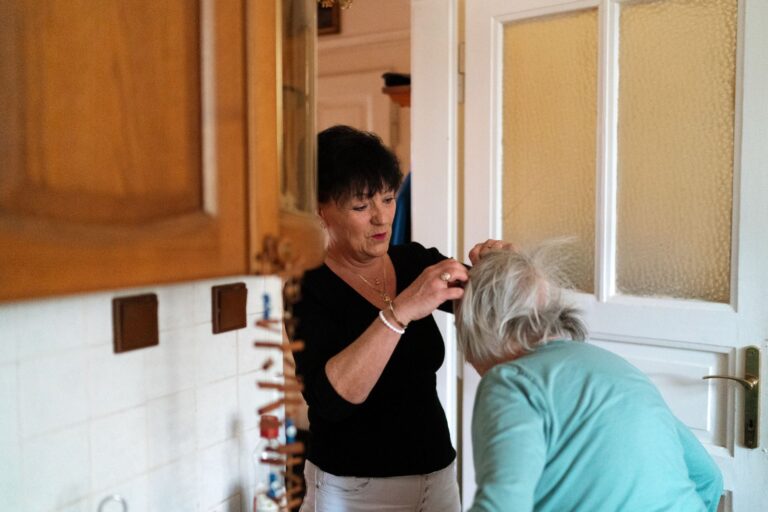
Stage 5 dementia generally describes a moderate stage in which a person begins needing regular daily support, especially with choosing appropriate clothing, managing household responsibilities, remembering important information, and navigating unfamiliar situations. For example, someone may still dress independently but select a winter coat on a hot afternoon, wear the same clothes repeatedly, or become unable to decide what belongs together without help. The label most often refers to Stage 5 of the Functional Assessment Staging Tool, commonly called FAST.
It does not mean that every person has exactly the same symptoms or care needs. At this stage, many people can still eat, walk, use the toilet, and participate in familiar activities, while memory loss and impaired judgment make living completely alone increasingly unsafe. Daily support may range from scheduled family visits to continuous supervision, depending on the person’s health, home environment, and behavior. Someone who calmly follows a familiar routine may manage with planned assistance, while a person who leaves the stove on, misses medication, or becomes lost near home may require much closer oversight.
Medical information disclaimer: This article is for general educational purposes only and does not provide medical advice, diagnosis, or treatment. Always consult a physician or other qualified health professional about symptoms, medications, tests, or treatment decisions.
Table of Contents
- What Does Stage 5 Dementia Mean When a Person Needs Daily Support?
- Stage 5 Dementia Symptoms and Changes in Everyday Function
- Personal Care, Communication, and Emotional Changes
- How to Provide Practical Daily Support at Stage 5
- Common Safety Problems and Signs More Care May Be Needed
- Medical Assessment and Care Planning
- Routines, Activities, and Preserving Remaining Abilities
- Frequently Asked Questions
What Does Stage 5 Dementia Mean When a Person Needs Daily Support?
stage 5 on the FAST scale is associated with moderately severe cognitive decline. A commonly recognized sign is difficulty selecting suitable clothing without assistance. This is more than an occasional fashion mismatch: the person may no longer connect weather, occasion, cleanliness, or sequence with the clothing choices in front of them. Other abilities are often affected before basic self-care is lost.
The person may be unable to manage finances, organize medications, plan meals, remember an address, or explain where they are if lost. By comparison, someone in an earlier stage might forget an appointment but successfully reschedule it; a person at Stage 5 may not remember the appointment, understand the calendar, or know whom to call. “Stage 5” is not a universal description across every dementia rating system. The seven-stage Global Deterioration Scale also uses Stage 5, but its definitions and assessment approach are not identical to FAST. Families should ask which scale a clinician is using rather than assuming that all Stage 5 labels describe precisely the same level of impairment.
Stage 5 Dementia Symptoms and Changes in Everyday Function
Memory problems at this stage often affect information needed for independent living. A person may forget a current address, telephone number, recent events, or the names of less familiar people. They may repeatedly ask when dinner will be served, even after eating, or insist that a relative has not visited despite seeing that person earlier in the day. Planning and judgment can become as important as memory loss.
Preparing a meal requires choosing ingredients, following steps, monitoring heat, and recognizing when food is safe to eat. A person may still make toast successfully because the process is familiar, yet be unable to prepare a full dinner without leaving burners on or combining ingredients incorrectly. Symptoms vary by dementia type, medical history, stress level, sleep, and environment. A staging label cannot determine whether confusion is caused solely by dementia. A sudden decline, new hallucinations, unusual sleepiness, fever, weakness, or abrupt change in behavior warrants prompt medical assessment because infection, medication effects, dehydration, pain, stroke, or delirium may be involved.
Personal Care, Communication, and Emotional Changes
Many people at Stage 5 retain substantial physical independence but need prompting, preparation, or supervision. A caregiver might lay out underwear, trousers, a shirt, socks, and shoes in the order they should be put on. The person may then dress without hands-on assistance, preserving more independence than if the caregiver automatically completed the task. Communication may become less precise.
The person might lose track of a conversation, struggle to find a word, substitute a general term such as “that thing,” or tell the same story several times. Long explanations and multiple questions can be overwhelming, so a choice between two shirts is often easier to process than an open-ended request to decide what to wear. Emotional reactions may include anxiety, frustration, suspicion, apathy, or embarrassment. Correcting every error can intensify distress without improving understanding. If someone says they must collect children who are now adults, arguing over dates may lead to fear or anger; acknowledging the concern and redirecting them toward a familiar task may be more effective.
How to Provide Practical Daily Support at Stage 5
Start by identifying tasks that involve significant consequences if they go wrong. Medication administration, cooking, driving, financial transactions, and leaving the house alone generally deserve more attention than harmless preferences. A written checklist may support a familiar morning routine, but it is not an adequate safeguard if the person can no longer interpret the instructions reliably. Simplifying the environment can reduce both errors and frustration. Keep seasonal clothing visible and store unsuitable items elsewhere, use automatic shutoff devices where appropriate, label drawers with words or pictures, and keep frequently used objects in consistent locations.
For example, placing two weather-appropriate outfits on a chair allows genuine choice without presenting an unmanageable wardrobe. There is a tradeoff between safety and autonomy. Taking over every activity may save time, but it can remove meaningful choices and abilities the person still possesses. Allowing unlimited independence may feel respectful while exposing the person to preventable harm. A balanced approach is to provide the least assistance that allows the task to be completed safely, then increase support when repeated errors show that the arrangement is no longer working.
Common Safety Problems and Signs More Care May Be Needed
Medication errors are a frequent concern because remembering to take a pill is only one part of the task. The person must also recognize the medication, follow the correct schedule, avoid duplicate doses, and notice when a prescription needs refilling. A pill organizer may help some people, but it can create false reassurance if no one confirms that the correct compartment was opened. Other warning signs include wandering, getting lost on familiar routes, unsafe driving, unpaid bills, spoiled food, unexplained injuries, falls, smoking hazards, and vulnerability to scams.
A person who sounds socially capable during a brief telephone call may still be unable to manage these risks over an entire day. Living alone should therefore be evaluated through observed function rather than conversational fluency. Care needs may also exceed what one family caregiver can safely provide. Nighttime disruption, lifting demands, aggression, or constant supervision can contribute to exhaustion and mistakes. Respite care, adult day programs, in-home assistance, or residential care may become relevant, but availability, cost, personal preference, and local eligibility rules can limit these options.
Medical Assessment and Care Planning
A clinician can review cognitive symptoms, daily functioning, medications, mood, sleep, hearing, vision, mobility, nutrition, and other medical conditions. Because dementia stages are estimates rather than fixed biological boundaries, assessment should focus on what the person can do safely and consistently.
A person may appear capable in a quiet clinic but become disoriented while shopping, handling money, or following a multistep routine at home. Care planning should also address legal and practical decisions while the person can still participate meaningfully. For example, the family might document who will help with bills, who may speak with healthcare professionals, where medication records are kept, and what emergency contacts should be called if the person goes missing.
Routines, Activities, and Preserving Remaining Abilities
Familiar, structured activities can support participation without requiring complex planning. Folding towels, watering plants, listening to well-known music, walking with a companion, sorting photographs, or helping set the table may be manageable when instructions are brief and the surroundings are calm. If setting the entire table causes confusion, the person might still place one napkin beside each plate after a caregiver arranges the dishes.
Routine also makes changes easier to notice. Recording sleep, appetite, bowel habits, medication changes, falls, agitation, and unusual confusion can help caregivers describe patterns accurately to a clinician. A dated note that confusion began two days after a prescription change is more useful than a general report that the person has “seemed worse lately.”.
Frequently Asked Questions
Is Stage 5 dementia the same as end-stage dementia?
No. On commonly used seven-stage frameworks, Stage 5 is a moderate or moderately severe phase rather than the final stage. Many people can still walk, eat, communicate, and complete parts of personal care, although they need regular support.
Can a person with Stage 5 dementia live alone?
Some people may remain at home with substantial services and supervision, but independent living often becomes unsafe. The decision should consider medication management, cooking, wandering, falls, emergency response, judgment, and the availability of dependable daily help.
Does Stage 5 dementia mean the person needs help bathing and using the toilet?
Not necessarily. Difficulty choosing appropriate clothing is a characteristic FAST Stage 5 problem, while hands-on help with dressing, bathing, or toileting is generally associated with further functional decline. Individual abilities do not always follow a perfectly ordered sequence.
How long does Stage 5 dementia last?
There is no reliable timetable for one individual. Progression differs according to the cause of dementia, overall health, complications, treatment, and how the stage is defined. A clinician may track changes over time rather than predicting duration from one assessment.
What should caregivers do after a sudden decline?
Seek medical advice promptly, particularly when the change occurs over hours or days or includes fever, weakness, a fall, reduced alertness, breathing difficulty, or new hallucinations. Sudden confusion may reflect an acute medical problem rather than ordinary dementia progression.