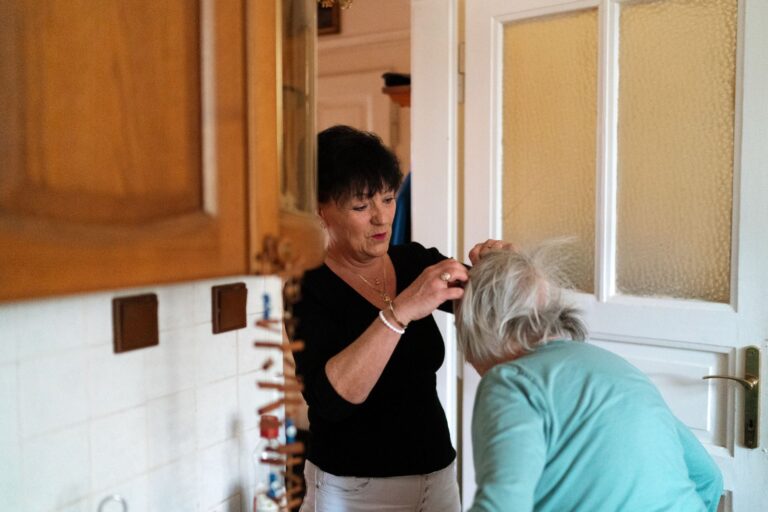
Stage 4 dementia commonly refers to mild dementia, or moderate cognitive decline, on the seven-stage Global Deterioration Scale. Families often notice that memory and planning problems now interfere with complex daily tasks, even though the person may still eat, dress, walk, and hold a familiar conversation independently. For example, someone who has managed household bills for decades may begin paying the same invoice twice, overlooking others, or becoming confused by an online banking screen. Daily life often becomes narrower and more structured at this stage. The person may avoid unfamiliar trips, complicated recipes, group conversations, or responsibilities that reveal their difficulties.
Changes can be subtle during a short visit because social manners and older memories may remain strong. A spouse living in the same home is more likely to notice repeated questions, unfinished chores, misplaced paperwork, and increasing dependence on reminders. “Stage 4” is not a universal diagnosis. Different organizations and clinical tools divide dementia differently, and symptoms do not always progress in a neat sequence. A clinician must consider the person’s actual abilities, medical history, type of dementia, and rate of change rather than treating a stage number as a complete description.
Medical information disclaimer: This article is for general educational purposes only and does not provide medical advice, diagnosis, or treatment. Always consult a physician or other qualified health professional about symptoms, medications, tests, or treatment decisions.
Table of Contents
- What Does Stage 4 Dementia Mean for Daily Life?
- Memory, Judgment, and Communication Changes Families Notice
- How Stage 4 Dementia Affects Work, Home, and Relationships
- Practical Ways to Support Independence and Safety
- Driving, Medication, Finances, and Other Common Risks
- Medical Assessment and Care Planning at Stage 4
- Building a Routine That Reflects Current Abilities
- Frequently Asked Questions
What Does Stage 4 Dementia Mean for Daily Life?
On the Global Deterioration Scale, Stage 4 describes clear cognitive decline that can usually be identified during a clinical assessment. Common difficulties involve recent events, concentration, organization, financial management, and completing tasks with several steps. The person may remember childhood experiences in detail while being unable to recall what was discussed earlier that morning. The difference from ordinary forgetfulness is the effect on function.
Anyone might occasionally forget an appointment; a person with Stage 4 dementia may repeatedly miss appointments despite a calendar, misunderstand the time, or arrive on the wrong day. Likewise, temporarily misplacing a receipt is different from losing track of an entire household budget or no longer understanding why a bill must be paid. Basic self-care is often relatively preserved, but independence can be misleading. A person may dress without assistance while choosing clothing unsuitable for the weather, or prepare lunch while forgetting that food is already cooking. Stage labels should therefore be interpreted alongside real examples of what the person can do safely, consistently, and without prompting.
Memory, Judgment, and Communication Changes Families Notice
Recent memory problems often become more visible. The person may repeat a story, ask the same question several times, forget a recent visitor, or insist that no one explained a plan that was discussed minutes earlier. Word-finding pauses can occur, especially under stress, although everyday conversation may still sound fluent and socially appropriate. Judgment and problem-solving may change before basic physical abilities do.
Offers that once would have seemed suspicious may now appear believable, and comparing insurance documents, following medication instructions, or responding to an unexpected home repair can become overwhelming. A person might purchase an unnecessary service because a caller sounded authoritative, then be unable to explain the transaction later. Not every lapse should be attributed to dementia. Hearing loss, poor sleep, depression, dehydration, medication effects, infection, pain, thyroid problems, and other medical conditions can worsen thinking. A sudden decline over hours or days is particularly concerning and should not be dismissed as progression; abrupt confusion can signal delirium or another urgent health problem.
How Stage 4 Dementia Affects Work, Home, and Relationships
At work, errors may appear in duties that require flexibility, deadlines, calculations, or new technology. A person may still perform a familiar routine but struggle when the sequence changes. For example, a bookkeeper might enter standard invoices correctly yet become unable to resolve a discrepancy that previously would have taken only a few minutes. At home, the person may rely increasingly on a partner without recognizing how much support is being provided.
The partner may quietly choose clothes, organize pills, answer messages, arrange transportation, and redirect conversations. Because this assistance can make the household appear to function normally, relatives who visit briefly may underestimate the extent of the change. Relationships can become strained when memory gaps are interpreted as carelessness or dishonesty. The person may deny a mistake, not because they are deliberately deceptive, but because they genuinely do not remember it and fill in the missing explanation. Correcting every inaccurate detail can produce arguments without improving memory; responding to the practical need is often more effective than trying to win a factual dispute.
Practical Ways to Support Independence and Safety
Support works best when it matches the task rather than replacing every activity at once. A written morning checklist, labeled drawers, automatic bill payments, prepared ingredients, and a single visible calendar can reduce cognitive demands. If someone can still make breakfast safely, the family might keep that routine while moving medication management and financial oversight to a trusted helper. There is a tradeoff between independence and protection.
Taking over too quickly can reduce confidence, privacy, and opportunities to use remaining skills. Waiting too long can expose the person to scams, missed medication, spoiled food, unsafe driving, or serious financial errors. Families can look for the least restrictive adjustment that makes a specific risk manageable, then reassess it as abilities change. Instructions are usually easier to follow when they are brief and concrete. “Please put on your blue coat” places less demand on memory and decision-making than “Get ready because we need to leave soon.” Offering two suitable choices can also preserve control: asking whether the person wants soup or a sandwich is often more manageable than asking an open-ended question about lunch.
Driving, Medication, Finances, and Other Common Risks
Driving ability cannot be determined by a dementia stage alone. Warning signs include new dents, missed turns on familiar routes, confusion at intersections, delayed reactions, traffic violations, or passengers feeling unsafe. Families should not rely only on the driver’s confidence, because impaired insight can prevent the person from recognizing mistakes. A medical review or formal driving evaluation may provide more useful evidence than an argument based on age or diagnosis. Medication errors are another common concern.
A pill organizer helps only if the person can identify the correct day, understand the schedule, and avoid taking extra doses. Finding Monday’s compartment empty on Sunday, discovering loose pills around the home, or seeing repeated refill problems suggests that reminders may no longer be enough and direct supervision may be needed. Financial safeguards should be introduced before a crisis whenever possible. Transaction alerts, limits on large transfers, removal from high-pressure mailing lists, and review by a trusted person can reduce risk. Families should obtain legal advice about powers of attorney and decision-making authority while the person can still understand and participate; a diagnosis does not automatically eliminate legal capacity, and requirements differ by location.
Medical Assessment and Care Planning at Stage 4
A dementia assessment may include interviews with the person and someone who knows them well, cognitive testing, medication review, physical and neurological examination, laboratory work, and sometimes brain imaging. Clinicians also examine function: forgetting three words during a test matters differently from leaving the stove on twice in one month, so families should bring dated, specific examples rather than descriptions such as “more confused lately.” Care planning should account for the cause of dementia and the person’s other health conditions.
Alzheimer’s disease, vascular dementia, Lewy body dementia, frontotemporal dementia, and mixed conditions can produce different patterns. Visual hallucinations, fainting, major movement changes, new weakness, or rapid deterioration deserve prompt medical attention rather than being assumed to be ordinary features of Stage 4.
Building a Routine That Reflects Current Abilities
A predictable routine can reduce the number of decisions and memory demands built into the day. Keeping meals, bathing, walks, and bedtime at similar times may make tasks easier to initiate. One family might place clean clothes in order on a chair, serve breakfast at the same table, and keep keys in a clearly marked tray, allowing the person to complete familiar steps with fewer verbal prompts.
Observation should focus on consistency as well as isolated success. Preparing tea safely once does not prove that the task is safe every day, especially when the person is tired, ill, or in an unfamiliar setting. A simple record of missed medications, cooking incidents, falls, driving concerns, and the amount of prompting required can give clinicians and relatives concrete evidence for adjusting support.
Frequently Asked Questions
What is Stage 4 dementia?
On the Global Deterioration Scale, Stage 4 generally means mild dementia or moderate cognitive decline. Problems with recent memory, planning, finances, concentration, and complex tasks are evident, while many basic self-care abilities remain intact.
Can someone with Stage 4 dementia live alone?
Some people can remain at home with structured support, but living alone safely depends on medication use, cooking, driving, judgment, mobility, emergency response, and available supervision. The stage number by itself cannot establish whether living alone is safe.
Does Stage 4 dementia mean the person needs help dressing and bathing?
Not necessarily. Many people at this stage can still dress, bathe, eat, and use the toilet independently. They may nevertheless need reminders, help selecting appropriate clothing, or oversight to ensure these activities occur safely and regularly.
How long does Stage 4 dementia last?
There is no dependable timetable for an individual. Progression varies with the underlying disease, general health, treatment of other conditions, and the staging method being used. Some abilities may remain stable while others decline.
Can a person with Stage 4 dementia make decisions?
Often, yes, particularly when information is presented clearly and the decision is familiar or straightforward. Capacity is specific to the decision and the time it is made; difficulty managing investments does not automatically mean the person cannot choose meals, express care preferences, or participate in other decisions.
When should a family seek urgent medical help?
Seek prompt medical attention for sudden or severe confusion, new weakness, facial drooping, difficulty speaking, a serious fall, loss of consciousness, fever with behavioral change, or an abrupt reduction in alertness. These changes may reflect a medical emergency rather than gradual dementia progression.