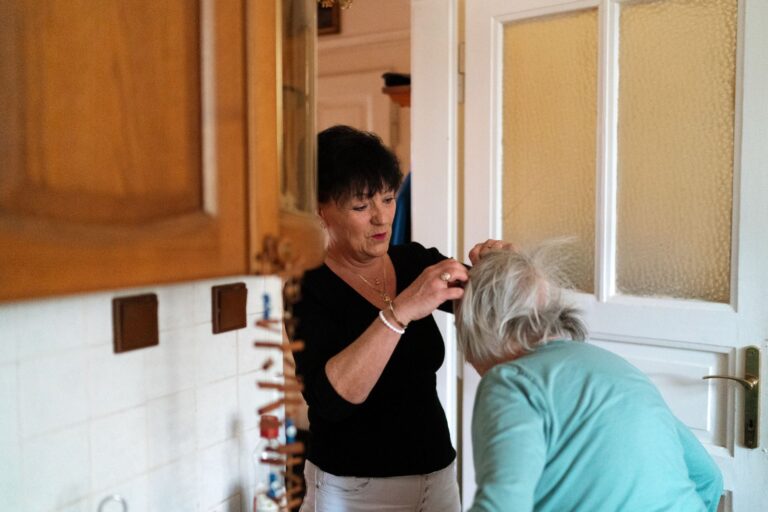
The seven commonly described stages of dementia are: no cognitive impairment, very mild cognitive decline, mild cognitive impairment, mild dementia, moderate dementia, moderately severe dementia, and severe dementia. These stages come from the Global Deterioration Scale, which is most applicable to Alzheimer’s disease. In practical terms, a person may progress from occasional forgetfulness to needing help with finances and dressing, then eventually require continuous assistance with eating, mobility, and personal care.
The stages are a guide, not a precise timetable. Symptoms can overlap, progression may be uneven, and vascular dementia, Lewy body dementia, frontotemporal dementia, and mixed dementia may not follow the same pattern. For example, someone with Alzheimer’s disease might gradually lose the ability to manage bills, while a person with vascular dementia may show a more stepwise decline after strokes or other blood-vessel injuries.
Medical information disclaimer: This article is for general educational purposes only and does not provide medical advice, diagnosis, or treatment. Always consult a physician or other qualified health professional about symptoms, medications, tests, or treatment decisions.
Table of Contents
- What Are the 7 Stages of Dementia and What Happens in Each Stage?
- Stages 1 and 2—No Impairment and Very Mild Cognitive Decline
- Stage 3—Mild Cognitive Impairment and Early Warning Signs
- Planning Care for Stages 4 and 5—Mild to Moderate Dementia
- Stages 6 and 7—Advanced Symptoms and Intensive Care Needs
- How Clinicians Determine a Dementia Stage
- What Comes Next After a Dementia Stage Is Identified?
- Frequently Asked Questions
What Are the 7 Stages of Dementia and What Happens in Each Stage?
Stage 1 involves no noticeable cognitive impairment. Stage 2 brings very mild changes, such as occasionally forgetting a name or misplacing an object. Stage 3 is generally considered mild cognitive impairment, when problems become noticeable but do not yet eliminate independent functioning. Stage 4 marks mild dementia, with clear difficulty managing complex daily responsibilities. Stage 5 is moderate dementia, when help with routine activities becomes necessary. Stage 6 is moderately severe dementia, involving extensive assistance and behavioral or physical changes. Stage 7 is severe dementia, with profound communication and physical-care needs.
Stages 1 through 3 are often called pre-dementia stages because a person does not necessarily meet the clinical criteria for dementia. Dementia is diagnosed when cognitive decline interferes with everyday independence. A person in Stage 3 might forget appointments but remain able to cook, dress, and travel independently; someone in Stage 4 might repeatedly miss payments, become lost on familiar routes, or be unable to prepare a meal without help. The numbered stages can make progression appear more orderly than it really is. A person may have abilities associated with several stages at once. Someone might require help choosing appropriate clothes, a Stage 5 feature, while still holding a detailed conversation and remembering close relatives. Clinicians therefore consider daily function, medical history, cognitive testing, caregiver observations, and possible alternative causes rather than assigning a stage from one symptom.
Stages 1 and 2—No Impairment and Very Mild Cognitive Decline
In Stage 1, thinking and memory appear normal in daily life, and cognitive testing may not detect a problem. This does not prove that no underlying brain changes exist; it simply means there is no measurable functional decline. Most people at this stage do not require dementia-related care, although routine health care should address hearing, vision, sleep, blood pressure, medication effects, mood, and other factors that can influence cognition. Stage 2 may involve minor lapses such as forgetting where keys were placed, struggling briefly to recall a familiar word, or walking into a room and forgetting why.
These experiences are common with normal aging, stress, poor sleep, depression, and medication side effects, so they do not establish dementia. A practical response is to use calendars, designated storage places, medication organizers, and written reminders while watching for changes that become more frequent or disruptive. A warning sign is not simply forgetting a name but losing the ability to perform a familiar task or repeatedly failing to retain important information. Sudden confusion is especially important: dementia typically develops gradually, while a rapid change over hours or days may indicate delirium, infection, medication toxicity, dehydration, stroke, or another urgent condition. New facial weakness, speech difficulty, severe headache, or one-sided weakness requires immediate medical attention.
Stage 3—Mild Cognitive Impairment and Early Warning Signs
Stage 3 is commonly associated with mild cognitive impairment, or MCI. A person has a noticeable decline in memory, language, attention, planning, or another thinking skill but remains largely independent. Signs may include repeating questions, losing track of a conversation, struggling to organize work, taking longer to make decisions, or having difficulty navigating an unfamiliar place. For example, a retired teacher may still drive, shop, cook, and manage personal care but repeatedly forget recent conversations and need written steps to complete tax paperwork.
Family members may notice the change before casual acquaintances do because social skills and long-established routines can conceal difficulties. Care needs at this stage often center on evaluation, organizational support, medication review, and monitoring rather than hands-on assistance. MCI does not always progress to dementia. Some people remain stable, and others improve when contributing problems such as sleep apnea, depression, vitamin deficiency, thyroid disease, hearing loss, or medication effects are treated. A thorough medical assessment is important because assuming every memory problem is Alzheimer’s disease can delay treatment for a different condition.
Planning Care for Stages 4 and 5—Mild to Moderate Dementia
Stage 4, or mild dementia, is usually when cognitive decline clearly interferes with independent life. The person may have trouble paying bills, planning meals, following recipes, managing medications, traveling alone, or remembering recent events. They may minimize problems or become defensive because the losses are frightening. Support should focus on reducing risk while preserving meaningful choices, such as offering two clothing options instead of taking over the entire dressing process. Stage 5, often described as moderate dementia, brings a need for help with everyday routines.
A person may forget their address or phone number, become confused about the date or location, wear clothing unsuitable for the weather, or need prompts for bathing and meals. They usually retain important personal knowledge, such as their own name and the names of close family members, but should not be expected to manage complex decisions reliably. Care planning involves tradeoffs between independence and safety. Automatic bill payment may preserve more autonomy than immediately transferring every financial responsibility, while disabling a stove may be necessary after repeated incidents involving burned pans or unlit gas. Driving requires an individualized assessment: familiar-road confidence does not guarantee the judgment, visual processing, or reaction time needed for an unexpected pedestrian or detour.
Stages 6 and 7—Advanced Symptoms and Intensive Care Needs
Stage 6, or moderately severe dementia, commonly involves major memory loss and extensive help with daily activities. A person may forget a spouse’s name, confuse family members, need assistance with dressing and bathing, experience urinary or bowel incontinence, or develop changes in sleep and behavior. Wandering, suspiciousness, agitation, hallucinations, repetitive actions, or resistance to care may occur, although the pattern depends partly on the type of dementia and the person’s health and environment. Stage 7 is severe dementia. Speech may narrow to a few words and later become difficult to understand or disappear.
The person may lose the ability to walk, sit upright, smile, or swallow safely and may become fully dependent for repositioning, hygiene, eating, and continence care. Care often includes skin protection, careful hand feeding when appropriate, management of pain and constipation, oral care, mobility assistance, and evaluation for swallowing difficulties. Behavioral changes should not automatically be treated as an inevitable part of dementia. Agitation can be a sign of pain, infection, constipation, hunger, fear, overstimulation, or an uncomfortable room temperature. Sedating medications may sometimes be considered, but they can cause serious side effects and should not replace an assessment for underlying causes. For example, a person who suddenly strikes out during bathing may be reacting to a painful shoulder or to feeling exposed rather than intentionally becoming aggressive.
How Clinicians Determine a Dementia Stage
Clinicians do not determine a stage from a memory-test score alone. They consider what the person can do safely and consistently, including handling money, taking medication, preparing food, communicating needs, using the bathroom, dressing, and moving around. Information from someone who knows the person well can be essential because limited insight may cause the individual to underreport difficulties.
A clinic score may suggest mild impairment even when real-world risks are substantial. For example, a person may correctly name the date and recall several words during testing but still send money to scammers or take the same prescription twice. Functional evidence can therefore be more useful for care planning than the stage number by itself.
What Comes Next After a Dementia Stage Is Identified?
The next step is to match support to the person’s current risks and abilities. This may include a medication review, hearing and vision checks, occupational or driving assessment, home-safety changes, legal and financial planning, caregiver respite, or help with personal care. Advance directives, health care proxy documents, and financial authorizations are best discussed while the person can still understand the choices and express preferences.
Families should also create a practical plan for urgent situations. One example is keeping an updated medication list, clinician contacts, insurance information, legal documents, and preferred hospital in one accessible place. If wandering is a concern, current photographs, door alerts, identification jewelry, and a written list of likely destinations can give caregivers and emergency responders concrete information during a search.
Frequently Asked Questions
How long does each stage of dementia last?
There is no reliable duration for any individual stage. Progression varies with the type of dementia, age, overall health, complications, and the way stages are defined. A person may remain relatively stable for a period and then decline after an illness or hospitalization.
At what stage does a person need 24-hour care?
Many people need continuous supervision by Stage 6, but safety needs can require it earlier. Wandering, unsafe cooking, medication errors, falls, nighttime activity, or inability to summon help may matter more than the assigned stage.
Is Stage 3 dementia?
Stage 3 is generally associated with mild cognitive impairment rather than dementia. The distinction is whether cognitive problems substantially interfere with independent daily functioning.
Can someone improve from one stage to another?
Progressive neurodegenerative dementia usually does not reverse, but function can temporarily improve when pain, infection, depression, medication effects, poor sleep, dehydration, or sensory problems are treated. A sudden decline should be medically assessed rather than assumed to be permanent progression.
Do all types of dementia have seven stages?
No. The seven-stage framework is most closely associated with Alzheimer’s disease and may fit other conditions poorly. Lewy body dementia can fluctuate, vascular dementia may progress in steps, and frontotemporal dementia may begin with behavior or language changes rather than memory loss.