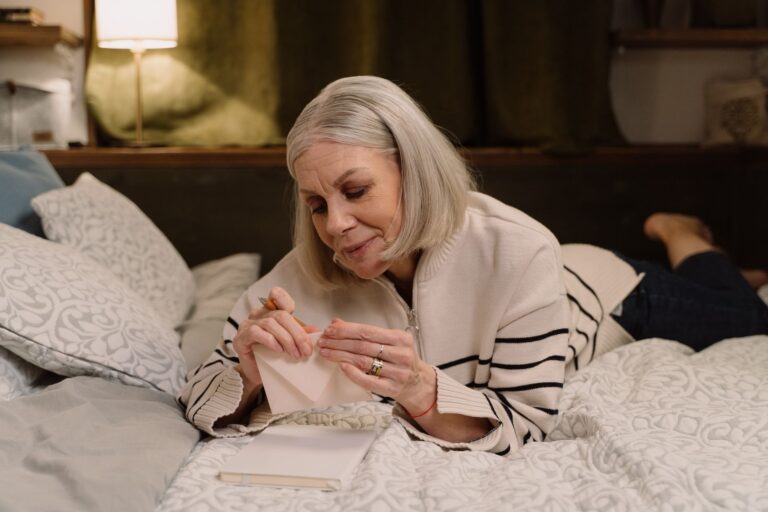
The exact last message the son says his mother wrote is not included in the verified account, so reproducing its words would be guesswork. Dementia is an umbrella term for a decline in thinking, memory, and reasoning severe enough to disrupt daily life, according to the National Institute on Aging. The story still captures a painful transition many families recognize: written or spoken exchanges becoming harder to sustain. Yet "conversation became impossible" describes one family's experience, not a medical stage that everyone reaches in the same way.
Medical information disclaimer: This article is for general educational purposes only and does not provide medical advice, diagnosis, or treatment. Always consult a physician or other qualified health professional about symptoms, medications, tests, or treatment decisions.
Table of Contents
- What does "conversation became impossible" mean?
- How families can keep communicating
- Does a last written message identify the dementia type?
- Can newer Alzheimer's drugs restore communication?
- What should families ask about testing and access?
What does "conversation became impossible" mean?
Dementia can affect word-finding, comprehension, attention, and the ability to organize language. The pattern and severity vary, so there is no universal moment when a person completely loses the ability to communicate. Speech is also only one part of communication.
Facial expressions, gestures, eye contact, tone, and responses to simple choices may remain meaningful even after complex conversation becomes difficult. The National Institute on Aging's communication guidance supports adjusting conversations as abilities change. Families should avoid treating a personal milestone—such as the final note or text—as proof of a precise disease stage.
How families can keep communicating
A person who cannot follow a long discussion may still respond when the pace and demands change. The National Institute on Aging recommends practical adjustments: These steps do not guarantee a reply or restore lost language.
They reduce pressure and preserve opportunities for the person to participate at their current level. A treasured final message can be saved without becoming the only focus. Families can continue speaking directly to the person, pausing for responses and recognizing communication that does not take the form of a complete sentence.
- Make eye contact before speaking.
- Allow extra time for a response.
- Rephrase a question instead of repeating it unchanged.
- Offer simple yes-or-no choices.
- Watch for gestures and other nonverbal responses.
Does a last written message identify the dementia type?
No. One message—or the loss of writing afterward—cannot establish which disease is causing the symptoms. dementia describes a group of impairments rather than a single diagnosis. Alzheimer's disease accounts for about 60% to 80% of dementia cases.
The CDC estimated that 6.7 million older U.S. adults had Alzheimer's, with that figure projected to approach 14 million by 2060. Because communication changes differ among individuals, families should not use another person's story as a diagnostic checklist. The meaningful comparison is between the person's present abilities and their earlier daily functioning.
Can newer Alzheimer's drugs restore communication?
Current disease-modifying anti-amyloid drugs are intended for early Alzheimer's disease—not advanced dementia. Eligible patients have mild cognitive impairment or mild dementia and confirmed amyloid, a protein associated with Alzheimer's. The FDA approved Kisunla, or donanemab-azbt, in July 2024. In a 1,736-person trial involving amyloid-confirmed early Alzheimer's, treatment slowed decline compared with placebo over 76 weeks; it did not restore communication already lost.
The FDA approval notice reports the trial results and treatment limits. Kisunla also carries a boxed warning for amyloid-related imaging abnormalities, known as ARIA. These can involve brain swelling or bleeding, and serious or life-threatening events can occur. APOE ε4 homozygotes face greater risk; families considering treatment can review the FDA prescribing and safety information before discussing individual risks with a clinician.
What should families ask about testing and access?
FDA clearance of the Lumipulse blood test does not make it a stand-alone Alzheimer's diagnosis. It is for symptomatic adults age 55 or older in specialized care, must be interpreted with other clinical information, and can produce false results.
Medicare coverage for FDA-approved anti-amyloid antibodies has narrower conditions than a general dementia diagnosis. CMS requires mild cognitive impairment due to Alzheimer's or mild Alzheimer's dementia, confirmed amyloid pathology, and participation in a qualifying study or registry. A practical next step is to ask the treating clinician three direct questions: what dementia type is suspected, whether the person remains in the early stage required for treatment, and what testing would confirm amyloid pathology.