Handmade birthday gifts can help families express love and invite connection as Alzheimer's changes communication. They work best when they suit the person's current abilities, without pressure to recognize, remember, or respond. Alzheimer's is the most common form of dementia, progressively damaging memory and thinking until daily life is affected, according to the National Institute on Aging. A gift cannot reverse that process, but making and sharing one can still create a meaningful family moment.
Medical information disclaimer: This article is for general educational purposes only and does not provide medical advice, diagnosis, or treatment. Always consult a physician or other qualified health professional about symptoms, medications, tests, or treatment decisions.
Table of Contents
- What makes a handmade gift meaningful?
- Choose for present abilities, not past skills
- How should you give the gift?
- Can photographs and objects improve communication?
- Keep the gift comfortable and safe
What makes a handmade gift meaningful?
The object does not need to trigger a specific memory to have value. It can communicate affection through familiar photographs, colors, names, textures, or family references. It may also preserve a family story.
A photo booklet, fabric collage, painted memory box, or set of large-print family cards can record people and events without becoming a test. The person may enjoy the visit even if they do not remember it later. The National Institute on Aging advises that activities should match current abilities and notes that family visitors may still be enjoyed without being remembered.
Choose for present abilities, not past skills
Alzheimer's can affect word-finding, comprehension, attention, organization of speech, and the ability to filter background noise, as the National Institute on Aging explains. Consider what the person can comfortably see, handle, and understand now.
Useful options might include: Avoid making completion part of the gift. A complicated craft kit may frustrate someone who once loved crafts but now struggles with multiple steps. If participation feels appropriate, offer one manageable task and help the person begin.
- A short photo book with one clearly labeled picture per page
- A soft lap blanket in familiar colors
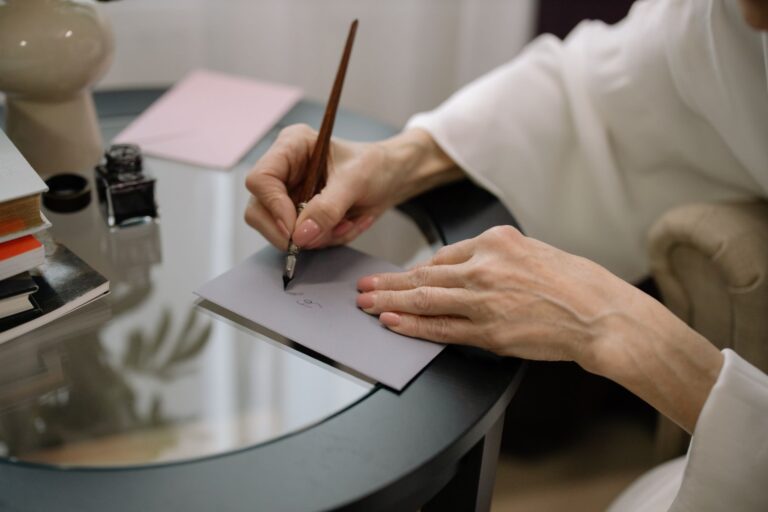
- A large-print card containing a brief message
- A simple album that can be viewed without reading
- A decorated box holding a few safe, recognizable objects
How should you give the gift?
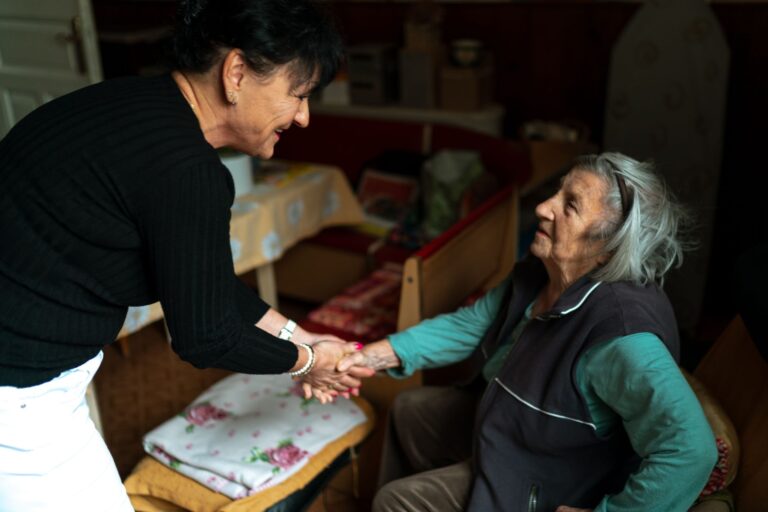
Choose a calm setting with limited background noise. Approach from the front, make eye contact, use the person's name, and offer time to respond.
Present the gift with a simple statement: "I made this for your birthday." Instead of asking, "Do you remember this?" try a gentle observation such as, "Here is a picture of the garden," or offer a choice: "Would you like to hold it or look at it here?" Watch the person's expression and behavior. If they seem confused or frustrated, pause, simplify the interaction, or let them observe. Warm tone, facial expression, and an unhurried presence can carry the exchange when words are difficult.
Can photographs and objects improve communication?
Photographs, music, and familiar objects are often used as prompts in reminiscence activities. A Cochrane review of 22 trials involving 1,972 people with dementia found that reminiscence may produce small communication benefits, particularly in group or community settings. That evidence does not show that a one-time birthday gift restores memory.
Results were inconsistent and often modest, and the review did not establish that every person or family finds such gifts meaningful. Expectations should therefore stay flexible. A smile, a brief look, quiet attention, or no visible reaction can all occur. The gift's success should not depend on recalling a name, explaining a photograph, or displaying gratitude.
Keep the gift comfortable and safe
Communication and independence vary by stage. Some people retain substantial ability earlier in the disease, while people with severe Alzheimer's may be unable to communicate and may depend fully on others. As abilities and perception change, reassess the gift rather than assuming it will remain suitable.
The National Institute on Aging's home safety guidance recommends addressing hazards and securing dangerous or easily misplaced items. Avoid sharp edges, breakable parts, confusing fasteners, and small loose pieces when these could create risk. Ask a regular caregiver whether the person has current safety or handling needs, then give the simplest suitable version.