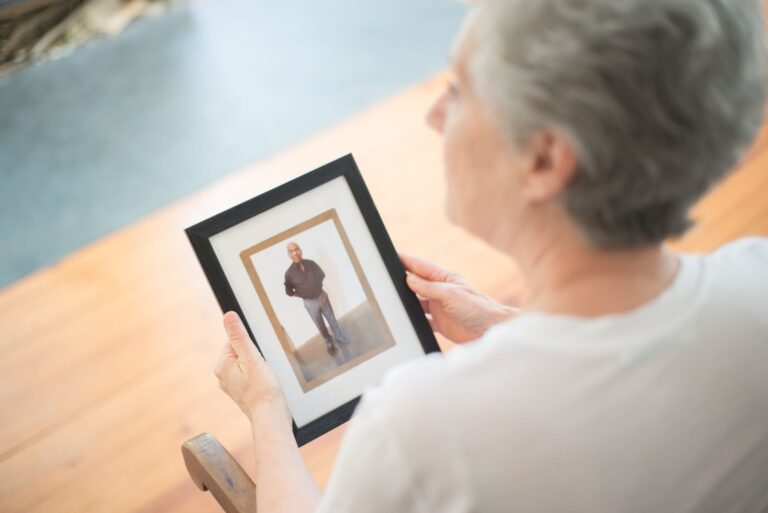
Smiling at an old wedding photograph can matter because it offers connection and enjoyment, even when the person cannot explain or retain the moment. The photograph is not a treatment or memory test; it is a gentle invitation to engage. Alzheimer's is a progressive brain disorder that affects memory, thinking, behavior, and eventually daily function, according to the National Institute on Aging. As those abilities change, a brief positive response can still make an interaction meaningful.
Medical information disclaimer: This article is for general educational purposes only and does not provide medical advice, diagnosis, or treatment. Always consult a physician or other qualified health professional about symptoms, medications, tests, or treatment decisions.
Table of Contents
- What a smile tells you—and what it does not
- What reminiscence evidence actually shows
- How to offer the photograph without testing memory
- Let the person's response set the pace
What a smile tells you—and what it does not
A smile may suggest that something about the photograph feels familiar, pleasant, or socially engaging. It does not prove that the person recognizes everyone, remembers the wedding, or understands when it happened. Avoid assigning a specific meaning to the reaction.
A person might respond to a face, clothing, the mood of the image, or simply the attention of someone sitting beside them. No study shows that wedding photographs specifically improve Alzheimer's outcomes. Treat the picture as an individual cue: useful when it invites comfortable engagement, but not important if it produces no response.
What reminiscence evidence actually shows
Reminiscence therapy involves discussing past events with prompts such as photographs, music, videos, or familiar objects. It can happen individually or in groups. A Cochrane review of 22 randomized trials found only a very small immediate cognitive benefit, with little or no longer-term difference.
The review found a probable small quality-of-life benefit in care homes and possible modest communication gains in some group or community programs. Evidence does not show clear improvements in agitation, daily activities, or relationships. Trials reported no harm to participants, although two studies involving caregivers suggested that joint sessions might slightly increase caregiver anxiety.
How to offer the photograph without testing memory
The National Institute on Aging's communication guidance supports allowing time, offering simple choices, and avoiding arguments or interruptions. Use the photograph to open a door, not to demand the correct answer.
If the person changes the subject, accept the change. The goal is a comfortable interaction, not an accurate reconstruction of the wedding day.
- Place the photograph where the person can see it without pressure.
- Start with an observation, such as, "Everyone looks dressed up."
- Ask a simple choice: "Would you like to hold it or leave it here?"
- Pause long enough for a look, gesture, word, or change of expression.
- Follow the person's subject, even if it differs from the photograph's history.
Let the person's response set the pace
Match the activity to what the person can comfortably do. Looking silently may be enough; another person may enjoy naming someone or telling a story. Watch for frustration and put the photograph away if the interaction becomes uncomfortable.
The National Institute on Aging's activity guidance recommends prioritizing enjoyment and success rather than performance. Do not measure the moment by whether the person remembers it later. Someone may enjoy companionship without later remembering the visitor, so the immediate experience can still be worthwhile.