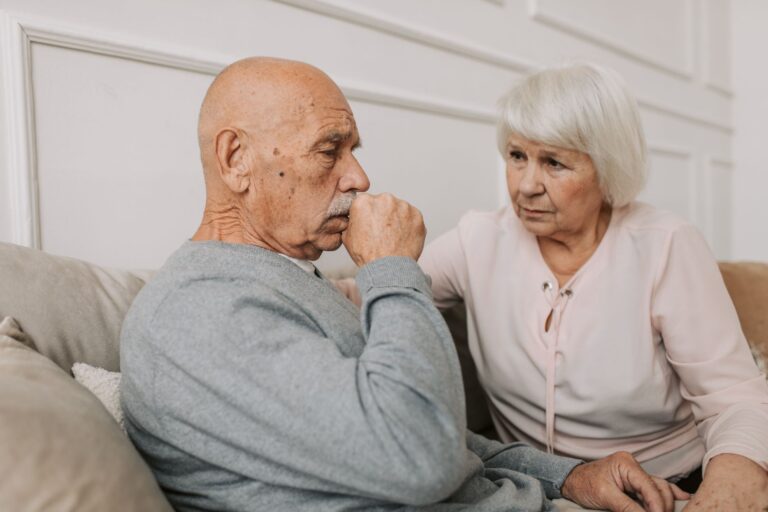
Singing an old church hymn can matter because a familiar song may create comfort, participation, or connection when ordinary conversation is difficult. Alzheimer's disease is a progressive, irreversible brain disorder, so this small moment cannot change the disease—but it can improve the experience of care.
A hymn may carry personal, family, or spiritual meaning. The goal is not perfect recall or performance. It is to offer a familiar activity and notice how the person responds.
Medical information disclaimer: This article is for general educational purposes only and does not provide medical advice, diagnosis, or treatment. Always consult a physician or other qualified health professional about symptoms, medications, tests, or treatment decisions.
Table of Contents
- What can a familiar hymn offer?
- Why do small moments matter at home?
- What does the music research show?
- How to try singing without creating pressure
- When should you stop or adapt the activity?
What can a familiar hymn offer?
alzheimer's gradually affects memory, thinking, language, and daily functioning. More than 6 million U.S. adults age 65 or older may have the disease, according to the National Institute on Aging's Alzheimer's overview. As these abilities change, singing offers another way to participate.
A person might hum, tap a hand, supply a few words, or simply listen. Each response can become a shared activity without requiring a complicated explanation. The hymn also gives the caregiver something concrete to do. Instead of pressing for a name, date, or memory, the caregiver can join the person in the present moment.
Why do small moments matter at home?
This is fundamentally a caregiving issue. About 80% of U.S. adults with Alzheimer's or related dementias receive care at home, largely from relatives or friends, according to the Centers for Disease Control and Prevention.
Home care consists of repeated daily interactions: dressing, eating, resting, waiting, and managing confusion. A brief song can soften one of those transitions or provide an activity when conversation stalls. "Small moments matter" should remain a care principle, not a medical claim. One warm interaction may support connection that day, but it does not prove an improvement in memory or a change in the course of Alzheimer's.
What does the music research show?
Music-based care has promising but limited evidence. A 2025 Cochrane review of 30 randomized studies involving 1,720 people with dementia found that therapeutic music interventions probably produced a slight improvement in depression compared with usual care. The review also found a possible improvement in overall behavioral problems.
The same Cochrane evidence review found no reliable benefit for agitation, cognition, or emotional well-being. It also found no clear evidence that benefits lasted after an intervention ended. These studies examined structured music-based interventions, not a single informal hymn at home. Their findings support modest expectations: music may help some aspects of mood or behavior, but it is not a cure, diagnostic test, or proven way to slow Alzheimer's.
How to try singing without creating pressure
Choose a hymn that the person knew well or valued. Personal familiarity matters more than selecting a song that caregivers happen to enjoy.
The National Institute on Aging recommends well-known songs and familiar spiritual practices, including sacred music, prayer, worship, and rituals, in its guide to adapting meaningful activities. Keep the invitation simple: Avoid questions such as "Don't you remember this?" Correcting missed lyrics can turn a shared activity into a memory test. If words are difficult, continue gently or switch to humming.
- Begin with one familiar verse at a comfortable volume.
- Sing beside the person instead of testing whether they remember the words.
- Allow humming, tapping, listening, or silence to count as participation.
- Pause between songs and watch the person's face, posture, and voice.
- Repeat the experience only when the response suggests comfort or interest.
When should you stop or adapt the activity?
Music is not automatically soothing. A sacred song may carry grief, fear, or other painful associations. Loud sound, a large group, an unfamiliar recording, or repeated prompting may also overwhelm the person.
Stop or change the activity if the person becomes tense, tearful, restless, angry, withdrawn, or asks for it to end. Adapting might mean lowering the volume, choosing another song, humming without words, or trying again on a different day. Research has not established the full risk profile because studies recorded adverse effects inconsistently. Treat the person's response as the practical guide: if the hymn brings visible ease or willing participation, stay with the moment; if it creates distress, stop.