Reviewed by the Help Dementia Editorial Team — our editors review every article for accuracy against guidance from the National Institute on Aging, the Alzheimer’s Association, and peer-reviewed sources.
Research shows sits at the center of this dementia and brain health question.
The claim that puzzles add 20 years of healthy brain function is more aspirational than what research actually supports. What studies do show is meaningful—people who regularly solve puzzles perform cognitively equivalent to 8 years younger than those who don’t, and crossword puzzle use is associated with a 2.54-year delay in dementia onset. These aren’t trivial benefits, but they’re notably different from the “20-year” headline circulating in popular media. A 75-year-old woman who starts doing daily crosswords won’t suddenly have the brain of a 55-year-old, but emerging evidence suggests she might maintain sharper memory and reasoning longer than peers who don’t puzzle at all.
The “20 years” in research typically refers to the duration of studies, not the length of cognitive benefit. French researchers analyzing 20 years of data from the Paquid cohort found that board game players had a 15% lower dementia risk than non-players. Recent 2024 research of over 9,000 people confirmed that puzzles were the strongest predictor of reasoning skills and a top predictor of memory and verbal ability. These findings are real and encouraging, but they come with an important caveat: this is correlation, not causation.
Table of Contents
- What Does the Research Actually Show About Puzzles and Brain Health?
- Why the “20-Year Benefit” Claim Doesn’t Hold Up in Research
- How Puzzles Compare to Other Brain-Health Interventions
- Starting a Puzzle Practice: What Actually Works
- The Causation Problem: Why Puzzle Solvers May Be Different to Begin With
- Puzzles in Dementia Care: What They Offer People Already Diagnosed
- The Future of Puzzle Research and Cognitive Health
- Conclusion
What Does the Research Actually Show About Puzzles and Brain Health?
Peer-reviewed studies consistently link puzzle-solving to better cognitive performance, but the specifics matter. The most cited finding shows that regular puzzle solvers perform cognitively equivalent to 8 years younger than non-puzzle solvers—a significant advantage that compounds over decades. Crossword puzzles specifically have shown a protective effect against memory loss and cognitive decline, with one major study finding a 2.54-year delay in dementia onset for people who use crosswords regularly compared to those who don’t.
That 2.54-year delay is real clinical value; for someone facing a dementia diagnosis, every year of delayed onset means more time with preserved independence and clearer thinking. The 2024 research showing puzzles as the strongest predictor of reasoning skills is particularly noteworthy because it included over 9,000 participants and controlled for multiple confounding variables. Puzzles ranked above screen-based cognitive training, video games, and other brain-training apps in effectiveness. However, researchers emphasize that even these benefits pale compared to lifestyle factors like regular aerobic exercise, blood pressure management, adequate sleep, and social engagement—all of which show stronger associations with dementia prevention than any cognitive activity.

Why the “20-Year Benefit” Claim Doesn’t Hold Up in Research
The persistent claim of 20 years of added brain health comes from conflating study duration with clinical benefit. French researchers followed participants for 20 years and found real dementia risk reduction in puzzle players, but that 20-year number describes the length of data collection, not the magnitude of cognitive preservation. This distinction matters because media headlines often compress nuanced findings into eye-catching but misleading claims.
When you see “20 years of brain health,” it sounds like a 50-year-old who starts puzzles will have the brain function of a 30-year-old—but that’s not what the evidence shows. The American Heart Association and other major health organizations explicitly warn that while cognitive activities including puzzles have value, they should never be viewed as substitutes for evidence-based dementia prevention: regular cardiovascular exercise, Mediterranean-style diet, cognitive challenge and social engagement, quality sleep, and blood pressure control. A person who does crossword puzzles daily but neglects sleep, skips exercise, and isolates socially may still experience cognitive decline at a normal or accelerated rate. Puzzles are a potentially helpful addition to a brain-healthy lifestyle, not a replacement for it.
How Puzzles Compare to Other Brain-Health Interventions
Recent research directly compared puzzle-solving to other cognitive interventions, and the results were surprisingly clear: traditional puzzles outperformed computer-based brain-training programs and video games in predicting real-world cognitive performance. This comparison matters because there’s a booming industry selling brain-training apps with claims that often exceed their evidence base. Lumosity, Elevate, and similar programs claim to sharpen memory and reasoning, but their effects are modest and often don’t transfer to real-world cognitive tasks. A person who spends 30 minutes daily on a brain-training app may improve at that specific app without improving their ability to remember faces, manage finances, or solve novel problems.
Puzzles, by contrast, seem to produce benefits that generalize more broadly to everyday thinking. The explanation likely relates to how puzzles engage multiple cognitive domains simultaneously—working memory, pattern recognition, vocabulary (in word puzzles), spatial reasoning (in tangrams or Sudoku), and sustained attention. A brain-training app optimized for speed and reaction time may strengthen only those narrow abilities. Additionally, puzzles often carry social and recreational value; doing a crossword puzzle with a friend or in a puzzle club provides cognitive challenge plus social engagement, both protective factors for brain health. A person clicking through a brain-training app alone receives only cognitive stimulation.

Starting a Puzzle Practice: What Actually Works
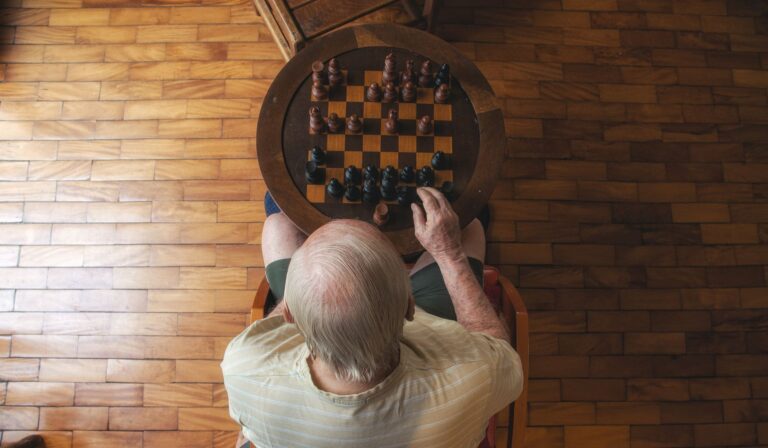
The research shows benefit from regular, sustained puzzle engagement rather than occasional use. People in studies who performed well cognitively were typically doing puzzles several times per week at minimum, not once a month. The type of puzzle matters less than consistency; crosswords, Sudoku, jigsaw puzzles, chess, and board games all showed cognitive benefits in different studies. The practical takeaway is to choose puzzles you actually enjoy—someone who hates Sudoku but loves crosswords will sustain a crossword habit far longer, and consistency determines whether you experience the benefits or not.
A realistic expectation involves years, not weeks. The dementia delay studies followed people over decades and measured effects that accumulated over time. Someone starting puzzles at age 60 might not notice dramatic changes in their memory after two months, but after five years of consistent play, they may perform measurably better on cognitive testing than peers who don’t puzzle. The 8-year cognitive advantage mentioned in research represents people who’ve maintained the habit long-term, not newcomers. Pairing puzzles with other proven interventions—a 30-minute walk five times weekly, a Mediterranean diet, time with friends, seven to nine hours of sleep—creates a synergistic effect much more powerful than puzzles alone.
The Causation Problem: Why Puzzle Solvers May Be Different to Begin With
Here’s the limitation that rarely makes headlines: all the dementia and cognitive benefit studies are correlational, not causal. People who do puzzles regularly may be different from non-puzzle solvers in ways that protect their brains independent of the puzzles themselves. Puzzle solvers tend to be more educated, have higher incomes, more social engagement, and better access to healthcare—all factors strongly linked to better cognitive aging. A study can show that puzzle solvers have lower dementia rates, but that doesn’t prove the puzzles caused the protection.
It’s possible that people with more cognitive reserve (from education and lifelong mental stimulation) are more likely to enjoy puzzles, and their reserve, not the puzzles specifically, explains their better outcomes. Researchers are aware of this limitation and try to control for confounding variables statistically, but the best way to truly prove causation would be a randomized controlled trial where people are randomly assigned to either a puzzle group or a control group over many years. Such studies are expensive and logistically challenging, so they don’t exist at the scale needed to definitively prove that puzzles prevent dementia. What we can say with confidence is that doing puzzles is associated with better cognitive aging, it’s an enjoyable activity, and it has no known downsides—so it’s worth including in a brain-health routine. But it’s not a silver bullet.

Puzzles in Dementia Care: What They Offer People Already Diagnosed
For someone with mild cognitive impairment or early-stage dementia, puzzles can serve purposes beyond prevention. Occupational therapists and neuropsychologists often recommend age-appropriate puzzles because they provide cognitive engagement without the frustration of pursuing complex problem-solving. A person with early-stage Alzheimer’s might find joy and a sense of accomplishment in completing a jigsaw puzzle together with a caregiver, an experience that’s also socially connecting.
Some research suggests that puzzle activities slow the rate of cognitive decline in people already diagnosed, though the evidence here is weaker than the prevention data. For caregivers, puzzles offer a structured activity that can reduce behavioral problems and sundowning (late-afternoon agitation) in people with dementia. A 90-minute puzzle-doing session can provide mental engagement, social connection with the caregiver, and a sense of routine—all factors that improve quality of life. The puzzle doesn’t need to be challenging; simple puzzles with larger pieces may work better for someone with declining dexterity or vision.
The Future of Puzzle Research and Cognitive Health
Ongoing research is investigating which specific types of puzzles produce the most cognitive benefit, whether certain puzzle types help prevent specific types of dementia, and how puzzles work best in combination with other interventions. Some researchers are also exploring puzzle-based intervention as an adjunct to standard treatment in people with existing cognitive decline, a use case that’s less studied but potentially valuable. As the population ages, understanding which accessible, low-cost activities protect brain health becomes increasingly important, and puzzles remain one of the most promising candidates.
What won’t change is the need for honest communication about what research shows versus what we hope is true. The “20 years of brain health” claim is aspirational marketing, not science. The actual findings—that regular puzzle-solving is associated with measurably better cognitive function and modest dementia delay—are substantial enough without exaggeration. For someone concerned about brain health and cognitive aging, starting a puzzle habit is a reasonable, evidence-supported choice.
Conclusion
The research supports puzzle-solving as one component of cognitive aging well, but not as an isolated solution to dementia risk. Regular puzzle engagement is associated with an 8-year cognitive advantage and a 2.54-year delay in dementia onset, benefits that emerge and strengthen over years of consistent practice. These are meaningful findings that justify including puzzles in a brain-health routine, alongside exercise, sleep, social engagement, and cardiovascular health management.
The “20-year” claim that dominates popular headlines reflects study duration, not clinical benefit, and represents the kind of exaggeration that erodes trust in health information. If you’re starting puzzles at 60, don’t expect a 20-year transformation in your brain; expect a modest, measurable advantage that accumulates over decades and becomes more valuable as you age. That’s not a headline that sells supplement bottles, but it’s the honest version of what research actually shows.
You Might Also Like
- Research Shows yoga Adds 3 Years of Healthy Brain Function
- Research Shows yoga Adds 3 Years of Healthy Brain Function
- Research Shows walking 30 minutes daily Adds 3 Years of Healthy Brain Function
For more, see Alzheimer’s Association.