A familiar goodnight kiss or gentle bedtime ritual creates connection with someone living with dementia by anchoring affection in a predictable routine rather than relying on memory. Even when dementia erodes the ability to recall conversations or recognize faces reliably, people with dementia retain the ability to feel comfort, fear, and affection, and touch becomes the primary language when words fade. A goodnight ritual—a kiss, hand massage, or consistent sequence of gentle touches—serves a dual purpose: it manages the evening behavioral challenges that affect most people with dementia, and it sustains emotional closeness between you and your care partner. This article explains why these simple rituals work and how to build one that fits your evening.
Medical information disclaimer: This article is for general educational purposes only and does not provide medical advice, diagnosis, or treatment. Always consult a physician or other qualified health professional about symptoms, medications, tests, or treatment decisions.
Table of Contents
- Why Physical Touch Matters More as Memory Fades
- Evening Confusion and Sundowning—When Connection Is Hardest
- How Routine Creates Calm When Memory Cannot
- Your Emotional Presence Shapes the Outcome
- Practical Steps to Build Your Evening Ritual
- Frequently Asked Questions
Why Physical Touch Matters More as Memory Fades
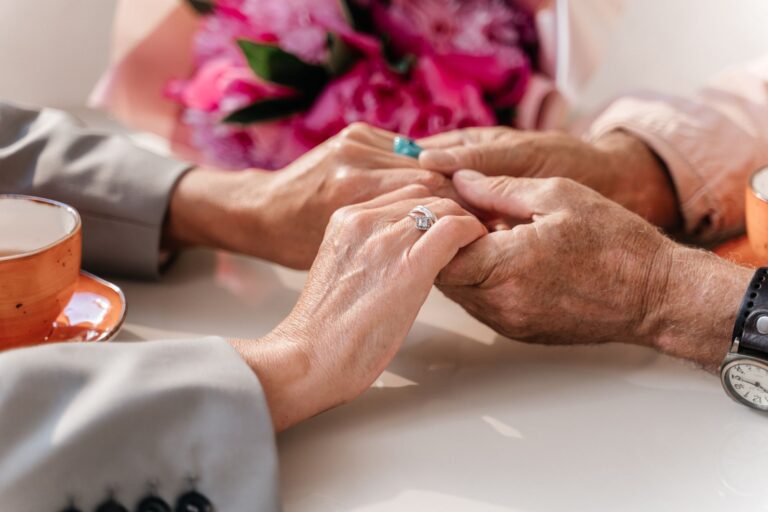
Physical touch interventions, such as hand massage, significantly reduce agitation levels for at least an hour afterward and lower pain intensity in older adults with dementia. Unlike verbal reassurance or memory-based comfort ("Remember, you're safe at home"), touch communicates safety directly through the body. For individuals in advanced stages who become nonverbal, touch may be the only means of reciprocal communication—a gentle hand squeeze or familiar voice creates comfort even when the person cannot explain why.
The emotional bond persists independently of memory. A goodnight ritual does not require your care partner to remember yesterday's kiss; it works because the familiar gesture registers as belonging and care in the moment. Hand massage interventions have been found to deepen emotional bonds between family caregivers and individuals with dementia, suggesting that consistency matters more than complexity.
Evening Confusion and Sundowning—When Connection Is Hardest
Most people with dementia struggle at bedtime. Approximately 70% experience significant sleep disruptions, including difficulty falling asleep, fragmented sleep, and confusion upon waking, all of which increase anxiety. Sundowning—increased confusion, agitation, and anxiety typically between 4:00 PM and 8:00 PM—affects 2.5–66% of individuals with dementia, making evening the most volatile time of day.
This is precisely when a familiar ritual becomes most protective. Evening chaos is not a personal rejection; it is a neurological symptom. A consistent, calm goodnight routine addresses both the behavioral turbulence and the isolation that aggravate it.
How Routine Creates Calm When Memory Cannot
Establishing predictable evening sequences—including calming activities, familiar objects, and the same sequence performed nightly—helps dementia patients' automatic behaviors remain intact longer than recent memory, reducing the cognitive demand of bedtime transitions. The ritual becomes automatic, bypassing the confusion that random or novel bedtime patterns trigger.
A goodnight kiss works best when it is part of a repeating sequence: the same dimming of lights, the same transition to the bedroom, the same hand held, the same words spoken (if any), and the same final gesture. The repetition allows your care partner's brain to anticipate and settle, even if they cannot form new memories of the routine.
Your Emotional Presence Shapes the Outcome
Higher caregiver closeness is associated with lower aggression and fewer psychological symptoms in people with dementia, and people with dementia pick up on emotional cues from caregivers—when caregivers remain calm and reassuring during evening routines, patient anxiety levels decrease. Your tone, pace, and presence matter as much as the ritual itself.
This means your own composure is part of the intervention. If you approach bedtime rushed or frustrated, your care partner will sense it and likely escalate. A deliberate slowdown—moving unhurried, breathing evenly, speaking softly—telegraphs safety and signals that this is a moment of connection, not a task to rush through.
Practical Steps to Build Your Evening Ritual
Start small and consistent. A goodnight ritual can be as simple as a hand massage, a forehead kiss, a squeeze of the hand, or a gentle stroke of the hair—anything familiar and repeated nightly.
Pair it with environmental supports: keeping living spaces well-lit during late afternoon and early evening, using gradual transitions to dim lighting, and minimizing overstimulation significantly reduce evening agitation. Build the ritual in stages: The goodnight kiss or touch becomes a reliable promise: this moment, with this person, is the same every night. That constancy is what transforms a simple gesture into an anchor of connection in a life increasingly untethered by memory.
- Choose one consistent time (e.g., 7:30 PM every evening).
- Use the same sequence: calming music or quiet, movement to the bedroom, change into pajamas, and the same closing gesture.
- Perform it at the same pace each night—repetition is the engine, not speed.
- If your care partner resists, pause and return to a calmer moment; forcing physical contact defeats the purpose.
- Adjust only if the ritual stops working; then introduce a small change and hold it consistently for at least two weeks.
Frequently Asked Questions
What if my care partner becomes upset when I try to touch them at bedtime?
Resistance may signal overstimulation, pain, or the ritual being introduced too quickly. Scale back to a single, brief touch (e.g., a hand on the shoulder) and try only once per evening. Some people need verbal consent: "May I hold your hand?" Wait for a response, and respect a no. If distress persists, consult their healthcare provider to rule out pain or discomfort driving the resistance.
Does the ritual have to include a kiss, or can it be something else?
A kiss is one option, but the ritual can be any repeated, gentle gesture: hand massage, stroking the arm, a familiar phrase, sitting beside them in silence, or playing the same music. Choose what feels natural and what your care partner tolerates. The consistency matters far more than the specific form.
How long before the ritual makes a difference?
Some people show calm within one or two nights; others need two to three weeks of consistent repetition for the nervous system to register safety. Do not abandon the ritual after a few attempts. Dementia brains often need longer repetition to integrate new or modified routines.