Music practice is linked to lower dementia risk and suits limited mobility because listening, singing, and simple instruments can be done seated and socially. In 10,893 initially dementia-free Australian adults age 70 and older, those who always listened to music had 39% lower dementia risk than never, rarely, or sometimes listeners. Dementia risk reduction means lowering the chance of developing dementia, not preventing it. Mild impairment means early changes in memory or thinking that do not yet prevent daily life.
Medical information disclaimer: This article is for general educational purposes only and does not provide medical advice, diagnosis, or treatment. Always consult a physician or other qualified health professional about symptoms, medications, tests, or treatment decisions.
Table of Contents
- What did the large older-adult study find?
- Can music improve memory and thinking?
- How can you practice music seated?
- Where does the evidence stop?
What did the large older-adult study find?
People who always listened to music also had 17% lower risk of mild impairment over follow-up, according to the Monash University research record for the 2025 cohort study Monash University research record. The comparison group was people who never, rarely, or sometimes listened. Always listening was also linked to better global cognition and memory over time.
Often or always playing an instrument was linked to about 35% lower dementia risk, but not to significantly lower mild-impairment risk. People who both listened to and played music had 33% lower dementia risk and 22% lower mild-impairment risk. Listening showed the broadest pattern across dementia, mild impairment, memory, and global thinking.
Can music improve memory and thinking?
A 2025 systematic review and meta-analysis found music-based programs improved global cognition, memory, and executive function in cognitively normal older adults, according to the review in Frontiers in Psychology 2025 review in Frontiers in Psychology. Executive function means planning, switching tasks, and controlling attention. Attention itself did not improve significantly.
For people already living with memory loss, music therapy can foster engagement, reduce agitation, and support memory recall. Familiar songs often help reconnection to memories and relationships. That makes music useful both before diagnosis and during care.
How can you practice music seated?
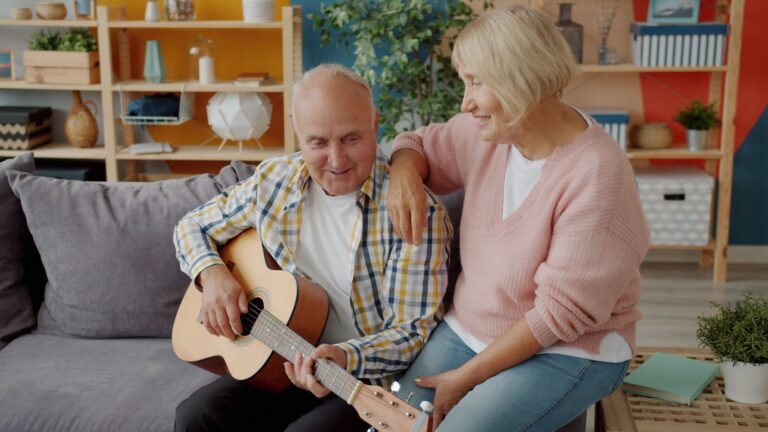
Regular listening, singing, clapping, and simple instruments can be done seated and with others. That combination brings cognitive, auditory, and social stimulation without walking, balance work, or travel.
Start with short sessions, a comfortable chair, safe volume, and music the person enjoys. Add one social session each week when possible, in person or by video. Benefit is lower risk, not guaranteed prevention, as described in the Alzheimer's Association report on 2026 WHO guidance Alzheimer's Association report on updated WHO guidelines.
- Listen daily to familiar favorites, with full attention rather than background sound.
- Sing along, clap rhythms, tap feet, or hum during choruses.
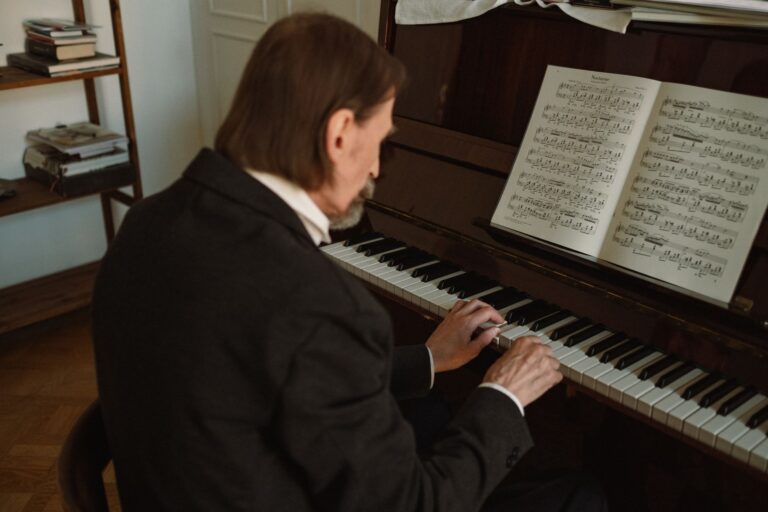
- Try an easy seated instrument such as ukulele, keyboard, harmonica, hand drum, or shaker.
- Join a choir, music group, class, or weekly listening session for social contact.
Where does the evidence stop?
The cohort results show observational links, not proof that music prevents dementia, according to the Harvard Health Publishing summary of the October 2025 study Harvard Health Publishing summary. Habits were self-reported. People who engage with music may also have healthier lifestyles, more education, better hearing care, or more social contact.
That means music is one part of a brain-healthy routine, not a substitute for medical care. Keep regular checkups, hearing checks, physical activity as able, blood-pressure control, sleep, and social connection. Choose the music habit you will repeat weekly and track whether mood, sleep, attention, or social time improve.