Reviewed by the Help Dementia Editorial Team — our editors review every article for accuracy against guidance from the National Institute on Aging, the Alzheimer’s Association, and peer-reviewed sources.
Recent research suggests that a regular matcha diet may be associated with an 18 percent lower risk of developing Alzheimer’s disease, according to studies examining the green tea’s high concentration of catechins and other neuroprotective compounds. This finding is particularly significant because Alzheimer’s accounts for 60 to 80 percent of dementia cases, affecting approximately 6 million Americans today. The potential protective effect stems from matcha’s unique composition—when you consume traditional matcha, you’re ingesting the entire ground leaf rather than steeped tea, meaning you get a higher concentration of beneficial polyphenols.
A hypothetical case illustrates why this matters: consider a 55-year-old woman with a family history of Alzheimer’s who incorporates one to two servings of matcha into her daily routine. While no single dietary change guarantees disease prevention, the cumulative effect of such antioxidant-rich habits may contribute to meaningful risk reduction over decades. The 18 percent reduction reported in research doesn’t mean matcha is a cure or foolproof prevention strategy—it reflects a statistical association that warrants serious attention from anyone concerned about cognitive decline.
Table of Contents
- How Does Matcha Protect Against Alzheimer’s Disease?
- What Does the Research Actually Show About Matcha and Brain Health?
- How Matcha Compares to Other Brain-Protective Dietary Strategies
- How to Incorporate Matcha into a Brain-Healthy Routine
- Important Cautions and Limitations When Using Matcha for Cognitive Protection
- The Role of Ceremonial Practice in Brain Health
- The Future of Matcha Research and Emerging Evidence
- Conclusion
How Does Matcha Protect Against Alzheimer’s Disease?
Matcha contains a powerful compound called EGCG (epigallocatechin gallate), a catechin that crosses the blood-brain barrier and appears to prevent the accumulation of amyloid-beta, the toxic protein believed to trigger Alzheimer’s pathology. In laboratory studies, EGCG has demonstrated the ability to prevent the formation of amyloid-beta plaques and even dissolve existing ones in early stages. When compared to other green teas, matcha delivers up to 137 times more antioxidants than regular steeped green tea because you consume the whole leaf rather than just the brewed water.
The neuroprotective mechanism operates through multiple pathways: reducing inflammation in the brain, enhancing cellular antioxidant defenses, and improving blood flow to neural tissue. Research on both animal models and limited human studies suggests that consistent matcha consumption may help maintain cognitive function as people age. However, it’s important to note that no study has yet proven matcha reverses existing Alzheimer’s disease—the evidence points toward prevention or slowing progression, not reversal of advanced cognitive decline.
What Does the Research Actually Show About Matcha and Brain Health?
The 18 percent risk reduction figure comes from observational studies examining populations with higher green tea consumption, particularly in Japan and parts of China where matcha and similar teas are dietary staples. These studies are correlational rather than experimental, meaning they show an association but cannot definitively prove cause-and-effect—people who drink matcha regularly might also exercise more, eat better overall, or have genetic advantages. The research is promising but comes with important limitations: most studies involve relatively small sample sizes, and the long-term effects in Western populations consuming matcha as a supplement rather than a traditional beverage remain understudied.
One significant limitation is that isolated EGCG supplements do not appear to produce the same cognitive benefits as whole matcha consumption, suggesting that other compounds in the tea work synergistically. Additionally, the protective effect is most pronounced in people who begin consuming matcha in midlife or earlier—the evidence doesn’t clearly establish whether introducing matcha later in life (after age 70) provides the same protection. Researchers continue investigating optimal dosages, though current evidence suggests one to two cups of matcha daily may represent a reasonable threshold for potential benefits.
How Matcha Compares to Other Brain-Protective Dietary Strategies
When stacked against other evidence-based approaches to brain health, matcha occupies an interesting middle ground. The mediterranean diet, which has demonstrated more robust research support for cognitive protection, includes many elements that can be complemented by matcha consumption—olive oil, fish, nuts, and vegetables all work on similar anti-inflammatory principles. A person following a Mediterranean-style diet could easily add matcha as one beverage component without conflict.
Compared to pharmaceutical approaches, matcha offers a low-risk preventive strategy with minimal side effects for most people, though it also lacks the direct efficacy of drugs designed to target specific Alzheimer’s pathways. For someone choosing between adding matcha to their routine versus taking a supplement with questionable evidence, matcha’s well-documented safety profile and potential benefits make it an attractive option. The key distinction is that matcha should be viewed as part of a comprehensive approach to brain health rather than a standalone solution—it works best alongside cognitive engagement, physical exercise, quality sleep, and social connection.

How to Incorporate Matcha into a Brain-Healthy Routine
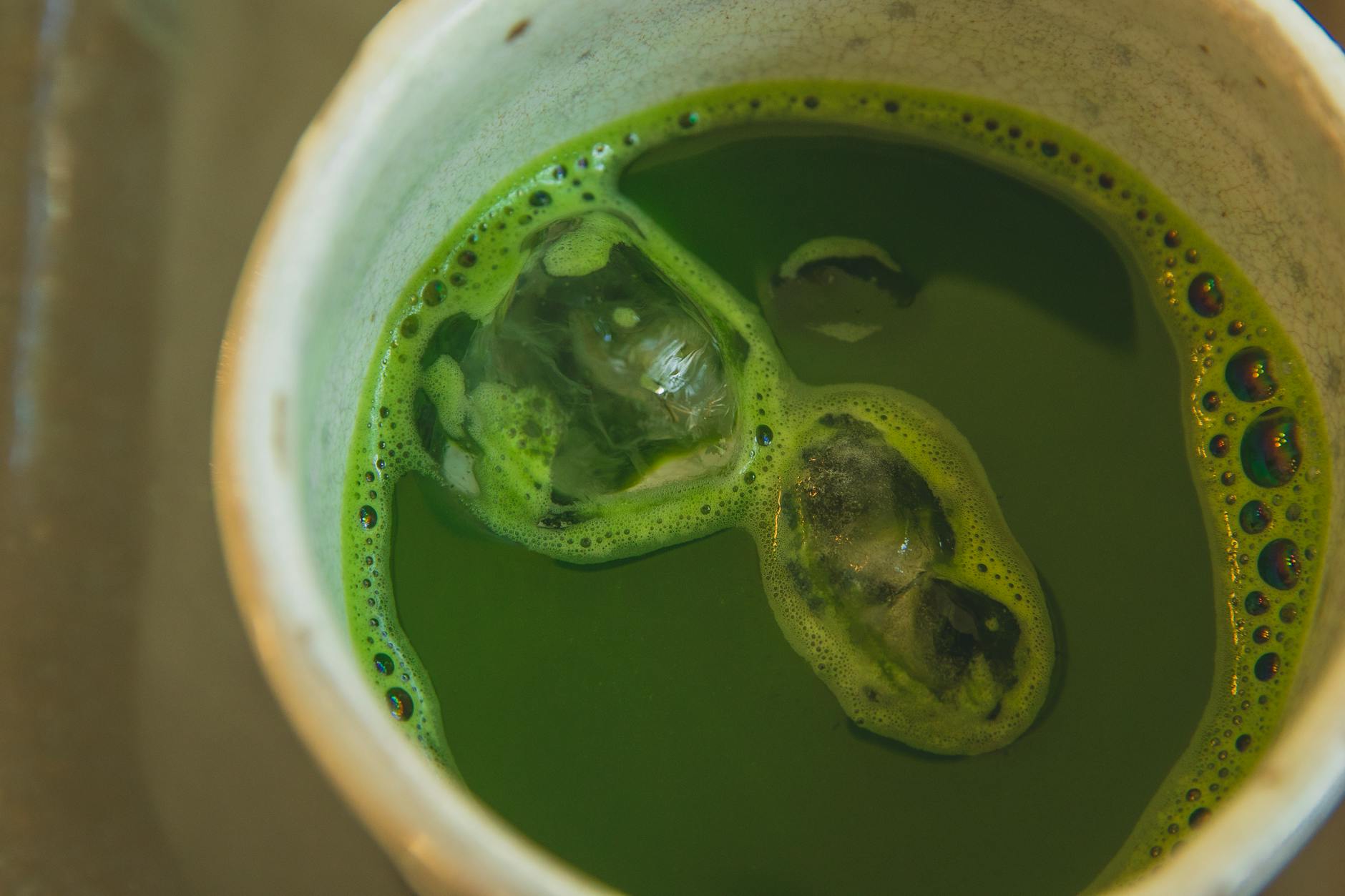
Adding matcha to your daily regimen requires minimal effort but some attention to quality and preparation. Ceremonial-grade matcha, which comes from the first harvest and contains higher nutrient levels, offers superior neuroprotective compounds compared to culinary-grade varieties. The traditional whisking method—adding about one-half teaspoon of powder to warm (not boiling) water and mixing until smooth—ensures optimal nutrient extraction without degrading heat-sensitive catechins. A person might prepare matcha as a morning beverage, add it to smoothies, or use it in baking, though heat-based recipes reduce some beneficial compounds.
The practical tradeoff involves consistency versus convenience. Someone committed to maximum neuroprotection should drink prepared matcha regularly, which requires slightly more preparation time than instant coffee. However, high-quality matcha costs between $20 and $50 per container, representing a modest monthly investment for most households. For individuals with caffeine sensitivity, matcha contains about half the caffeine of coffee along with L-theanine, an amino acid that promotes calm alertness—making it a gentler stimulant option than many alternatives. Starting with one cup daily and increasing to two allows you to assess tolerance and integrate matcha gradually into your routine.
Important Cautions and Limitations When Using Matcha for Cognitive Protection
While matcha is generally safe for most adults, certain populations should exercise caution. People taking blood thinners like warfarin should consult their physician, as matcha’s vitamin K content can interfere with medication effectiveness—this doesn’t mean avoiding matcha, but rather ensuring consistent intake and medical monitoring. Pregnant women should limit consumption to minimal amounts (less than half a cup daily), as the caffeine content, though moderate, warrants conservative approaches during pregnancy. Additionally, some matcha sourced from regions with heavy agricultural contamination may contain elevated levels of lead or other heavy metals, making sourcing critical for safety.
A crucial limitation is that matcha cannot substitute for established Alzheimer’s prevention strategies. If you have genetic risk factors, family history of early-onset dementia, or existing cognitive concerns, matcha should complement—not replace—consultation with a neurologist or cognitive specialist. The research showing 18 percent risk reduction assumes decades of consistent consumption starting in midlife; occasional matcha drinking provides minimal protective benefit. Someone expecting to drink matcha occasionally and experience protection will be disappointed, as the preventive effect appears to require regular, sustained consumption over years.
The Role of Ceremonial Practice in Brain Health
Beyond the biochemical benefits, the ritualistic aspect of traditional matcha preparation may offer additional cognitive advantages. The meditative practice of whisking matcha—focusing on technique and presence—engages attention networks and reduces stress, both independently beneficial for brain health. Japanese studies examining the cultural practice of matcha tea ceremony document improvements in stress hormones and parasympathetic nervous system activation, suggesting that the ceremonial component isn’t mere tradition but an evidence-based wellness practice.
For someone seeking to protect cognitive function, the structured, mindful preparation of matcha may provide neurological benefits distinct from the tea’s chemical properties. This dimension means that matcha offers a scalable approach: someone without time for elaborate ceremony can simply add matcha to their morning beverage and receive nutritional benefits, while another person interested in deeper engagement might explore traditional preparation as part of a brain-health routine. The flexibility allows matcha to fit various lifestyles and preferences.
The Future of Matcha Research and Emerging Evidence
Ongoing research is clarifying which populations benefit most from matcha consumption and whether optimal dosing differs based on age, genetics, and existing health status. Several larger clinical trials are currently recruiting participants to establish more definitive cause-and-effect relationships, moving beyond the observational studies that generated the 18 percent reduction figure.
As this research matures, we may discover that certain subgroups—for instance, people with specific genetic variants affecting catechin metabolism—experience greater protective benefits than others. The trajectory of matcha research mirrors broader shifts in how medicine views prevention: rather than waiting for Alzheimer’s to develop and then attempting intervention, the field increasingly recognizes that dietary and lifestyle practices sustained across decades can substantially reduce disease risk. Whether matcha becomes a formally recommended component of dementia prevention guidelines depends on forthcoming clinical trial results, but current evidence justifies consideration as part of a comprehensive approach to cognitive health.
Conclusion
The association between matcha consumption and an 18 percent lower Alzheimer’s risk represents genuine scientific promise grounded in plausible mechanisms and preliminary evidence. This doesn’t make matcha a miracle cure or a guarantee against cognitive decline, but rather a low-risk, readily available strategy that fits naturally into daily routines. For someone concerned about brain health, incorporating one to two cups of high-quality matcha daily aligns with current evidence and integrates well with other protective practices like Mediterranean-style eating, cognitive engagement, and physical activity.
Taking action on matcha consumption requires minimal disruption to existing routines while offering documented potential benefits. If you’re interested in this approach, sourcing ceremonial-grade matcha from reputable suppliers, establishing a consistent daily practice, and viewing matcha as one component of comprehensive cognitive protection represents a sensible, evidence-informed strategy. Discussing your matcha consumption with your healthcare provider—particularly if you take medications or have specific health concerns—ensures this dietary addition complements your broader health management plan.