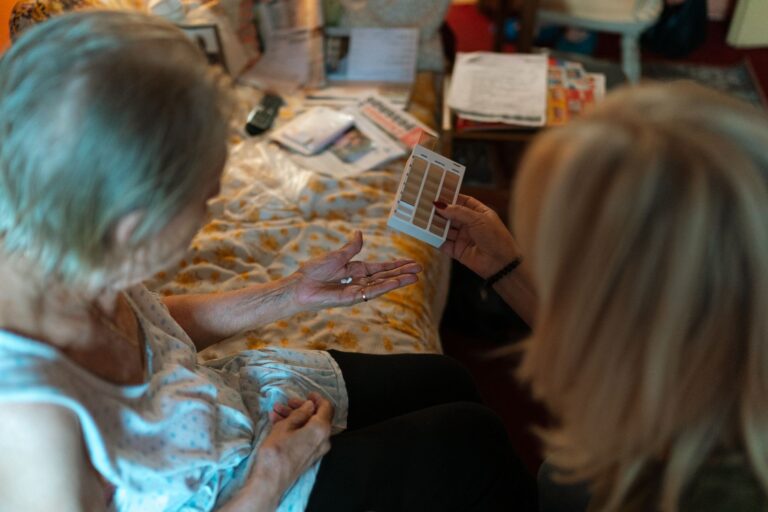
Therapeutic fibbing can sometimes be ethically defensible in dementia care, but only as an exceptional, person-specific way to reduce serious distress or protect safety—not as routine deception. For example, if a woman with advanced dementia repeatedly asks for her husband who died decades ago and relives the grief as fresh news each time, a caregiver might say, “He isn’t here right now, but you’re safe with me,” before redirecting her toward a familiar activity. There is no authoritative U.S. medical rule giving therapeutic fibbing a blanket approval or rejection.
It is not an FDA-approved treatment, drug, device, or standardized clinical intervention, so drug-style indications, eligibility requirements, formulations, and safety labels do not apply. The evidence comes primarily from ethics discussions, observational research, and caregiver-practice literature rather than clinical trials proving that deception improves patient outcomes. The ethical question is therefore not simply, “Is lying wrong?” It is whether a particular response respects the individual’s dignity, reduces avoidable suffering, and presents less risk than truthful correction, silence, validation, or redirection. A convenient falsehood that saves staff time is fundamentally different from a carefully limited response used after safer communication strategies have failed.
Medical information disclaimer: This article is for general educational purposes only and does not provide medical advice, diagnosis, or treatment. Always consult a physician or other qualified health professional about symptoms, medications, tests, or treatment decisions.
Table of Contents
- Is Therapeutic Fibbing Ever Okay in Dementia Care?
- Therapeutic Fibbing Is Not a Proven Dementia Treatment
- Dignity, Trust, and the Purpose Behind the Response
- What Caregivers Should Try Before Therapeutic Fibbing
- Distress May Signal Pain, Illness, or an Unmet Need
- Creating a Person-Specific Ethical Care Plan
- Reviewing and Documenting Therapeutic Fibbing in Practice
- Frequently Asked Questions
Is Therapeutic Fibbing Ever Okay in Dementia Care?
Therapeutic fibbing generally refers to giving an untrue or incomplete answer with the intention of reducing distress in a person living with dementia. Even that description is unsettled. A 2024 concept analysis in *Age and Ageing*, based on 37 papers, found no settled definition or consensus standard. It described the term as subjective, warned that it can damage trust and contribute to “othering,” and argued that it should be considered only as a last resort when truth-related distress cannot be resolved another way. A 2022 peer-reviewed review in the *Journal of Alzheimer's Disease* similarly characterized therapeutic lying as common but ethically unresolved.
The authors found no consensus about whether it is suitable or how it should be used, and called for more experimental research before legal or clinical protocols are established. Consider two responses to a man who insists he must leave a care residence to collect his children from school. Saying, “Your children are safe, and we can wait here together,” may ease a fear rooted in an earlier period of his life. Telling him, “The doors are locked because the police said you cannot leave,” invents authority and may create new fear. Both statements depart from literal reality, but their emotional effects and ethical risks differ sharply.
Therapeutic Fibbing Is Not a Proven Dementia Treatment
Calling a statement “therapeutic” does not establish that it produces a measurable health benefit. A 2025 ethnographic study in *Nursing Ethics* observed that therapeutic value is often asserted without evidence showing how that value is measured. The paper also reported that earlier research had not directly observed the impact of lies on people with dementia. A small 2021 staff-training study illustrates the limitation.
Seventeen long-term-care professionals participated in a workshop, but it did not change their attitudes, confidence, or self-reported use of therapeutic lying. All participating personal-support workers and 50% of the nurses reported using it. Those figures show that the practice existed among the respondents; they do not demonstrate reduced agitation, improved well-being, or other patient benefits. caregivers should therefore be cautious about treating a fib as if it were an evidence-based behavioral therapy. If a resident becomes quieter after being told that a nonexistent bus will arrive tomorrow, the immediate calm may be real, but it does not reveal whether the statement increased later confusion, waiting behavior, suspicion, or dependence on repeated deception.
Dignity, Trust, and the Purpose Behind the Response
The strongest ethical defense of therapeutic fibbing treats it as exceptional de-escalation directed toward the person’s safety and well-being. A 2021 bioethics analysis argues that diversion may be justified when it serves those aims. When it primarily benefits staff or care providers, however, it conflicts with person-centered care. Purpose matters because the same words can serve very different interests. Telling a frightened resident, “Your mother knows where you are,” might be intended to soothe someone who believes she is a young child lost from home.
Telling every resident, “Lunch is coming,” whenever they ask for assistance may simply postpone work and deny legitimate needs. The first response attempts to enter one person’s emotional reality; the second uses deception as a management shortcut. Trust remains a serious limitation. Some people with dementia retain enough memory and reasoning to recognize contradictions. A caregiver who repeatedly invents appointments, phone calls, or messages may eventually be viewed as unreliable. Deception can also become paternalistic when staff assume that a diagnosis automatically removes the person’s right to accurate information and meaningful choices.
What Caregivers Should Try Before Therapeutic Fibbing
First-line communication should emphasize listening, reassurance, calm speech, and redirection rather than argument. The National Institute on Aging advises caregivers to reassure the person that they are safe, listen to frustrations, speak calmly, and shift attention toward an activity or snack. These strategies address emotion without necessarily making a false factual claim. Suppose a man says, “I need to go home,” while sitting in the house where he has lived for years. Literal correction—”You are home, and I’ve told you that five times”—may intensify his distress. A validating response such as, “You’re missing the feeling of home.
What do you miss most?” can identify whether he wants comfort, familiarity, a particular person, or relief from an overstimulating room. The caregiver might then look through photographs, offer tea, or move with him to a quieter space. The tradeoff is that validation and redirection require patience and may not work immediately. A narrowly framed fib may occasionally cause less harm than repeated correction, particularly when the person cannot retain painful information and experiences each correction as a new trauma. Even then, the response should use the least deception necessary. “She isn’t here right now” generally creates fewer complications than an elaborate story about where a deceased relative has gone and when she will return.
Distress May Signal Pain, Illness, or an Unmet Need
Behavioral distress should prompt a search for causes, not an automatic fib. The NIA lists pain, depression or stress, constipation, sleep loss, medication effects or interactions, environmental overload, loneliness, and changes in routine among possible drivers of agitation. Caregivers are advised to discuss potential causes with a clinician. For example, a resident who repeatedly calls for a spouse may be lonely, but a person who suddenly starts pacing and shouting could be experiencing urinary symptoms, dental pain, constipation, a medication problem, or another illness.
Reassuring statements may temporarily suppress the visible behavior while leaving the underlying condition untreated. New or substantially worsened confusion deserves particular attention. The NIA's guidance on common medical problems in Alzheimer's disease notes that other illnesses can cause confusion and behavioral changes and advises caregivers to watch for signs of illness and inform a clinician. A fib should never be used to explain away a sudden change, severe pain, a fall, breathing difficulty, unusual drowsiness, or other possible medical problem.
Creating a Person-Specific Ethical Care Plan
Families and care teams can document situations in which truth causes recurring distress, the communication approaches already attempted, and the least deceptive response that appears to help. The plan should reflect the person’s history, culture, values, communication abilities, and previously expressed preferences. It should also specify when staff must stop redirecting and assess for pain, illness, medication effects, or environmental triggers.
The Alzheimer's Association's 2023 quality-care guide reports that people living with dementia wanted staff trained in subjects that included therapeutic fibbing so approaches could be tailored, alongside person-centered care and dignity. This is a staff-training topic rather than a blanket recommendation. One resident may be comforted by hearing that a deceased sibling is “safe,” while another may find any discovered deception humiliating or frightening.
Reviewing and Documenting Therapeutic Fibbing in Practice
When a fib is used, caregivers should record the trigger, the exact response, the person’s reaction, alternatives attempted, and any later effects. A useful note might read: “At 7:15 p.m., Maria asked to leave to meet her deceased mother and began crying. Staff validated that she missed her mother, reassured her that her family knew she was safe, and invited her to fold towels.
Crying stopped after five minutes; no further exit-seeking occurred during the shift.” That is more informative than writing, “Therapeutic lie effective.” Patterns should be reviewed because a response that once eased distress can lose its value or create a new problem. If Maria begins waiting by the door after being told that her mother will arrive later, the invented promise is increasing rather than relieving distress. Documentation should then direct staff to avoid that promise, assess evening triggers, and use the calmer response that does not predict a visit.
Frequently Asked Questions
Is therapeutic fibbing an FDA-approved dementia treatment?
No. It is not a drug, device, or standardized clinical intervention, so FDA approval, indications, formulations, eligibility criteria, and drug-style safety labeling do not apply.
Is redirecting someone the same as lying?
Not necessarily. Redirection changes the focus of the conversation or activity without requiring a false statement. Offering a snack or looking at photographs after acknowledging distress is different from inventing a detailed event.
Should a caregiver tell someone with dementia that a loved one has died?
The answer depends on the person’s cognitive abilities, preferences, circumstances, and response to the information. If the person can understand and retain the news, withholding it may compromise trust and autonomy. If the person repeatedly experiences the disclosure as entirely new and devastating, validation and a minimally deceptive reassurance may cause less harm.
Can therapeutic fibbing be used to make caregiving easier?
Staff convenience alone is not a sufficient ethical justification. Deception used mainly to obtain compliance, avoid answering requests, or compensate for inadequate staffing conflicts with person-centered care.
When should behavior changes be reported to a clinician?
New, sudden, or markedly worsened confusion or behavior should be reported, especially when accompanied by pain, fever, urinary symptoms, constipation, medication changes, unusual sleepiness, a fall, or other signs of illness.