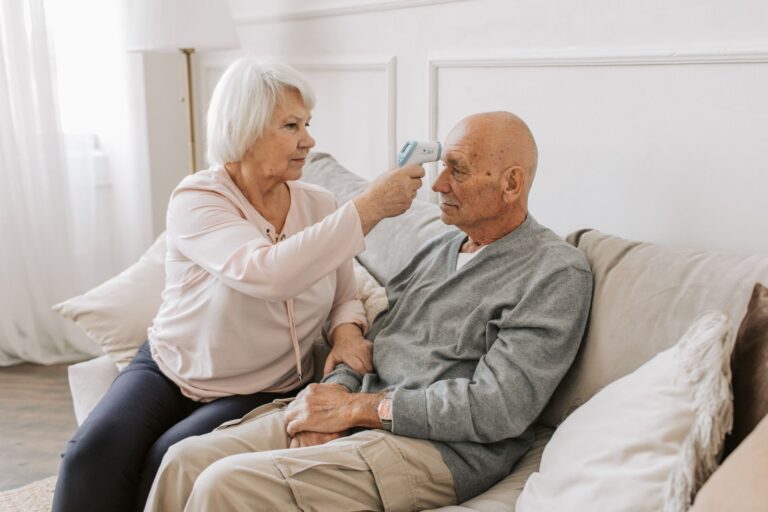
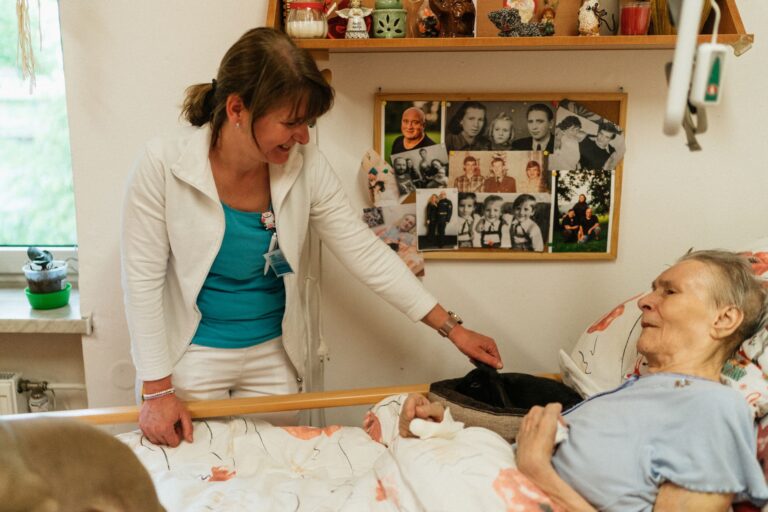
The most effective way to help a person with dementia speak at their own care meeting is to address them directly, ask one question at a time, and then hold the silence long enough for them to answer. Federal law backs this up: 42 CFR §483.21 requires nursing homes to include the resident, along with their representative, in developing the comprehensive care plan — so the person's seat at the table is a legal right, not a courtesy.
The harder part is what everyone else does in the pause. Family members and staff usually answer for the person out of kindness, to spare them embarrassment or keep the meeting moving. The evidence from communication research says that habit is exactly what shuts the person out, and that small, deliberate changes — pronouns, eye contact, a beat of silence — put the floor back in their hands.
Medical information disclaimer: This article is for general educational purposes only and does not provide medical advice, diagnosis, or treatment. Always consult a physician or other qualified health professional about symptoms, medications, tests, or treatment decisions.
Table of Contents
- Why the person gets talked over in the first place
- Address the person as "you," and look at them
- The pause is the whole technique
- Set up the room before the meeting starts
- When the person genuinely cannot answer
- Frequently Asked Questions
Why the person gets talked over in the first place
Care meetings are triadic: the person with dementia, a companion, and one or more professionals. Research on these three-way consultations, published in Research on Language and Social Interaction, found that people with dementia are often excluded from discussion earlier than their actual capacity warrants — sometimes even when their own diagnosis is being disclosed. The exclusion is rarely deliberate.
Word-finding takes longer in dementia, and a pause of a few seconds feels awkward in a professional meeting, so someone fills it. Once a companion has answered two or three questions, clinicians start directing everything to the companion, and the person becomes a topic rather than a participant. The same research found the reverse is also true: when a patient displays clear understanding, clinicians treat them as the primary decision-maker. How much the person gets to decide is shaped, turn by turn, by who answers.
Address the person as "you," and look at them
A 2024 conversation-analysis study by Jones and colleagues found that in medical appointments, addressing the person with dementia directly as "you" helps them respond, while talking about them in the third person — "how has she been sleeping?" — excludes them from the conversation. The study also found that gaze and gesture can override the words: a question phrased as "you" but delivered while looking at the daughter still hands the daughter the floor.
The Alzheimer's Association gives families the matching rule: speak to the person, not to their caregiver or companion, and do not interrupt unless the person asks for help. In a meeting, that means questions about the person's pain, sleep, food, and preferences go to them first, with eye contact, and go to the family only afterward for anything the person could not supply. If you are the family member, you can set this up before anyone speaks: sit beside the person rather than opposite them, and open with something like "Mom will answer for herself where she can — I'll fill in gaps after.".
The pause is the whole technique
Guidance from the National Institute on Aging is blunt about this: allow extra time for the person to respond, do not interrupt, and do not talk about them as if they are not there. The Alzheimer's Society adds a warning about what pressure costs: rushing a person to reply can stop them from even attempting to respond in future conversations. A pause that feels long to you is often just processing time to them.
Researchers have documented something called the "head-turning sign": a person with dementia who is asked a direct question may turn toward their companion, offering them the turn. The same study notes this shows turn-taking skills remain intact in early dementia — and it means a companion who stays silent for a beat, or gently says "you can tell them," leaves the answer with the person instead of taking it. Practical habits for the meeting itself:.
- Count silently to five (or longer) after any question before anyone else speaks.
- If the person turns to you, hold their gaze warmly and wait rather than answering.
- Rephrase rather than repeat — one shorter question, not the same one louder.
- Correct the record later, privately, instead of contradicting them at the table.
Set up the room before the meeting starts
The environment decides a lot before a word is said. The Family Caregiver Alliance's communication tips start with limiting distractions and noise — a quiet room, no TV, no hallway traffic — because a calm setting helps the person focus, find words, and answer for themselves. Ask for a small room and a time of day when the person is usually at their best, often mid-morning. Prepare the person, too.
Tell them the meeting is about their care, who will be there, and one or two things they might be asked. Bring their glasses and hearing aids; a missed question is indistinguishable from an unanswered one. The UK's NICE dementia guideline NG97 directs services to encourage and enable people with dementia to give their own views, using modified communication — visual aids, simplified written material — and an advocate where needed. If a facility runs its meetings in a way that makes the person's participation impossible, you can point to that standard and to the federal care-planning regulation and ask for adjustments.
When the person genuinely cannot answer
Direct address still matters in later stages, even when the answers thin out. Keep the questions coming to the person first — about comfort, food, music, who visits — and accept a gesture, a facial expression, or a single word as a real answer. Fill in the factual detail afterward, framed as adding to what they said rather than replacing it.
Never argue with an inaccurate answer in front of the team. Note it, let the moment pass, and give the correction to staff separately. The person leaves the meeting having been heard; the record still ends up right. If the person cannot attend at all, the care-plan regulation still requires their representative's involvement — but ask staff to gather the person's preferences beforehand, in a quiet one-to-one, and bring them into the room in the person's own words.
Frequently Asked Questions
Does a person with dementia have a legal right to attend their care-plan meeting?
In US nursing homes, yes. Federal regulation 42 CFR §483.21 requires the interdisciplinary team developing the comprehensive care plan to include the resident and their representative to the extent practicable.
What should I do when my parent turns to me instead of answering?
That head turn is an offer of the conversational turn, not an inability to answer. Wait a beat, keep the silence open, and the turn usually stays with them; answer only if they ask you to.
How long should the pause after a question be?
Longer than feels natural — several seconds at minimum. The Alzheimer's Society warns that pressuring a quick reply can discourage the person from responding at all in future conversations.