Reviewed by the Help Dementia Editorial Team — our editors review every article for accuracy against guidance from the National Institute on Aging, the Alzheimer’s Association, and peer-reviewed sources.
Tezspire safe sits at the center of this dementia and brain health question.
Tezspire is not intended to treat fever and chills—it’s a monoclonal antibody medication designed to control moderate-to-severe asthma. However, fever and chills can actually be side effects of taking Tezspire itself, which makes the question of safety more nuanced for older adults and particularly for those with dementia. The answer depends on whether you’re asking whether Tezspire can safely cause these symptoms, or whether it’s safe to continue taking if fever and chills develop.
For people with dementia, the situation becomes more complex. A person with cognitive decline may not clearly communicate that they’re experiencing fever or chills, and these symptoms can sometimes mask or be confused with behavioral changes related to dementia. Additionally, fever in older adults often signals a more serious infection than it would in younger people, so any fever during Tezspire treatment warrants prompt medical evaluation rather than assuming it’s a minor side effect.
Table of Contents
- What is Tezspire and Why Do Fever and Chills Matter?
- How Tezspire Can Cause Fever and Chills as Side Effects
- Special Considerations for People with Dementia Taking Tezspire
- Managing Fever and Chills While on Tezspire
- Drug Interactions and Other Safety Concerns
- When to Seek Medical Help
- Long-Term Safety and Monitoring
- Conclusion
What is Tezspire and Why Do Fever and Chills Matter?
Tezspire (tezepelumab) is a monoclonal antibody that works by blocking TSLP (thymic stromal lymphopoietin), a protein involved in inflammation. It was approved by the FDA in December 2021 for people aged 12 and older with moderate-to-severe asthma. The medication is administered as a subcutaneous injection once every four weeks, and it’s prescribed when other asthma controllers aren’t controlling symptoms adequately.
Fever and chills matter in the context of any medication because they can indicate your immune system is responding to something—either the medication itself or an infection your body is fighting. In older adults with dementia, fever is particularly significant because it can signal urinary tract infections, pneumonia, or other serious infections that may progress rapidly. Unlike younger adults who might recognize and report a fever, someone with dementia might simply become agitated, withdrawn, or more confused without the fever being identified as the root cause. This delay in recognition can lead to complications that could have been prevented with earlier intervention.
How Tezspire Can Cause Fever and Chills as Side Effects
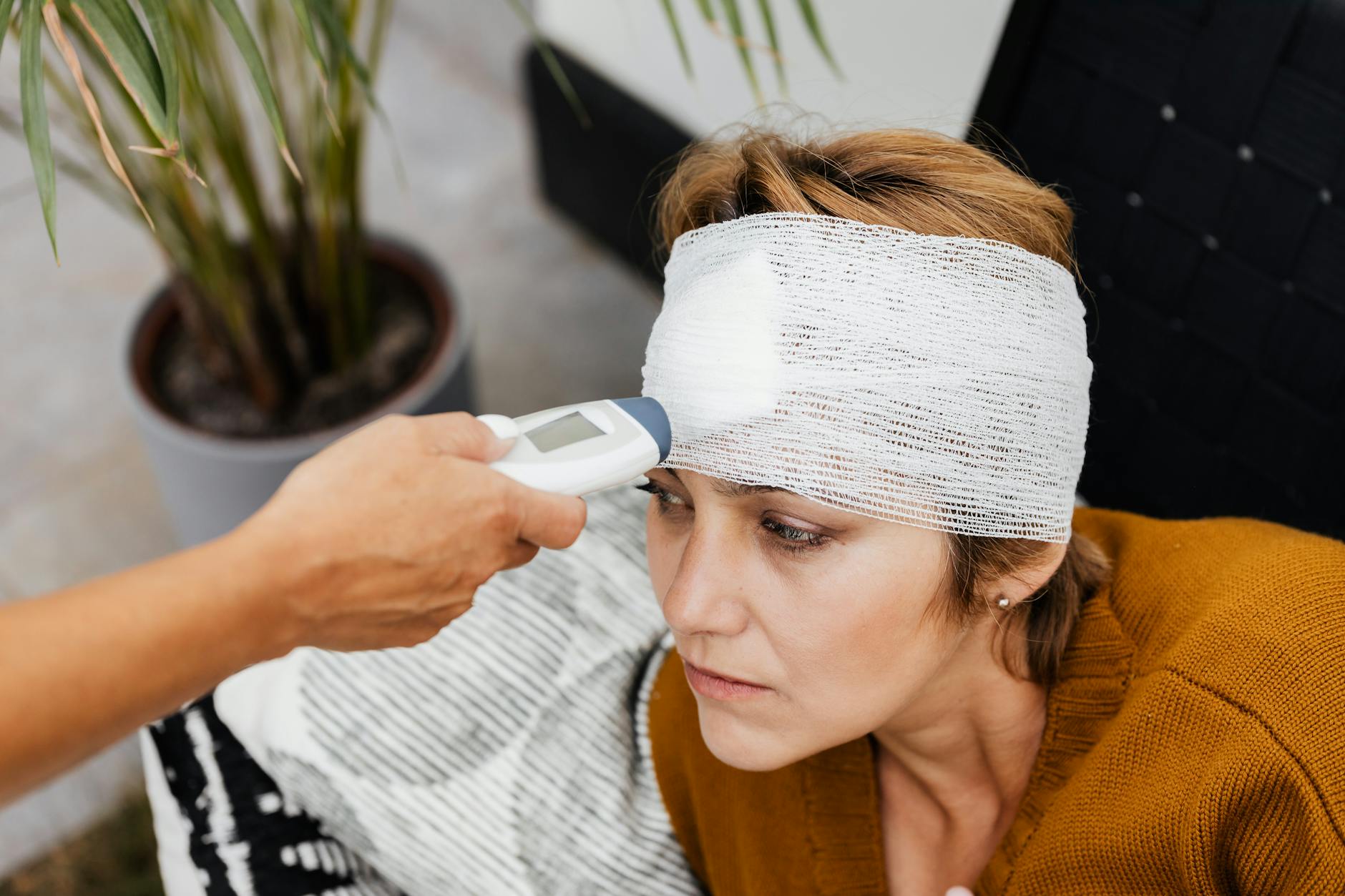
Clinical trials of Tezspire found that fever and chills can occur, though they’re not among the most common side effects. When fever does develop during Tezspire treatment, it typically happens in the first few days after an injection. The mechanism isn’t entirely clear, but it appears related to how the immune system reacts to the monoclonal antibody itself—a phenomenon sometimes called a “first-dose effect” or immune activation. For example, a 68-year-old woman in a clinical trial developed a low-grade fever (101°F) the day after her first Tezspire injection; it resolved on its own within 36 hours, and she had no fever with subsequent injections.
An important limitation to understand is that not all fever during Tezspire treatment is caused by the drug. A person on Tezspire can still develop infections like the flu or a UTI, and distinguishing between medication-induced fever and infection-related fever requires medical assessment. This distinction becomes harder when the patient has dementia and can’t clearly describe their symptoms. In older adults, fever from infection can appear much milder than in younger people—someone might have a UTI with only a temperature of 100.5°F rather than the 103°F you’d expect in a younger person. This makes it crucial to contact a healthcare provider whenever fever appears during Tezspire treatment, rather than waiting to see if it resolves on its own.
Special Considerations for People with Dementia Taking Tezspire
People with dementia face particular challenges when managing Tezspire and potential side effects like fever and chills. The cognitive decline means they may forget they received an injection, not understand why they’re experiencing symptoms, or become extremely distressed by physical discomfort in ways that are hard for caregivers to manage. A 72-year-old man with mid-stage Alzheimer’s disease developed chills and confusion after his second Tezspire injection; his family initially attributed the confusion to worsening dementia, not recognizing it as part of a medication reaction, and he didn’t receive appropriate symptom management for several hours. The relationship between Tezspire and dementia is worth examining carefully.
Tezspire works by reducing certain types of immune activation in the lungs. Some research suggests that chronic inflammation might play a role in cognitive decline, which theoretically could make Tezspire protective for brain health. However, there isn’t yet direct research on whether Tezspire impacts dementia progression. This means the choice to prescribe Tezspire to someone with dementia should be based on the urgency of controlling their asthma, not on any hope that it might help their cognition. For people with dementia and severe asthma, the benefits of better asthma control often outweigh the risks of fever or chills, but this decision should be made carefully with the healthcare team.

Managing Fever and Chills While on Tezspire
If someone on Tezspire develops fever or chills, the first step is always to contact their healthcare provider—this is especially true for older adults and those with dementia. Many people assume low-grade fevers will resolve on their own and try to manage symptoms at home, but this approach can be dangerous. For a patient with dementia, the family should describe any changes in behavior, activity level, appetite, or physical comfort to the doctor, since fever might present primarily as behavioral changes rather than the person reporting they feel hot.
For managing comfort while waiting for medical guidance, caregivers can use standard approaches: lightweight blankets for chills, ensuring the person stays hydrated, and keeping the room temperature comfortable. Acetaminophen can be given if the healthcare provider approves it, though it’s important to check whether it interacts with the person’s other medications—and particularly important to confirm the dose is appropriate for older adults, since dosing recommendations are sometimes different than for younger people. A comparison worth noting: while some fever medications are available over-the-counter, using them without checking with the asthma or primary care doctor first could mask an infection that needs antibiotics or other treatment.
Drug Interactions and Other Safety Concerns
Tezspire can interact with other medications in ways that complicate fever and chills management. If someone with dementia is also taking medications for cognitive symptoms (like donepezil or memantine), blood pressure medications, or pain relievers, there’s potential for interactions. For example, some pain relievers used to manage fever can interact with certain asthma medications. Tezspire itself doesn’t appear to have major interactions with most common medications, but the presence of fever itself changes things—many infections that cause fever also require antibiotics, and antibiotics can interact with other drugs the person is taking.
A significant warning is that fever and chills during Tezspire treatment could indicate a serious allergic reaction or a condition called anaphylaxis, though these are rare. Signs beyond just fever and chills would include difficulty breathing, swelling of the face or throat, or rapid heartbeat. Any combination of fever/chills with these symptoms requires immediate emergency care. For people with dementia, recognizing anaphylaxis is particularly challenging because they may not be able to communicate breathing difficulty clearly—caregivers should watch for gasping, wheezing, or changes in color of lips or fingernails in combination with fever.

When to Seek Medical Help
Clear guidance on when to contact a healthcare provider is essential for any family managing Tezspire in someone with dementia. If fever is 101°F or higher, contact the doctor the same day. If fever is 100.5°F to 101°F along with other symptoms like chills, confusion, difficulty breathing, or pain, also contact the doctor the same day rather than waiting.
If fever appears more than a week after the injection (most medication-related fever appears within the first few days), it’s more likely to indicate an infection unrelated to Tezspire, and it still warrants medical evaluation. Seek emergency care immediately if fever is accompanied by severe confusion beyond the person’s baseline dementia, inability to recognize family members, difficulty breathing, chest pain, or any sign of anaphylaxis. For someone with dementia, the baseline level of confusion is important context—if the person is suddenly more confused than usual, that’s a red flag even if fever is mild. The challenge for family caregivers is having a clear sense of what “baseline” looks like so changes are noticeable.
Long-Term Safety and Monitoring
For people with dementia who need to continue Tezspire for asthma control, the long-term safety approach involves regular monitoring and clear communication. At each office visit, the healthcare provider should ask whether fever, chills, or other side effects have occurred since the last injection. Keeping a simple log can help—noting the date of injection, any symptoms that appear within the first week, and how long they last. This record becomes invaluable if a pattern emerges (for instance, if someone always develops low-grade fever after the first injection but not after subsequent ones, the doctor might recommend giving fever-reducing medication prophylactically).
As Tezspire has been used more widely since its approval, the long-term safety picture continues to become clearer. Additional data on rare side effects, interactions, and long-term outcomes is still being gathered. For people with dementia taking Tezspire, the calculus includes weighing the risks of uncontrolled asthma (which can be life-threatening) against the risks of medication side effects. In most cases, managing asthma well improves overall health and possibly even brain function, since oxygen deprivation from asthma attacks is harmful to the brain. The goal is maintaining this balance while remaining vigilant about any new symptoms.
Conclusion
Tezspire is generally considered safe, but fever and chills can occur as side effects, particularly after the first injection. For people with dementia, safety depends on close monitoring, caregiver awareness of subtle symptom changes, and prompt communication with healthcare providers. The key is not assuming fever is minor or waiting to see if it resolves on its own.
If you or a family member with dementia is on Tezspire and develops fever or chills, contact your healthcare provider the same day for guidance. Keep clear records of when symptoms occur and what they look like, stay alert to behavioral changes that might signal fever in someone who can’t clearly report physical symptoms, and don’t hesitate to seek emergency care if fever is accompanied by other concerning signs. Managed carefully, Tezspire can provide important asthma control for older adults and people with dementia.
You Might Also Like
- Is Tylenol Cold Safe to Use for Reduced Taste?
- Is QNasl Safe to Use for Hoarse Voice?
- Is Aleve-D Sinus & Cold Safe to Use for Headache From Sinus Pressure?
For more, see CDC — Alzheimer’s and Dementia.