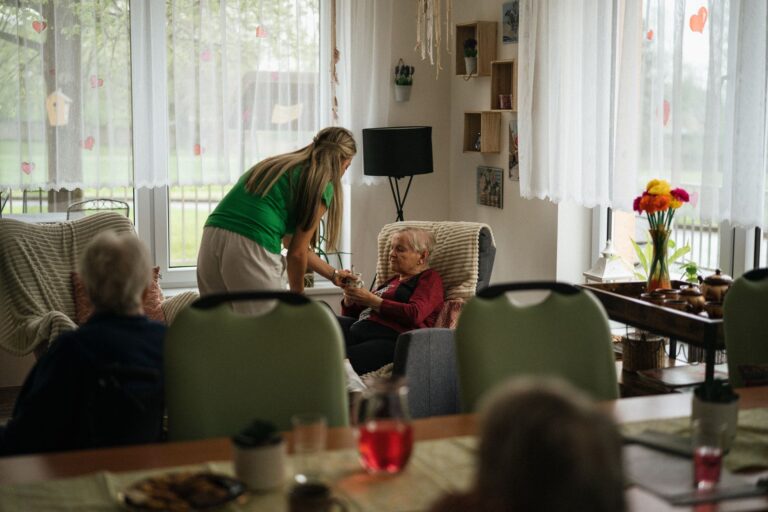
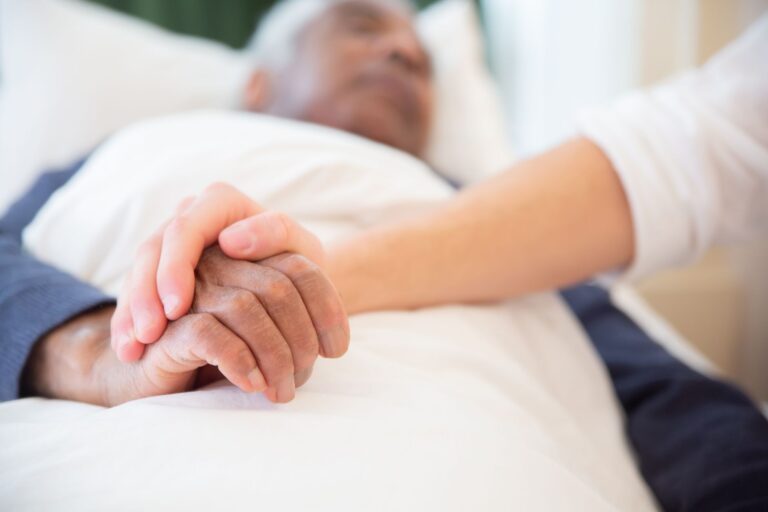
Technology in dementia care works best as a support system that enhances what human caregivers already do, rather than attempting to replace them. A monitoring system that alerts family members when a person with dementia hasn’t eaten since breakfast, for instance, enables the caregiver to respond more quickly and thoughtfully—but it’s the caregiver’s judgment, compassion, and presence that determines whether that meal is prepared with dignity, conversation, and attention to what the person actually wants. Technology extends the reach and precision of human care; it cannot and should not replace the relationship itself.
The reality is that dementia is fundamentally a condition of communication and connection. A person with advancing dementia needs consistency, reassurance, and genuine human presence. Technology’s proper role is to reduce the burden on the people providing that presence—freeing caregivers from routine monitoring tasks so they can spend more time actually present with their loved one, catching details that matter, and responding to emotional needs that no device can address.
Table of Contents
- What Specific Tasks Can Technology Handle in Dementia Care?
- Monitoring Systems and Their Limitations
- How Technology Can Ease Caregiver Burden
- Choosing the Right Technology for Your Situation
- Privacy, Data, and the Risks of Over-Monitoring
- Medication Management and Adherence Technology
- Smart Home Tools and Daily Living Support
- Frequently Asked Questions
What Specific Tasks Can Technology Handle in Dementia Care?
Technology is most valuable when it automates the repetitive, time-consuming work that pulls human attention away from direct caregiving. A medication reminder system sends a timed alert to the caregiver when it’s time for the 2 p.m. dose—something that would otherwise require the caregiver to manually track dosing schedules and remember to check. A door sensor alerts family members if a person with dementia, who has a history of wandering, exits the home at night. A glucose monitor automatically logs blood sugar readings, eliminating the need to manually write down numbers and calculate averages. These examples share a common feature: they handle information management and notification, not the actual care decisions.
The caregiver still decides whether to approach with firmness or gentleness, whether to redirect with humor or patience, whether the person might need a meal, a bathroom break, or just a moment to sit quietly. Technology gathers and flags information; humans interpret and act on it. In care communities and facilities, technology can also reduce the administrative overhead that pulls nursing staff away from residents. If a charting system is intuitive and quick, nurses spend less time on documentation and more time at the bedside. If a call system is responsive, residents experience shorter waits when they need assistance. The time saved by better systems is time reclaimed for the care itself.
Monitoring Systems and Their Limitations
Motion sensors, bed occupancy monitors, and activity trackers offer a form of continuous awareness that human caregivers, no matter how dedicated, cannot maintain alone. A pressure-sensitive mat under a bed can alert a caregiver if someone is attempting to get up at 3 a.m.—critical information for preventing a fall. A wearable device can track how much a person is moving, sleeping, and eating, providing objective data that supplemental to what a caregiver observes during visits. But monitoring has clear limitations, and misunderstanding those limitations can actually harm care. A high number of false alerts from a wearable device (for example, registering “activity” when the person is actually resting) can lead caregivers to ignore alerts entirely, a phenomenon called alert fatigue.
An over-reliance on numerical data—the system says she’s moving 20 percent less than yesterday—can obscure important context: perhaps she’s simply having a quieter day, or perhaps she’s coming down with an infection that won’t show up in the data for another day or two. A caregiver who knows the person well and pays attention to subtle shifts in mood or behavior may spot something the numbers miss. Privacy and dignity also complicate monitoring. A motion-sensitive camera in a bedroom, even with good intentions, crosses into surveillance of intimate moments. Some monitoring tools gather data that ends up with companies and insurers. Caregivers must weigh the genuine safety benefits against the loss of privacy for the person being monitored, and that’s a human judgment, not a technical specification.
How Technology Can Ease Caregiver Burden
Family caregivers often face an impossible balancing act: maintaining their own health, work, and relationships while providing increasingly intensive hands-on care. Many experience depression, burnout, and financial strain. When technology can reasonably handle parts of the monitoring or routine task management, it can be genuinely life-changing for the caregiver. A caregiver who previously woke up multiple times a night to check on a loved one, or who called the care facility every few hours to ask questions that weren’t answered the first time, suddenly has more capacity for the care that requires presence and attention. Remote monitoring allows a family member who lives far away to stay meaningfully involved without having to call repeatedly or visit unexpectedly at odd hours.
Video call capabilities allow a grandchild to visit and read a story, rather than being unable to participate in caregiving at all. None of this replaces the person sitting with the individual; it enables more people to contribute in sustainable ways. The freedom technology creates matters. A spouse who relies on an incontinence monitor that alerts them when assistance is needed can rest more securely at night, reducing the chronic sleep deprivation that accelerates caregiver decline. A daughter who uses a remote calendar and reminder system can coordinate care responsibilities with her siblings without consuming hours to conversation and coordination. These are real improvements to the caregiver experience, and they cascade into better care for the person with dementia.
Choosing the Right Technology for Your Situation
Not every piece of technology labeled “dementia care” will fit your situation or values. A wearable GPS tracker might be essential for someone prone to wandering, irrelevant for someone in late-stage care who is bedbound. A video call system is wonderfully useful for distant family members; it’s intrusive if the person with dementia becomes confused or distressed by seeing faces on a screen. A smart speaker that can call for help is practical if the person is reliable about speaking clearly; it’s frustrating if their speech has become slurred or unintelligible. Before purchasing or implementing a technology, ask whether it solves a specific, real problem in your care situation—not a hypothetical one or a problem the marketing copy tells you that you should have.
Does the person actually need a reminder, or do they forget only occasionally and respond well when reminded in person? Is safety monitoring the priority, or is independence and normal activity? What happens if the technology fails or the battery dies? How steep is the learning curve, and who is going to learn it and troubleshoot it? Also consider the cost-to-benefit ratio honestly. Some technology is expensively marketed to families who are anxious and vulnerable. A sophisticated remote monitoring system costs several hundred dollars per month but provides only modest advantages over a simpler, lower-cost alternative combined with regular phone check-ins. A specialized bed or chair designed for dementia care might be worth the expense for safety reasons, or it might be an unnecessary luxury that strains a family’s finances. The most important care tool—a caregiver who is rested, supported, and able to be present—cannot be purchased; it must be protected.
Privacy, Data, and the Risks of Over-Monitoring
As dementia care technology proliferates, so does data collection. A home monitoring system might log when someone enters different rooms, how long they spend in the bathroom, whether they’re eating regular meals. A wearable device records heart rate, location, movement patterns. Companies developing these tools have financial incentives to collect, retain, and sometimes sell this intimate information. Health insurance companies have begun expressing interest in this data, raising the specter of higher premiums or denial of care based on a continuous record of decline. There’s also a more subtle risk: that constant monitoring creates a false sense of control. A daughter who can see real-time data from a motion sensor in her parent’s home might believe she’s ensuring safety, when in fact she’s simply observing outcomes after they occur.
A fall still happens; the technology just alerts her to it. The illusion of continuous surveillance can paradoxically reduce meaningful engagement—checking a screen feels like caregiving, but it’s not the same as actual presence. Families should read privacy policies for any monitoring tool and understand where data goes. Some devices allow you to store data locally on a hub in your home; others require uploading to a cloud service where it’s stored with the company indefinitely. Some require you to grant permission for the company to sell or share anonymized data with researchers; others explicitly exclude that. And remember that no technology company is truly secure against hacking; data breaches happen. For a person with dementia, a breach that exposes location data or intimate behavioral patterns is not merely inconvenient—it’s a violation of autonomy they can no longer advocate for themselves.
Medication Management and Adherence Technology
One of the more straightforward applications of technology in dementia care is medication management. Automatic pill dispensers, often called compliance aids, hold several days’ worth of medications in pre-sorted compartments that light up and sound an alarm when it’s time for the next dose. The caregiver needs only to verify that the person has taken the contents of the compartment, rather than having to organize pills each day or remember what was given when. These systems reduce medication errors, which are common and dangerous in dementia care: skipped doses, double doses, or wrong medications taken because the person with dementia, or even a tired caregiver, made a mistake.
Some advanced versions can alert a caregiver via text or app if a dose is missed. For people living alone or in facilities with high turnover staff, this kind of automation can be genuinely critical for safety. The downside is the cost—these devices range from $50 to $300 or more—and some require a subscription service to send alerts. For a person on many medications who lives in a facility, the cost may be justified; for someone taking a few routine medications with a reliable caregiver present daily, simpler methods might suffice.
Smart Home Tools and Daily Living Support
Smart home technology—voice-activated speakers, smart lights, temperature controls—can be adapted to support people with dementia in familiar home environments. A light that turns on automatically in the morning can help signal the start of the day to someone whose circadian rhythm is disrupted. A smart speaker that responds to voice commands to call for help, play music, or set reminders removes the need to navigate a complex device. Automatic door locks that unlock for a caregiver’s keypad code prevent the scenario where a person with dementia forgets to unlock the door, keeping them from being trapped inside.
However, these tools work best when they’re intuitive and don’t create new confusion. A person with moderate to advanced dementia may not understand why talking to a device brings results, may become frustrated when voice recognition fails, or may ask the speaker the same question repeatedly without retaining the answer. The technology works as support, not replacement: it’s one tool among many that the human caregiver uses to create structure, safety, and dignity. A smart light is helpful; a caregiver’s presence to help the person understand and use it is essential.
Frequently Asked Questions
Isn’t using monitoring technology a violation of someone’s privacy?
It depends on the person, the technology, and how it’s used. A monitoring system that genuinely prevents serious harm—like a GPS tracker for someone prone to wandering into traffic—may be worth the privacy tradeoff. But constant video surveillance of intimate moments, or data collection that the person is unaware of, crosses into violation. The best approach is to disclose what monitoring is in place and why, involve the person in the decision if they’re able, and use the least intrusive tool that actually solves the problem.
Can technology replace a nursing home or assisted living facility?
Not completely. Technology can support a person with dementia to remain at home longer, or can reduce the intensity of care needed. But at advanced stages, the physical demands of care—bathing, toileting, preventing pressure sores, managing behavioral crises—usually require human presence. Technology is a supplement to hands-on care, not a substitute for it. It can also make care at home safer and more manageable, which is valuable for families who want that choice.
What’s the biggest risk of using too much technology in dementia care?
The biggest risk is that caregivers become reliant on data and monitoring systems and lose touch with direct observation and intuition. A caregiver watching numbers on a screen is not present with the person. Technology works best when it automates the routine so that human attention can focus on what matters most: connection, safety, and responsiveness to emotional needs.
Is technology more expensive than hiring additional human care?
Generally, yes. A high-quality monitoring system might cost $200 to $400 per month. A home care aide costs $15 to $25 per hour, often 4-6 hours per day or more for someone needing significant help. Technology can reduce the hours of care needed, but it won’t eliminate the need for human presence. The best approach often combines modest technology use with strategic hiring of help for the tasks that are genuinely dangerous or physically demanding.
How do I know if a piece of dementia care technology is actually useful?
Ask whether it solves a specific problem you actually have, not a problem the company’s marketing suggests you should have. Test it with a small investment or trial period if possible. Talk to other caregivers who use it. Most importantly, observe whether it genuinely gives you more time and energy to spend with the person you’re caring for—that’s the measure of whether it’s truly supporting your care.