Hospital stays pose unique challenges for people with dementia because the unfamiliar environment, disrupted routines, and frequent transitions between staff can trigger confusion, anxiety, and behavioral changes that complicate medical care. As a dementia caregiver, your role in ensuring safety goes beyond traditional patient advocacy—you become a bridge between your loved one’s needs and a medical system that may not fully understand how dementia affects their responses to hospitalization. The good news is that specific preparation and communication strategies can reduce complications, prevent falls, minimize medication errors, and help your loved one receive safer, more coherent care.
Most hospital safety problems for dementia patients stem not from negligence but from the gap between how medical staff expect patients to communicate and how dementia affects communication. A person with moderate dementia may nod along to discharge instructions they don’t understand, wander from their room looking for something familiar, or refuse medications because they don’t recognize the nurse giving them. When caregivers are aware of these patterns and prepared to advocate, incident rates drop measurably.
Table of Contents
- How Should You Prepare Before Hospital Admission?
- What Communication Strategies Work Best During a Hospital Stay?
- How Do You Prevent Wandering and Falls in a Hospital?
- How Can You Prevent Medication Errors?
- What Should You Know About Hospital-Acquired Complications?
- How Do You Manage Pain Assessment When Communication Is Limited?
- What Happens at Discharge and How Do You Prevent Readmission?
How Should You Prepare Before Hospital Admission?
Start preparation weeks before a scheduled procedure or as soon as possible after an emergency admission. Create a one-page “dementia care summary” that includes: current medications and dosages (critical because hospitals often enter drugs manually and miss interactions), communication preferences (does your loved one respond better to a calm voice, written notes, or family photos?), behavioral triggers (what activities or people upset them?), and daily routines that matter (favorite breakfast, when they nap, preferred bathroom times). Include a recent photograph and a simple description of their personality—this transforms them from “room 412” into a recognizable person in staff minds.
Ask the hospital which staff member will be your primary point of contact, and request that the same nurses work your loved one’s shift when possible. Staff continuity dramatically reduces confusion because your family member has fewer people to adjust to and fewer times they must re-explain their needs. If the hospital uses an electronic medical record system, ask whether you can add a note visible to all staff—something like “I have dementia and communicate better with simple sentences and visual cues”—so every nurse, aide, and technician sees it without you repeating yourself 20 times a day. One family reported that adding a laminated photo of their mother’s grandchildren to the hospital bed rail reduced her agitation by roughly half because she had an anchor to what mattered to her.
What Communication Strategies Work Best During a Hospital Stay?
Hospital staff are trained to explain tests and procedures to patients, but the explanations often happen once, quickly, to multiple patients in a row. If your loved one has dementia, a single explanation may not stick—they may forget within minutes that they’re scheduled for imaging and panic when technicians come to move them. Develop a system: ask the doctor or nurse to write the procedure name and time on a whiteboard at the patient’s bedside, draw a simple picture if needed, and have a staff member explain it again right before it happens. Repetition without pressure works better than one detailed conversation.
Establish a sign system for communication needs that don’t require speech—a bell for pain, a card for “I need the bathroom,” a gesture for “I’m cold.” Some hospitals allow caregivers to stay overnight or visit continuously for dementia patients; if yours allows this, use those hours to reduce the amount of information your loved one must process from strangers. You can confirm their pain level, ensure they’re comfortable, and catch problems early. A limitation of this approach: caregiver burnout is real, and staying at the hospital every night for a week can exhaust you, making your judgment less sharp. Consider alternating nights with other family members or asking about daytime vigils if overnight stays aren’t sustainable.
How Do You Prevent Wandering and Falls in a Hospital?
Hospitals aren’t designed like homes—hallways look identical, bathrooms are in unexpected places, and patients often move at night when disorientation peaks. If your loved one wanders at home, they will likely attempt to wander in the hospital, creating serious fall risk. Alert the nursing staff immediately and ask about a bed alarm (a sensor that alerts staff if the patient tries to get up), a room closer to the nurses’ station, and a wristband that identifies them if they do leave the room. Some hospitals use door sensors that chime when a patient with dementia tries to exit, but this approach is controversial because it can feel like confinement—discuss it with your loved one’s doctor.
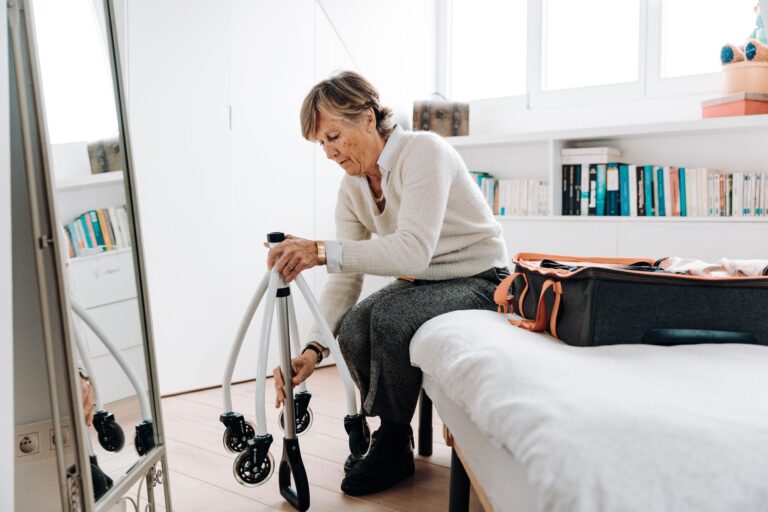
Ensure your loved one is wearing appropriate shoes (not socks, which are slippery on hospital floors) and that their room is clear of trip hazards—call cords, IV stands, and monitor cables are common fall culprits. Request that the hospital bring any mobility aids they use at home (cane, walker, rollator) so they have a familiar balance support. A real example: one man with moderate dementia was admitted after a fall at home and fell again in the hospital while reaching for the bathroom because his walker wasn’t brought from his room and he didn’t recognize the hospital layout. His second fall was preventable through better preparation. Check in daily about whether your loved one is actually using any mobility assistance offered—some people refuse devices they don’t recognize.
How Can You Prevent Medication Errors?
Hospital pharmacies dispense medications in pre-filled cups labeled with the patient’s name, which sounds foolproof but misses a critical dementia-specific problem: your loved one may not remember taking medications they’ve taken for years. They may take them twice (once from a cup, then again from a bottle they kept) or refuse them (not remembering why they need them). Ask if a staff member can watch your loved one actually swallow each dose, and confirm that all home medications are documented—medications from different doctors sometimes interact, and a hospitalist may not know about an over-the-counter supplement your loved one takes at home.
Request a medication printout at discharge that lists every drug, its purpose, and the exact dose. Hospital discharge paperwork is notoriously unclear and often differs from what was actually given; one caregiver discovered after discharge that her mother had been on a blood thinner in the hospital but wasn’t prescribed to continue it at home, creating a dangerous gap. Ask the pharmacist to explain the purpose and side effects of any new medications before discharge, not just the nurse. This takes 10 minutes and prevents misunderstandings about why a drug is needed or what to watch for.
What Should You Know About Hospital-Acquired Complications?
People with dementia are at higher risk for hospital-acquired infections (urinary tract infections from catheters, pneumonia from lying in bed), blood clots from immobility, and delirium (severe confusion distinct from baseline dementia). Some of these risks are unavoidable—a person truly too confused to move safely will develop clot risk—but many are preventable. Ask staff daily whether a catheter is still necessary (they’re often left in past their usefulness, creating infection risk). Encourage movement: even slow walks to the bathroom or sitting in a chair instead of lying flat reduce clot risk and pneumonia risk.
A significant limitation of hospital care for dementia patients: hospitals optimize for acute medical problems, not for preserving cognitive function. The disorientation, medication changes, routine disruption, and sleep deprivation from alarms and night-shift care can worsen dementia symptoms or trigger new behavioral problems that persist after discharge. This post-hospital delirium is sometimes called “hospitalization-induced decline,” and it’s not always reversible. To minimize it, ask staff to keep noise low, maintain consistent bedtimes, use familiar objects from home, and minimize medication changes unless medically urgent.
How Do You Manage Pain Assessment When Communication Is Limited?
Many people with dementia can’t tell you their pain level numerically—the classic 1-to-10 scale assumes reliable verbal memory and abstract thinking. Watch for behavioral signs: restlessness, aggression, refusing food, facial grimacing, and changes in sleep are often signs of pain. If your loved one suddenly becomes agitated in the hospital and they’re not usually agitated, pain is often the cause before dementia is blamed. Mention this observation to the nurse and ask for pain management, not sedation.
One caregiver’s father was given a sedative for “agitation” when the real problem was inadequate pain control from surgery; once pain medication was adjusted, the agitation stopped and he was actually more alert. Develop a pain communication system unique to your loved one: they might point to where it hurts, flinch when that area is touched, or use a word that means pain (some people regress to childhood language). Share this system with all staff. Pain management directly affects recovery—people in pain don’t move, eat, or heal well—so clear communication prevents cascade problems.
What Happens at Discharge and How Do You Prevent Readmission?
Hospital discharge is high-risk because your loved one is cognitively vulnerable after days in a strange place, they may have new medications or restrictions they don’t understand, and caregivers are often exhausted. Ask for a discharge meeting with the primary doctor, pharmacist, and a social worker or case manager before your loved one leaves—not a rushed handoff by a resident as you’re walking out. Clarify: what medication changes happened, what new conditions developed, what restrictions apply (can they shower? eat solid foods? drive?), and who to call if something goes wrong.
Get the discharge summary in writing and read it before your loved one is discharged, not after. Errors in summaries (wrong medication doses, missed allergies, incorrect contact numbers for follow-up) directly cause readmissions. Arrange a follow-up appointment with their primary care doctor within one week if possible—many readmissions happen because complications develop before a post-discharge check-in catches them. One woman with mild dementia developed a urinary tract infection three days after hospital discharge and was readmitted; earlier detection through a post-discharge visit might have caught it during an office call instead.
- —