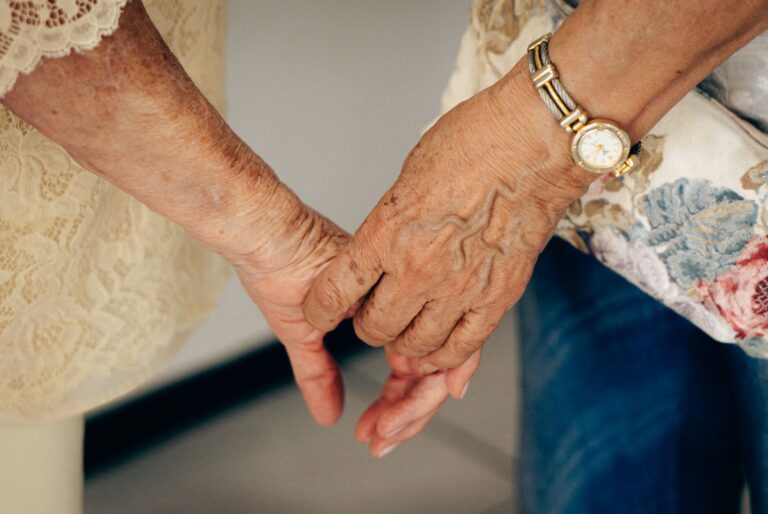
Care transitions—moving from one healthcare setting to another, or changing living situations, caregivers, or daily routines—represent a critical vulnerability for people with dementia. A person with dementia relies heavily on routine, familiar faces, and environmental consistency to maintain orientation and emotional stability. When that structure is disrupted, their cognitive and physical health can deteriorate rapidly. In the weeks following a transition, dementia patients face significantly higher rates of acute complications, hospital readmissions, behavioral crises, and accelerated cognitive decline than they do during periods of stable care.
One concrete example: An 78-year-old with mid-stage Alzheimer’s disease who spent three years in the same assisted living facility, cared for by the same morning and evening aides, was transferred to a hospital for a urinary tract infection. During the four-day hospital stay, he received care from different nurses each shift, was kept in a noisy room near the nursing station, and was given medications on an unfamiliar schedule. Upon discharge to a temporary rehabilitation center (because his family needed time to arrange his return), he became extremely agitated, refused to eat, and pulled out his IV twice. Within two weeks, he had lost the ability to recognize his own daughter’s voice on the phone. The infection itself was minor, but the transition nearly cost him his remaining functional abilities.
Table of Contents
- Why Does Cognitive Fragility Make Transitions So Dangerous?
- How Information Loss During Handoffs Creates Clinical Risk
- The Caregiver Relationship and Its Irreplaceable Role
- Managing the Practical Chaos of Medication and Routine Changes
- The Acute Behavioral Crisis During Care Transitions
- Hospital Readmission Cycles After Transitions
- The Acceleration of Decline in the Weeks After a Major Transition
Why Does Cognitive Fragility Make Transitions So Dangerous?
The dementia brain has already lost much of its capacity for adaptation and learning. Unlike a cognitively intact older adult who can tolerate a temporary stay in a new setting and eventually acclimate, a person with dementia cannot encode and retain new information about their surroundings. They cannot learn where the bathroom is in a new room, remember new staff members’ names or routines, or build confidence in an unfamiliar environment. Instead, a new setting feels perpetually threatening and disorienting, triggering fear, anxiety, and withdrawal.
This isn’t a behavioral problem—it’s a neurological reality. The hippocampus and prefrontal cortex, regions critical to memory formation and spatial orientation, are already damaged in Alzheimer’s disease and many other dementias. A transition doesn’t just inconvenience someone with dementia; it exhausts their already-limited cognitive resources as they struggle to process continuous novel stimuli. This cognitive exhaustion accelerates the progression of their underlying disease and increases their vulnerability to delirium, infection, falls, and other acute medical crises.
How Information Loss During Handoffs Creates Clinical Risk
Every time a person with dementia transitions between care settings, there is a documented risk of information loss. A hospital discharge summary may not capture that a patient becomes severely agitated if they see their own reflection in a mirror, or that they refuse medications if they’re offered by anyone other than their spouse, or that they have a lifelong phobia of bathrooms that surfaces when they’re confused. The rehabilitation center staff may not know that the patient has a standing order for behavioral medications that should be used only as a last resort because they cause dangerous falls. These gaps in information are not minor administrative oversights.
They directly lead to inappropriate care decisions. A staff member unaware that a patient cannot communicate verbally may misinterpret agitation as aggression and escalate to physical restraint. Another caregiver unaware that a patient has medication allergies may administer a contraindicated drug. A third may not know that the patient needs frequent reorientation and sundowning interventions, and instead interprets confusion as a reason to isolate the patient in their room. Each information gap creates an opportunity for harm.
The Caregiver Relationship and Its Irreplaceable Role
A familiar, consistent caregiver—whether a spouse, adult child, or long-term aide—becomes the person with dementia’s external memory and emotional anchor. This caregiver learns the patient’s nonverbal cues, preferences, triggers, and communication patterns that no one else understands. When a transition happens, the patient loses that person or sees them only briefly. New caregivers, however competent and well-meaning, cannot immediately provide the same sense of security. Research shows that dementia patients who maintain consistent caregiver contact during transitions have significantly better outcomes than those who don’t.
However, many transitions make this continuity impossible. A person admitted to a hospital cannot have their spouse present 24 hours a day. An adult child cannot take unpaid leave to accompany their parent through rehabilitation. A facility transfer may happen over a weekend when family cannot be present. The patient is left with strangers during the most vulnerable moment, and the psychological impact is profound and measurable—increased confusion, behavioral changes, faster decline.
Managing the Practical Chaos of Medication and Routine Changes
During transitions, medication lists often change, get duplicated, or are incomplete. A patient’s long-standing blood pressure medication might be discontinued in a hospital because of a drug interaction, but then restarted at a different dose when they transfer to the next setting. Behavioral medications might be added in a hospital to manage agitation caused by delirium, but then continued inappropriately in the next setting even after the delirium resolves. A medication the patient has taken for five years might not make it onto the discharge summary, and the next facility assumes it was discontinued for a reason. For a patient with dementia who cannot advocate for themselves or remember their medication history, these errors compound.
Additionally, the patient’s entire daily routine—meal times, bathing times, medication times, activity times—shifts during a transition. A person who has eaten breakfast at 7 a.m. for decades may be served breakfast at 8 a.m. in a new facility. A patient who always takes a walk in the morning may find themselves in a locked unit where walks are not offered. These routine disruptions trigger confusion and anxiety that further destabilize the patient’s condition.
The Acute Behavioral Crisis During Care Transitions
It is common and predictable for dementia patients to experience severe behavioral changes during or immediately after a transition. Agitation, screaming, refusal to eat or take medications, accusations, and physical aggression often emerge when a patient is moved to a new environment. Family members sometimes interpret these behaviors as signs of dementia progression or as evidence that the patient is “better off” in a facility. In reality, the behaviors are usually a response to fear, disorientation, and loss of control.
A significant limitation of facility care during transitions is that behavioral symptoms are often managed pharmacologically rather than environmentally. A patient who is agitated because they don’t recognize anyone around them may be given an antipsychotic medication to sedate them, rather than having consistent familiar faces present to provide reassurance. While medications can be necessary, over-reliance on them during transitions can mask delirium, cause dangerous side effects like falls or aspiration, and accelerate cognitive decline. The patient becomes quieter, but not actually safer or more comfortable.
Hospital Readmission Cycles After Transitions
Dementia patients discharged from hospitals have readmission rates that are two to three times higher than non-dementia patients. Much of this is driven by the chaos of the transition itself. A patient discharged with inadequate follow-up care, medication confusion, or caregiver stress is more likely to have a fall, infection, or acute medical event within weeks. They then return to the hospital, experience another transition, and the cycle continues. One stark example: An 82-year-old woman with vascular dementia went to the hospital for pneumonia.
She was discharged after five days to a skilled nursing facility she had never seen before, with a new medication for pain that she was allergic to according to family records—but the allergy was documented in a different hospital system. Three days later, she developed a severe rash and was readmitted to the hospital with anaphylaxis. The second hospital stay led to another facility placement. Within two months, she had been in three different facilities and had two more hospital admissions. Her cognitive and functional status deteriorated from mild-to-moderate dementia to severe dementia. The transitions themselves may have contributed more to her decline than her underlying disease.
The Acceleration of Decline in the Weeks After a Major Transition
Research tracking dementia patients through major care transitions shows measurable acceleration of cognitive and functional decline in the first 4-12 weeks after a move. A patient who had been stable in their cognitive abilities may lose several months of functional capacity in the weeks following hospitalization or facility placement. These losses are often permanent—the patient cannot regain abilities once they’ve been lost to transition-related decline. The mechanism appears to involve both the stress of the transition itself and the cumulative effect of delirium, medication changes, reduced activity, and caregiver inconsistency all occurring simultaneously.
A patient who becomes delirious during hospitalization may not fully recover their baseline cognition even after the delirium resolves. A patient who stops eating during a transition may develop malnutrition and weakness that takes months to recover. A patient who becomes withdrawn and depressed after repeated transitions may never regain interest in activities or social engagement. These changes are neurologically real, not simply behavioral or emotional preferences—they represent actual loss of brain function that compounds the underlying dementia process.