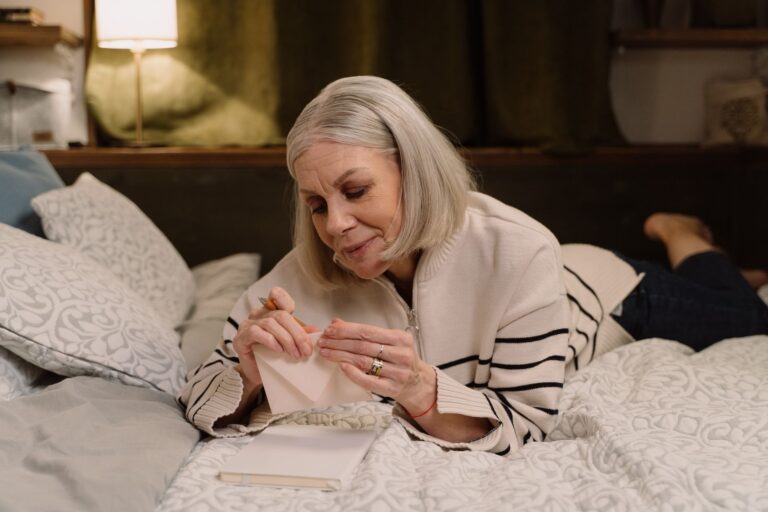
The "last loving message" cannot be reported accurately because no original message or identifiable couple was provided. Without names, a date, a diagnosis, or a source post, the claim that a husband shared his wife's final written message remains unverified. Dementia is an umbrella term for cognitive decline severe enough to disrupt daily life, not a normal part of aging. Alzheimer's disease is its most common type, according to the Centers for Disease Control and Prevention.
Medical information disclaimer: This article is for general educational purposes only and does not provide medical advice, diagnosis, or treatment. Always consult a physician or other qualified health professional about symptoms, medications, tests, or treatment decisions.
Table of Contents
- What remains unknown about the message
- Can dementia take away speech?
- Does a speech change prove dementia?
- How to communicate when words become difficult
What remains unknown about the message
The missing source makes it impossible to confirm what the wife wrote, when she wrote it, or whether it was her final message. There is also no reliable basis for describing her words as "loving," however plausible that description may sound. The claim about dementia requires equal caution.
No diagnosis or medical history identifies the type or stage of her condition. Readers should not treat the headline as a documented account or share invented wording as her message. This distinction protects both accuracy and dignity. A compelling story about memory loss can still mislead when its central people, quotation, and medical details cannot be traced.
Can dementia take away speech?
Dementia can affect speaking, understanding, reading, and writing, but the pattern differs by person and underlying cause. In Alzheimer's disease, someone may have trouble finding words, organizing thoughts, understanding language, or continuing a conversation. In later stages, the person may become unable to communicate, according to the National Institute on Aging.
That progression does not justify assuming the unnamed wife had Alzheimer's disease. Frontotemporal dementia can also cause difficulty producing or understanding speech. The phrase "took her speech" may describe a profound loss, but it leaves important questions unanswered. It does not explain whether speech disappeared gradually, which abilities remained, or what diagnosis clinicians made.
Does a speech change prove dementia?
No. Difficulty speaking or expressing thoughts can occur in dementia, but losing speech alone does not establish a diagnosis. Symptoms must be considered alongside the person's broader cognitive and daily functioning. Researchers are studying whether subtle speech patterns may help reveal early brain changes.
An NIA-described study of 238 cognitively normal adults associated slower speech and more or longer pauses with tau in certain brain regions. The finding makes speech a research signal, not a standalone diagnostic test, as the National Institute on Aging explains. Families noticing language changes should document concrete examples rather than assign a disease label. Useful observations include whether the person struggles to find words, understand questions, read, write, or follow a conversation.
How to communicate when words become difficult
Meaningful connection can continue even when spoken language declines. The goal is to reduce pressure and make it easier for the person to respond in whatever way remains comfortable.
Caregivers can: A written message may become especially precious to a family, but it should not be treated as the last evidence of the person's feelings. A glance, gesture, expression, or accepted touch can still carry meaning when a full sentence is no longer possible.
- Allow extra time for an answer.
- Offer short yes-or-no choices.
- Rephrase a question if it causes confusion.
- Avoid arguing over mistaken words or details.
- Watch facial expressions and other nonverbal responses.