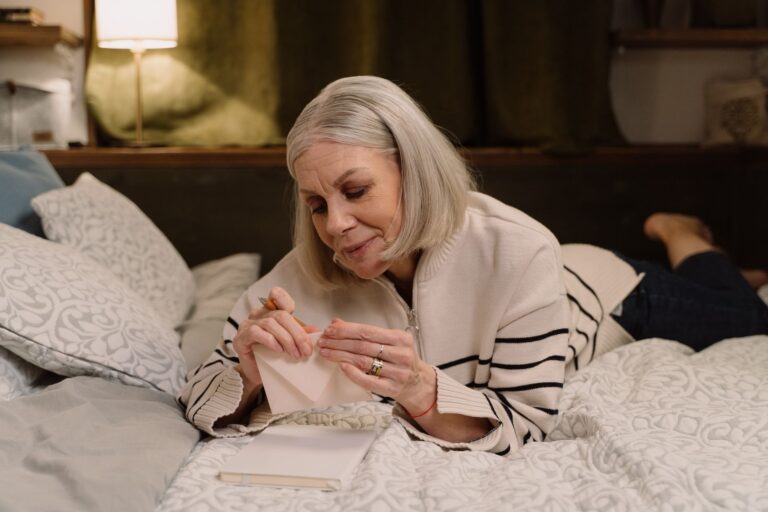
The granddaughter's shared note preserves the last handwritten message her grandmother could express before dementia limited her words. Because its wording and the family's identities are not provided here, those details should not be guessed or embellished. The note still carries meaning as a record of connection and change. It may also help families understand why language can fade unevenly—and why communication remains possible after writing becomes difficult.
Medical information disclaimer: This article is for general educational purposes only and does not provide medical advice, diagnosis, or treatment. Always consult a physician or other qualified health professional about symptoms, medications, tests, or treatment decisions.
Table of Contents
- What the handwritten message represents
- Why words may become harder to use
- When language changes need medical attention
- What current Alzheimer's treatments can—and cannot—do
- How to preserve a meaningful final note
What the handwritten message represents
A final note can hold a person's familiar handwriting, word choices, and affection in a form the family can revisit. Its importance comes from that personal connection, not from its value as medical evidence. The phrase "dementia took her words" expresses a family's experience.
It does not identify a disease, establish when impairment began, or show how quickly it progressed. Dementia describes problems with thinking, memory, reasoning, or behavior severe enough to disrupt daily life. It includes several diseases and is not a normal part of aging, according to the National Institute on Aging's dementia overview.
Why words may become harder to use
alzheimer's can make it difficult to find words, understand language, organize speech, read, or write. These changes vary by person and disease stage, as the National Institute on Aging's communication guidance explains.
A person may struggle to write a sentence but still respond to a familiar voice, facial expression, or gentle presence. Families should not treat reduced speech or writing as proof that the person has nothing to communicate. When conversation becomes difficult:.
- Ask one clear question at a time.
- Allow extra time for an answer.
- Avoid repeatedly correcting missing or mistaken words.
- Offer a pen, pictures, or simple choices without pressuring the person.
- Pay attention to gesture, expression, and tone.
When language changes need medical attention
A single misspelled word or forgotten name does not establish dementia. The relevant concern is a pattern of changes that interferes with ordinary tasks, relationships, judgment, or communication. Families who notice persistent changes can document concrete examples for a medical appointment.
Useful notes include what happened, when it began, whether it is worsening, and which daily activities have become harder. A clinician needs that broader history because dementia is an umbrella term, not one diagnosis. Alzheimer's is the most common dementia diagnosis among older adults, but language symptoms alone cannot determine the cause.
What current Alzheimer's treatments can—and cannot—do
Current disease-modifying Alzheimer's treatments should not be presented as ways to restore lost words. The FDA traditionally approved Leqembi in 2023 and Kisunla in 2024, but both are intended for confirmed Alzheimer's at the mild cognitive impairment or mild-dementia stage. These intravenous anti-amyloid drugs slowed decline in trials; they did not reverse dementia or recover communication already lost.
Their safety and effectiveness have not been established when treatment begins outside the studied stages. Both treatments carry boxed warnings about amyloid-related imaging abnormalities, known as ARIA. These abnormalities can involve brain swelling or bleeding, so treatment requires careful eligibility decisions and MRI monitoring. People with two copies of the ApoE ε4 gene face a higher ARIA risk.
How to preserve a meaningful final note
Preserve the message without changing what it says. Keep the original wording, spelling, punctuation, and line breaks separate from any typed interpretation.
- Photograph or scan both sides in clear light.
- Create a word-for-word transcription.
- Record the date and circumstances only if known.
- Mark uncertain words as unclear instead of guessing.
- Remove names and medical details before sharing publicly unless the people involved have agreed.