HUG is a soft cuddle comforter with weighted arms and legs, a simulated beating heart, and a music player for a favourite playlist. It provides sensory comfort for anxiety, agitation and connection in advanced dementia, not a treatment or cure.
The UWE Bristol blog traces HUG to the AHRC-funded LAUGH project led by Prof. Cathy Treadaway at Cardiff Metropolitan University. It was developed for people with advanced dementia and later spun out as HUG by LAUGH.
Medical information disclaimer: This article is for general educational purposes only and does not provide medical advice, diagnosis, or treatment. Always consult a physician or other qualified health professional about symptoms, medications, tests, or treatment decisions.
Table of Contents
- How HUG provides comfort
- Who it was made to help
- What the studies reported
- What to expect before buying
How HUG provides comfort
The Alzheimer's Society shop describes HUG with weighted limbs, a beating heart in its body, and a music player programmable with familiar songs, as shown in the Alzheimer's Society shop listing. Weight means gentle pressure from added mass. Sensory comfort means soothing input through touch, sound and holding.
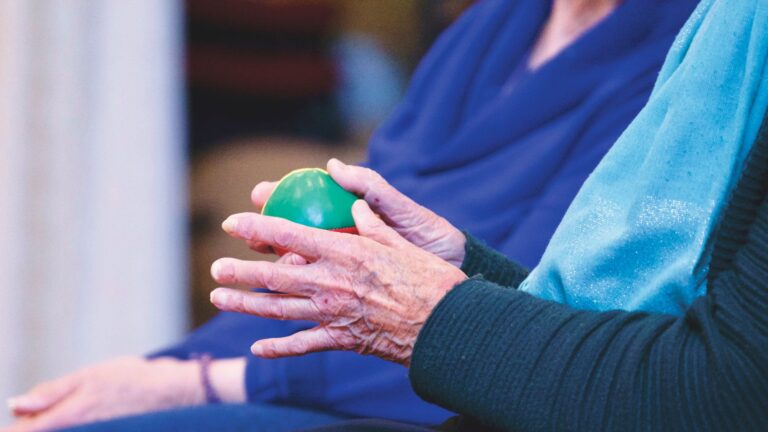
A person holds HUG on the lap, drapes the arms around the body, and listens. Familiar music can prompt attention, calm restlessness, or support closeness with a carer. Staff can leave it within reach during quiet times.
Who it was made to help
The peer-reviewed MDPI paper describes intended users as people with advanced dementia in care homes and NHS hospital wards, plus some patients with post-stroke cognitive impairment. Advanced dementia means late-stage loss of memory, language and daily function. These users often show anxiety, agitation and reduced interaction.
HUG does not suit everyone. Some patients accept it quickly and settle, while others push it away at once. Carers should treat first contact as a trial, not a prescription.
What the studies reported
The PubMed Central version of the Treadaway study followed 40 participants across care-home and NHS hospital settings over months with observational wellbeing scales, detailed in the full study text. Wellbeing scales rate mood, engagement and restlessness by observation. The design tracked change during ordinary care.
The 2023 MDPI paper reports 87% of care-home users showed improved wellbeing after six months, with over half also improving on adapted Bradford or PAL ability measures, as reported in the MDPI results paper. Hospital staff reported that accepters became less anxious and calmer and needed less medication, with potential for fewer falls. Some hospital patients rejected HUG immediately.
What to expect before buying
Health Technology Wales found only one small published effectiveness study, no HUG data in systematic reviews, no economic evidence and high uncertainty, and it declined full appraisal, according to the Health Technology Wales topic report. That finding frames HUG as promising comfort care with limited proof.
HUG by LAUGH sells HUG as non-drug sensory comfort with personalisable music, not as a dementia therapy. Plan a short supervised trial at home or in the care setting.
- Offer HUG calmly when the person is settled, not during acute distress.
- Load one short playlist of known favourites before the first use.
- Watch for reaching, holding and relaxing versus turning away or pushing.
- Remove it promptly if the person rejects it and try again another day.