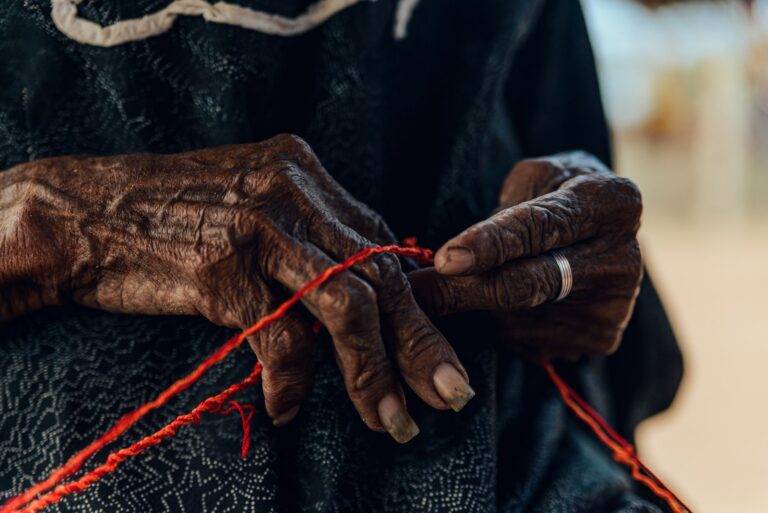
To simplify simple knitting for one-on-one dementia care, replace the full project with one repeated hand motion using bulky yarn and large needles. Sit beside the person, guide that single motion, and prize participation over a finished piece. One-on-one care here means one caregiver sharing an activity with one person with dementia. Simple knitting means short, repetitive yarn handling that fits current hand strength, attention, and vision.
Medical information disclaimer: This article is for general educational purposes only and does not provide medical advice, diagnosis, or treatment. Always consult a physician or other qualified health professional about symptoms, medications, tests, or treatment decisions.
Table of Contents
- Start with the hands, not the pattern
- How do you set up a calm one-on-one session?
- What if needles no longer work?
- When should you switch to sensory comfort?
Start with the hands, not the pattern
Choose tools that are easy to see and grip. Use large needles, thick soft yarn in a high-contrast color, and a short row that does not need counting.
Caregiver guidance summarized from a UCSF Lewy body dementia webinar recommends simplifying to a small potholder with bigger needles, a child's weaving frame, rolling yarn into balls, or gluing yarn and fabric in the UCSF webinar summary. Pick one option per session. A potholder suits someone who can still loop yarn, while rolling balls suits stiff or unsteady hands.
How do you set up a calm one-on-one session?
Alzheimers New Zealand advises keeping activities simple, unhurried and meaningful, focusing on one thing at a time and breaking tasks into simple manageable steps in its Keeping Active guide. Clear the table, reduce noise, and allow extra time for each motion.
Sit on the person's dominant-hand side. Keep your hands close, speak in short prompts, and follow their pace rather than correcting mistakes.
- Offer one choice at a time, such as red or blue yarn.
- Demonstrate one slow stitch, then guide hand-over-hand if welcome.
- Repeat the same motion for five to ten minutes.
- Pause, offer water, and stop while the mood is still pleasant.
What if needles no longer work?
Drop the needles and keep the yarn. Winding a loose skein into a firm ball gives rhythm, grip work, and a visible result. Finger-looping, pulling yarn through a weaving frame, or pressing short yarn pieces onto fabric glue keeps hands active without sharp points.
Match the step to the day. On a restless day, choose larger movements like winding and smoothing. On a focused day, try two or three loops on a frame. Save the same yarn and frame for next time so the activity feels familiar.
When should you switch to sensory comfort?
Switch when stitches cause frustration, fatigue, or loss of interest. Trade making for touching, holding, and warming the hands. Watch the face and shoulders for tension, then change the activity before distress builds.
The Isle of Wight NHS Trust says knitted twiddle muffs with attached textures give visual, tactile and sensory stimulation while keeping restless hands busy and warm in its twiddle muff guidance. Offer a muff with buttons, ribbons, soft patches, and different yarn textures. Keep one within reach during rest, visits, and travel.