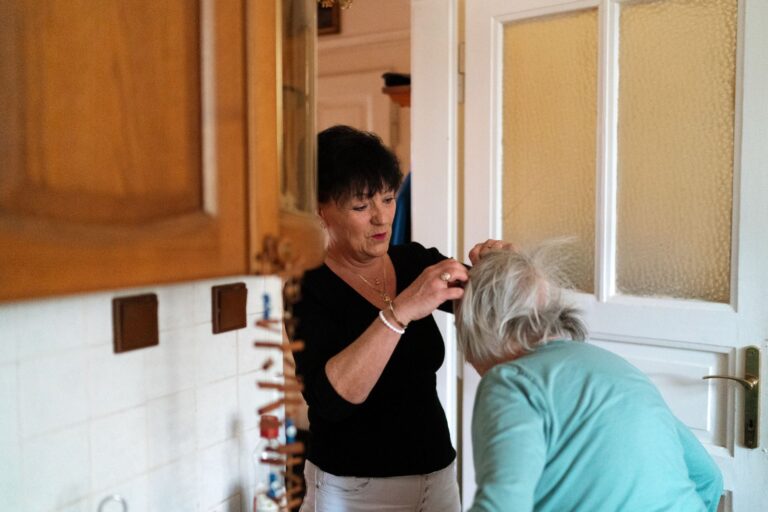
Reducing kitchen choices for someone with dementia means systematically limiting the number of visible food options, appliances, and decision points in the space. Instead of leaving a full refrigerator, pantry, and counter space open to exploration, you remove most items from sight, present only a few pre-selected options at mealtimes, and simplify the physical environment to match the person’s reduced ability to process choices. When someone with dementia opens the refrigerator, they should see perhaps three prepared dishes or simple items clearly labeled, not dozens of containers and ingredients that trigger confusion, frustration, or unsafe decisions.
This approach reduces cognitive overload, which is one of the primary drivers of behavioral distress in dementia. A person in mid-stage Alzheimer’s disease cannot easily evaluate the safety or freshness of food, remember how to prepare something, or make a simple choice between five options without significant anxiety. By curating the environment instead of expecting the person to navigate it, you prevent many crises before they start. For example, removing the ability to access raw chicken that has been sitting in the fridge for days prevents food poisoning; removing scissors and sharp tools from the counter prevents injury; pre-portioning snacks eliminates the need for decision-making that may lead to overeating or neglecting meals.
Table of Contents
- Why Kitchen Overwhelm Accelerates Cognitive Decline and Behavioral Problems
- Removing and Storing Items Out of Sight to Simplify the Environment
- Designing a Simplified Meal and Snack Rotation
- Removing or Hiding Appliances to Prevent Unsafe Use
- Managing Water Access and Beverage Safety
- Labeling and Visual Cues for the Items That Do Remain
- Preventing the Obsessive Search and the Hidden Food Problem
Why Kitchen Overwhelm Accelerates Cognitive Decline and Behavioral Problems
The kitchen is often where decision fatigue becomes visible first. A person with dementia standing in front of an open refrigerator or a full pantry faces a paralysis that looks like indecision but is actually a processing failure—the brain cannot hold, compare, and choose between multiple options simultaneously. Research on cognitive load in dementia shows that choice paralysis correlates with increased agitation, refusing meals, wandering into the kitchen repeatedly without a clear goal, and sometimes unsafe behaviors like trying to cook something they are no longer capable of preparing.
The visual complexity of a typical kitchen accelerates this decline. Where a healthy person might scan a pantry and decide “I’ll have cereal,” someone with moderate dementia may see boxes, cans, and packages as a confusing array without context or meaning. They cannot remember whether they like oatmeal or have already eaten breakfast three times that day. Some individuals become obsessed with a single item (crackers, ice cream, a particular drink) and will request it dozens of times per day or attempt to access it repeatedly, not out of appetite but out of a neurological loop they cannot break.
Removing and Storing Items Out of Sight to Simplify the Environment
The first practical step is to physically remove 80 percent of what lives in plain view. This means taking most items from countertops, refrigerator shelves that are within eye level, and pantry shelves that are easily accessible. Those items go into a locked cupboard, a separate refrigerator, the garage, or are simply removed from the home. The kitchen itself should contain only the dishes, utensils, appliances, and ingredients that are used daily for prepared meals and snacks you have intentionally selected. One limitation of this approach is that it requires a caregiver or family member to actively manage and decide what stays visible. If you live alone or have limited support, this strategy becomes harder to maintain consistently.
Additionally, if the person with dementia has a history of hiding food or becomes obsessive about obtaining something they know was removed, having items out of sight may create a different kind of distress—they may spend time searching, asking repeatedly where something is, or becoming suspicious that someone is hiding food from them. In these cases, a locked cupboard is necessary, but it can also trigger feelings of infantilization or loss of autonomy if not handled with sensitivity. Another practical concern is that storage must be organized in a way that is safe for the caregiver and other household members. Storing medication, cleaning products, or alcohol in the same locked space as snacks is dangerous and defeats safety. Separate storage areas, clearly labeled keys, and a consistent system are essential. One household found it useful to use a separate small refrigerator in a bedroom or office for the caregiver’s personal items, so medications could be kept secure without mixing household food items.
Designing a Simplified Meal and Snack Rotation
Instead of offering choices at mealtime, present one or two prepared options. Breakfast might always be oatmeal or scrambled eggs, not “would you like oatmeal, eggs, cereal, toast, or yogurt?” The snack rotation can be established so that every afternoon at 3 p.m., a specific snack is offered—apple slices on Monday, crackers on Tuesday, cheese on Wednesday. This routine removes decision-making entirely and provides the structure that many people with dementia find comforting. The benefit of this system is that it also regulates nutrition and consumption. When snacks are pre-portioned and offered on a schedule, overeating becomes impossible.
For example, someone with dementia who would previously eat an entire box of cookies if left unsupervised is instead offered a small bowl with five crackers at a predetermined time. The routine also helps with toileting schedules, sleep patterns, and agitation, because the person knows what to expect and the body adapts to consistent timing. The downside is that this requires planning and adherence from whoever is managing meals. Holidays, visits from family, or changes in routine can disrupt the system. Additionally, some people with earlier-stage dementia may experience frustration or feel patronized by such rigid structure, even if it ultimately reduces their anxiety. There is a balance between providing structure and preserving dignity, and different families will find that balance at different points.
Removing or Hiding Appliances to Prevent Unsafe Use
The kitchen contains many appliances that present safety risks when used by someone without intact judgment or memory. A person with dementia may turn on the stove and forget about it, fill the oven with odd items, or attempt to use the microwave in ways that cause fires. Removing or securing these appliances is a direct way to prevent disaster. Common strategies include unplugging the stove and storing the knobs in a drawer so someone cannot accidentally turn on the burners, using a stove lock or a childproof cover, disabling the microwave, or removing the toaster from the counter and storing it when not in use.
Some families have disconnected the kitchen sink sprayer or removed the garbage disposal activation if the person with dementia has become unsafe around water or has tried to put hands into the disposal. A comparison to childproofing is useful here—the logic is identical, though the person is an adult and the measures can feel more psychologically fraught as a result. One household discovered that their father had been turning on the oven to 500 degrees at night to “warm the kitchen,” then forgetting about it; they removed the knobs entirely and kept them in the master bedroom closet. Another family found that their mother would go to the refrigerator every five minutes to “find something to eat,” even after she had just finished a meal; they placed a small whiteboard on the refrigerator that said “Next meal at 6 p.m. Kitchen is closed now” and this visual cue, combined with redirection by a caregiver present nearby, reduced the behavior significantly.
Managing Water Access and Beverage Safety
Water and beverages present specific hazards that deserve their own attention. Some people with dementia become obsessed with water and drink excessive amounts, or they cannot recognize the difference between clean water and dishwater and may drink from unsafe sources. Others become dehydrated because they forget to drink or don’t recognize thirst. The solution is to control access and manage beverages actively. Pre-prepared drinks can be left on a specific shelf in the refrigerator—one or two bottles of water, one juice, one coffee in a thermos. The rest of the water and beverages are stored out of reach.
Some families use a small beverage cooler instead of the main refrigerator, so the person can see and access only what is safe. A limitation of this approach is that if the person is thirsty at 2 a.m. and a caregiver is asleep, they may not have access to water, or they may search and find unsafe alternatives. Round-the-clock supervision or monitoring is necessary to make this strategy work safely. Additionally, some people with dementia have difficulty using bottles or managing sips from a cup—they may bite off the bottle top, spill, or struggle with opening mechanisms. Offering water in a sippy cup or using a straw can help, but this introduces an element of infantilization that some families object to. A practical compromise is to place water in easy-open cups or small bottles that are clearly marked and pre-portioned, limiting the quantity available at any one time.
Labeling and Visual Cues for the Items That Do Remain
When you do keep items visible, labeling them clearly can reduce confusion and prevent mistakes. A label that says “Milk” with a picture of milk, or a container labeled “Snack—Eat at 3 p.m.” provides context that the person’s damaged brain can sometimes hold onto where abstract knowledge has failed.
Color coding can also help—red labels for items not to touch, green for items that are safe, blue for items to ask about. One caregiver family used large, printed photos of meals on the refrigerator door to signal “This is what we’re having for lunch today,” which provided reassurance and reduced repeated questions about what was available. Another family used a simple chalkboard menu on the kitchen wall, listing “Breakfast,” “Lunch,” “Dinner,” and times, so that even if the person could not read precisely, they could see structure and ask for clarification.
Preventing the Obsessive Search and the Hidden Food Problem
As dementia progresses, some people become fixated on finding or accessing items they know exist, or they begin hiding food in odd places—under the bed, in drawers, in clothing. This behavior is often rooted in a survival instinct (fear of scarcity) or a memory of when they controlled their own food. Removing the object of fixation can help, but it can also entrench the behavior if the person becomes convinced that food is being withheld. The practical response is consistency, transparency, and sometimes gentle deception.
If the person asks “Where are the cookies?” a truthful answer (“They are in the locked cupboard. We’ll have a treat after dinner”) provided calmly and repeated as many times as necessary is better than ignoring the question or changing the story. Some families have found that having the person participate in a “snack check” at a set time each day—physically looking in the refrigerator together and confirming what is available—provides reassurance and reduces searching. If the person is hiding food, checking under the bed and in drawers daily and removing spoiled items prevents illness. This is an ongoing management task, not a one-time solution, and it requires patience and a clear understanding that the behavior is a symptom, not a choice or a manipulation.
- —