Yes, balance exercises can significantly help older adults maintain and even improve their independence. A consistent balance training program addresses one of the most direct threats to an older adult’s autonomy: the risk of falling. When an 72-year-old who has been avoiding stairs due to fear of losing her footing can once again walk down them confidently without gripping the railing, or when a man can safely reach for items on a high shelf without calling for help, that’s independence restored through measurable physical change. Balance exercises work by strengthening the stabilizer muscles in the legs, hips, and core that keep the body steady during movement.
They also train the nervous system to respond more quickly to shifts in weight and changes in terrain. This combination of muscular and neurological adaptation has direct consequences for daily life—the ability to walk on uneven ground, to turn around quickly, to recover when you stumble, and to move through the world with confidence rather than constant vigilance. The relationship between balance and independence extends beyond physical capability. Older adults who lose confidence in their balance often become less active, which accelerates the decline in strength and flexibility that makes falls more likely in the first place. Breaking that cycle requires both physical training and the psychological reassurance that comes from genuine improvement.
Table of Contents
- HOW DO BALANCE EXERCISES RESTORE FUNCTIONAL INDEPENDENCE?
- WHAT HAPPENS IN THE BODY WHEN BALANCE IMPROVES?
- HOW DOES BALANCE TRAINING TRANSLATE TO DAILY INDEPENDENCE?
- HOW SHOULD OLDER ADULTS START AND PROGRESS BALANCE TRAINING?
- WHAT ARE THE RISKS AND LIMITATIONS OF BALANCE TRAINING?
- HOW DOES BALANCE TRAINING CONNECT TO BRAIN HEALTH?
- WHAT DO REAL-WORLD OUTCOMES SHOW?
- Frequently Asked Questions
HOW DO BALANCE EXERCISES RESTORE FUNCTIONAL INDEPENDENCE?
Balance exercises restore independence by targeting the specific systems that allow people to move safely through their environment. The vestibular system (which detects head position and movement), proprioception (the body’s awareness of where it is in space), and lower-body strength all deteriorate with age and inactivity. A structured balance program trains all three simultaneously. When an older adult practices standing on one leg, that exercise is simultaneously strengthening the ankle and hip muscles, improving the brain’s processing of balance signals, and building the confidence needed to move without constant support.
Research shows that older adults who perform balance exercises for 30 minutes, two to three times per week, can reduce their fall risk by 20 to 30 percent within just three to four months. A practical example: an 80-year-old man who participated in a balance training class twice a week for eight weeks showed measurable improvements in his single-leg stance time (from 5 seconds to 25 seconds) and reported feeling comfortable walking to the mailbox without holding onto his spouse’s arm for the first time in two years. The difference between an older adult who maintains balance and one who doesn’t is often the difference between living independently in their own home and requiring assisted living or constant supervision. This isn’t always about dramatic falls—it’s about the small hesitations and adjustments that are needed hundreds of times a day, and whether the body can make them automatically or must rely on someone else nearby.
WHAT HAPPENS IN THE BODY WHEN BALANCE IMPROVES?
When someone begins balance training, several changes occur relatively quickly. Muscle fibers in the legs and core—particularly the type II fast-twitch fibers that respond to sudden changes—start to reactivate and strengthen. The nervous system becomes faster at detecting changes in posture and initiating corrective responses. Proprioceptive nerve endings in the joints and muscles become more responsive. Within three to six weeks, many people notice they can stand or walk steadier; within two to three months, functional improvements appear in how they navigate stairs, get out of bed, or rise from a chair. However, improvement plateaus if training stops.
This is a critical limitation: balance is a use-it-or-lose-it capability. An older adult who completes an 8-week balance program and then stops exercising will gradually return to their baseline level of balance decline over the following months. The nervous system cannot “store” balance improvement the way it might store some other forms of strength. This means balance training must become a permanent part of someone’s routine, not a short-term intervention. Another limitation is that balance improvement happens slowly for very frail or deconditioned older adults. Someone who hasn’t exercised in 10 years may only see small changes in the first month of training, and some very elderly individuals (particularly those with advanced cognitive decline) may struggle to retain instructions or perform exercises consistently. Motivation and consistency are often the limiting factors, not the effectiveness of the exercises themselves.
HOW DOES BALANCE TRAINING TRANSLATE TO DAILY INDEPENDENCE?
The connection between balance and daily independence is direct and measurable. Consider the simple act of walking from the kitchen to the living room while carrying a cup of coffee. An older adult with poor balance must make that journey slowly, carefully, perhaps setting the cup down partway. An older adult with good balance can make the journey at a normal pace while holding the coffee with one hand, potentially using the other to open a door or steady themselves briefly. That difference—the ability to perform two things at once while moving safely—is what allows someone to live independently rather than requiring constant assistance. Climbing stairs, walking on uneven ground like sidewalks or grass, and recovering from near-falls all depend on responsive balance.
A specific example: a woman in her 70s who was afraid to go outside after nearly falling in her driveway completed a 12-week balance training program that included walking exercises on progressively uneven surfaces. After three months, she resumed shopping trips, walking in her neighborhood, and visiting her grandchildren—all activities she had avoided for the previous year because of fall fear. The psychological dimension is equally important. An older adult with confidence in their balance is more likely to stay active, which maintains muscle mass, bone density, and cardiovascular fitness. An older adult with poor balance becomes increasingly sedentary, which accelerates overall physical decline and often leads to depression or isolation. Balance training therefore affects independence through multiple pathways simultaneously.
HOW SHOULD OLDER ADULTS START AND PROGRESS BALANCE TRAINING?
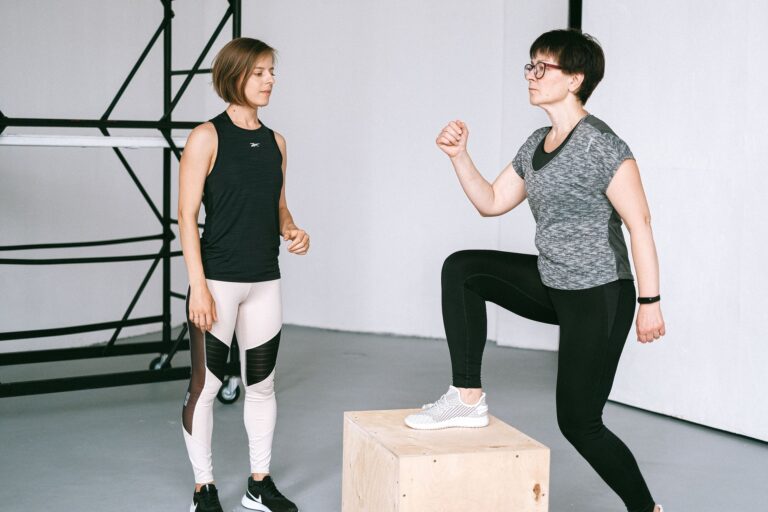
Beginning a balance program requires careful progression to avoid falls during the learning phase. An older adult with minimal balance experience should start with exercises performed while holding onto something stable—a kitchen counter, the back of a sturdy chair, or a wall. Simple exercises like marching in place, standing on one leg for 10-15 seconds, or weight shifts side to side build foundational stability before progressing to more challenging movements. The progression tradeoff is between safety and results. Moving too slowly means results take longer to appear and motivation may fade before improvement arrives.
Moving too fast risks a fall that undermines confidence and willingness to continue. An effective approach typically involves starting with 3-5 minutes of balance exercises 2-3 times per week, then gradually increasing duration and difficulty as confidence builds. A comparison: a structured balance class offered twice weekly in a community center provides supervision, social engagement, and consistent progression, but requires transportation and scheduled attendance; home-based exercises offer convenience and privacy but require self-motivation and risk less accountability. Working with a physical therapist or trained instructor for the first 2-4 weeks to learn proper form and progression significantly improves outcomes. This early guidance prevents compensatory movement patterns (like leaning to one side to avoid balance work) that limit effectiveness. After establishing proper technique, many older adults can continue progressing independently or in a group class.
WHAT ARE THE RISKS AND LIMITATIONS OF BALANCE TRAINING?
The most obvious risk is falling during balance exercises themselves. An older adult who loses their balance during a training session and falls could sustain an injury that sets back their independence goals. This risk exists but can be minimized through proper supervision, appropriate progression, and environmental safety (good lighting, clear floor space, stable support objects). The risk of injury during balance training is substantially lower than the risk of injury from falling in daily life, especially for someone with poor baseline balance. Another limitation involves cognitive changes.
An older adult with mild to moderate dementia may struggle to retain or execute balance exercise instructions even in a supervised setting. They may forget what they were told from one session to the next, or become frustrated by the inability to perform movements. This doesn’t mean balance training is impossible for someone with cognitive decline—it simply means it requires more repetition, shorter sessions, and potentially one-on-one guidance rather than group classes. A third consideration is that balance training produces results primarily for people whose balance decline is caused by deconditioning or muscle weakness. An older adult whose poor balance is caused by severe inner-ear disease, advanced Parkinson’s disease, or other neurological conditions may see less dramatic improvement. In these cases, balance training can still help and should still be pursued, but expectations should be adjusted and progression may be slower.
HOW DOES BALANCE TRAINING CONNECT TO BRAIN HEALTH?
Balance training involves significant cognitive engagement, not just physical movement. The brain must process sensory information about body position, anticipate movements, make small adjustments, and maintain focus on the exercise. This cognitive component of balance training creates a secondary benefit: engagement of the attention, coordination, and planning systems in the brain.
For an older adult concerned about cognitive decline, balance training offers a form of physical activity that actively engages mental processes rather than simply repeating a movement. A study of adults over 65 found that balance training was associated with faster processing speed and better performance on attention tasks compared to a control group. The mechanism likely involves the constant demand for coordination and environmental awareness that balance exercises require. For older adults with early cognitive changes or concerns about dementia, adding a balance component to their exercise routine may offer cognitive benefits alongside the physical improvements.
WHAT DO REAL-WORLD OUTCOMES SHOW?
Long-term data on balance training programs show consistent benefits for independence. A five-year follow-up study of older adults who maintained regular balance training showed that they continued to live independently and had significantly fewer hospitalizations due to falls or fall-related injuries compared to peers who did not exercise. The group that maintained balance training also reported higher quality of life and fewer limitations in daily activities.
One practical example comes from a community center balance program that tracked 120 participants over two years. Those who attended at least twice weekly showed measurable improvements in walking speed, stair-climbing ability, and confidence in their movement. More importantly, 88 percent of active participants remained living in their own homes, while only 62 percent of non-participants maintained independent living situations over the same period. The difference wasn’t just about physical capability—it included the psychological confidence that regular exercise provides, which encouraged continued activity and engagement with their community.
- —
Frequently Asked Questions
How long before I see improvements in my balance?
Most people notice small improvements in 2-3 weeks of regular practice and measurable functional changes in 4-8 weeks. However, consistency is critical—missing sessions slows progress.
Can balance training help if I’ve already had a fall?
Yes. Balance training after a fall can reduce fear, rebuild confidence, and decrease the likelihood of another fall. Work with a physical therapist to ensure exercises are appropriate for your recovery.
Is balance training safe if I have dementia?
It can be safe with supervision and appropriate instruction, though cognitive changes may require longer learning periods and more repetition. Always consult with a healthcare provider about individual readiness.
Do I need special equipment for balance exercises?
No. Most effective balance exercises use only a sturdy chair or counter for support. You can start anywhere you have something stable to hold.
What if my balance doesn’t improve after a few weeks?
Results vary based on your starting point and any underlying conditions. If you see no improvement after 4-6 weeks of regular training, discuss progression or modifications with a physical therapist.
How long do I need to do balance exercises?
Balance improvements decline when you stop exercising. Long-term maintenance requires ongoing practice—typically 2-3 times per week indefinitely to sustain gains. —