Emergency rooms are one of the most difficult healthcare environments for people with dementia. The combination of loud noises, bright fluorescent lights, constant interruptions, and unfamiliar procedures creates an overwhelming sensory experience that often makes dementia symptoms worse in minutes. A person with early-stage Alzheimer’s disease who was coherent and oriented at home can become acutely confused, agitated, or withdrawn within an hour of arriving at an ER—not because their condition has deteriorated, but because the environment itself is hostile to how their brain processes information. The ER’s inherent design works against dementia patients. Staff members change constantly, asking the same questions repeatedly.
Monitors beep unpredictably. Family members are separated from patients during procedures. Waiting areas are chaotic. For someone whose memory is fragile and whose sense of safety depends on routine and familiar faces, an emergency room is the worst possible place to be during a medical crisis. Yet it’s often unavoidable—chest pain, falls, infections, and other emergencies send dementia patients to the ER every day, where standard protocols were designed for people whose brains function differently.
Table of Contents
- Why Emergency Rooms Overwhelm the Dementia Brain
- Communication Breaks Down When You Need It Most
- Delirium on Top of Dementia Creates a Medical Emergency
- What Hospitals Know vs. What They’re Equipped to Do
- The Risk of Harm During Standard Procedures
- The Cascade of Complications After the ER Visit
- What Family Members Should Know Before the ER Visit
Why Emergency Rooms Overwhelm the Dementia Brain
Dementia impairs a person’s ability to process confusing or novel information quickly. In a normal situation, confusion resolves once you understand context—when a nurse in scrubs walks into your hospital room, your brain immediately categorizes her as medical staff, and you adjust accordingly. For someone with dementia, this automatic processing doesn’t work reliably. A stranger in scrubs entering a loud, disorienting space triggers fear rather than reassurance, because the brain isn’t able to quickly construct the reassuring narrative that “this is a hospital, that’s a nurse, I’m getting help.” The ER’s sensory environment is aggressively overstimulating. A typical emergency department contains multiple alarm systems, overhead pagers, monitors with constant beeping, fluorescent lights operating at 400+ lumens (compared to soft home lighting at 50-100 lumens), and people moving rapidly through tight spaces. For healthy adults, this is manageable background noise. For someone with dementia—especially Lewy body dementia or advanced Alzheimer’s—these stimuli overload the sensory processing system.
The result is acute confusion, paranoia, agitation, or total shutdown (sitting silently, refusing to respond). These behavioral changes aren’t psychiatric symptoms; they’re a direct neurological response to an impossible environment. Repetition without continuity makes things worse. An ER patient with dementia will be asked “Do you know where you are?” by five different staff members over the course of four hours, often in slightly different ways. Each time, the patient must start from scratch trying to figure out what’s happening. There’s no cumulative learning—their brain doesn’t build a coherent story across these interactions. Instead, each new person and each new question feels like a fresh crisis.
Communication Breaks Down When You Need It Most
dementia typically affects language ability before other cognitive functions. A person with dementia may have trouble retrieving words, especially under stress, even if they understand what you’re saying. An emergency room nurse trying to assess pain, allergies, or current medications often doesn’t have time to adapt to a patient’s communication style. The standard approach—asking direct questions at normal speaking speed—fails with many dementia patients. The nurse becomes frustrated. The patient becomes frightened. Both interpret the other as being uncooperative or declining. The absence of familiar communication partners makes this much worse.
When a dementia patient is with their regular caregiver, the caregiver knows their patterns and can interpret their needs and preferences to medical staff. In the ER, family members are often not allowed in the treatment area during initial assessments. A patient who normally relies on their daughter to speak for them now has to communicate with strangers without that translator. If the patient can’t clearly explain their medications, past surgeries, or current symptoms, the ER staff operates with incomplete information, leading to delays in diagnosis or treatment. This isn’t just inconvenient—it’s medically dangerous. Dementia also affects a person’s ability to follow complex instructions. “We’re going to do a CT scan now, so we need to move you to a different room and you’ll need to hold still for several minutes” is a lot of information delivered in a stressful moment. A dementia patient may hear only fragments, or may understand the words but forget the context by the time they’re being transferred. They might resist the move, not out of stubbornness, but out of confusion and fear.
Delirium on Top of Dementia Creates a Medical Emergency
Hospital delirium is common in dementia patients and is often mistaken for disease progression. An 82-year-old woman with mild cognitive impairment comes to the ER with a urinary tract infection. Within hours, she’s hallucinating, refusing to leave her bed, and become essentially nonverbal. Her daughter thinks this is Alzheimer’s advancing, but it’s actually delirium—a temporary but serious change in mental status triggered by infection, medication, dehydration, or the ER environment itself. The woman’s actual condition (a UTI) is treatable, but the delirium makes assessment and treatment much harder. Delirium in dementia patients is severe and hard to reverse.
In a healthy older adult, delirium might cause confusion and disorientation that resolves once the underlying cause is treated. In someone with dementia, the delirium stacks on top of existing cognitive loss, creating a state that’s sometimes described as “dementia on top of dementia.” A person who was independent, living alone, and managing well with mild memory problems can become unable to recognize family members or know their own name during a delirious episode. Even after the infection or other cause is treated, the delirium can take weeks to fully resolve, and some cognitive function may not return. The ER is the wrong place to manage delirium. Hospitals now have specialized delirium protocols in ICU and acute care units, but emergency departments still treat delirium as a psychiatric or behavioral problem rather than a medical emergency. A delirious dementia patient might receive sedation or restraint rather than treatment for the underlying cause. This can prevent the diagnosis—if a patient is sedated, you can’t fully assess their neurological status.
What Hospitals Know vs. What They’re Equipped to Do
Most hospitals now have dementia-friendly policies on paper. Quiet rooms, consistent staff, minimizing unnecessary tests, involving family members—these are all recommended in guidelines from the American Geriatrics Society and the Alzheimer’s Association. Yet in a real emergency department, during a busy shift, these recommendations are often abandoned. A quiet room is not available when eight patients are waiting to be seen. A consistent staff member can’t be assigned to one dementia patient when every nurse has five other critically ill patients. The tradeoff is between personalized, dementia-sensitive care and the efficiency demands of emergency medicine.
An ER that takes 20 minutes to help an agitated dementia patient get settled in a quiet room, with a calm voice and a family member present, is delaying care for the chest pain patient in the next bay. Hospitals that prioritize dementia-friendly practices often face criticism for slow throughput. There’s no perfect solution—hospitals can’t simultaneously maximize ER efficiency and provide individualized, patient-centered dementia care. Staffing and training gaps are real. Most ER nurses and doctors receive minimal training in dementia communication or behavior. A patient who becomes agitated or uncooperative is often labeled as “difficult” or “sundowing,” and the standard response is medication or restraint. Reframing the behavior as a communication need or a sign of overwhelming environment would require the ER to operate very differently.
The Risk of Harm During Standard Procedures
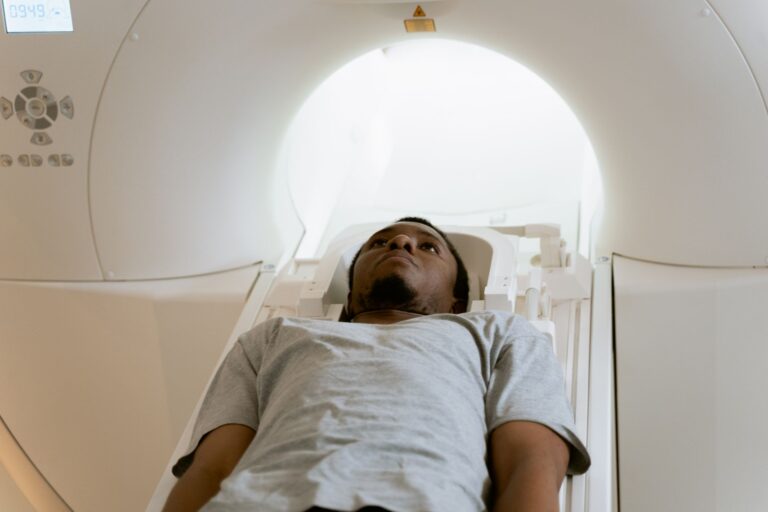
Dementia patients undergoing ER procedures face compounded risks. A CT scan requires a patient to lie still in a tunnel for several minutes while loud noises sound around them. For a dementia patient without family present to reassure them, this is often interpreted as confinement or torture. If the patient panics and moves, the scan is corrupted and must be repeated, exposing them to more radiation. If the patient is sedated to tolerate the scan, sedation itself carries risks—it can worsen delirium and increase fall risk in the hospital afterward. Catheterization, blood draws, and other invasive procedures require consent and patient cooperation. A dementia patient who can’t fully understand what’s being done to them, why, or how long it will last may resist violently.
Staff members then face a difficult choice: is this informed refusal, or is the patient unable to consent due to cognitive impairment? If they proceed against apparent refusal, is it ethical? If they don’t proceed, can they diagnose the acute problem? These situations often result in restraints, which cause more distress and carry their own medical risks (aspiration, muscle breakdown, skin injury). Medication errors are more likely. A dementia patient may not be able to report medication allergies or drug interactions clearly. The ER relies on written records, medical alert bracelets, and family information. If those aren’t available, medications are given based on incomplete information. Anticholinergic drugs (used for many conditions) are particularly risky in dementia—they can worsen delirium and cognitive function acutely. Yet they’re commonly prescribed in ERs.
The Cascade of Complications After the ER Visit
Many dementia patients don’t recover quickly after an ER visit, even if they leave without admission. The ER experience itself becomes a destabilizing event. A person who was living independently might lose confidence afterward. They become more frail, more dependent, more prone to further decline. This isn’t just psychological—ER visits are associated with higher rates of hospitalization, falls, and institutionalization in dementia patients in the weeks following the visit.
Post-ER delirium can persist for weeks. A dementia patient might leave the hospital functionally the same as when they arrived but be in the middle of a delirious episode. The family thinks the hospital has broken their relative permanently, but what they’re actually witnessing is severe delirium that will gradually resolve over 2-4 weeks as the underlying infection or metabolic problem clears. During that time, the patient is vulnerable to falls, aspiration, further complications, and loss of functioning. If they’re placed in a facility during this period, they may not recover their baseline because the facility setting prevents re-adaptation to home.
What Family Members Should Know Before the ER Visit
Preparing in advance makes a difference. Families should carry a brief card or document with their relative’s baseline cognitive function, communication style, medication list, and any triggers for agitation or confusion. Some families also write a note to medical staff: “My mother has dementia. When confused, she often becomes angry. Please call me into the room—her name is the best way to calm her.” This simple preparation can change how ER staff interact with the patient.
Dementia is not a medical condition you can plan perfectly for, but families can reduce the likelihood of a chaotic ER experience. Designate one family member to stay with the patient if possible—the ER may not allow this initially, but many have now adopted policies allowing family at bedside for dementia patients. Keep a list of current medications and supplements in your phone or wallet. Know your relative’s baseline—a score on the Montreal Cognitive Assessment, or just a written description of what “normal” is for them. When they deteriorate rapidly in the ER, you’ll have a reference point to help staff understand whether this is acute delirium (treatable and temporary) or permanent decline.
- —