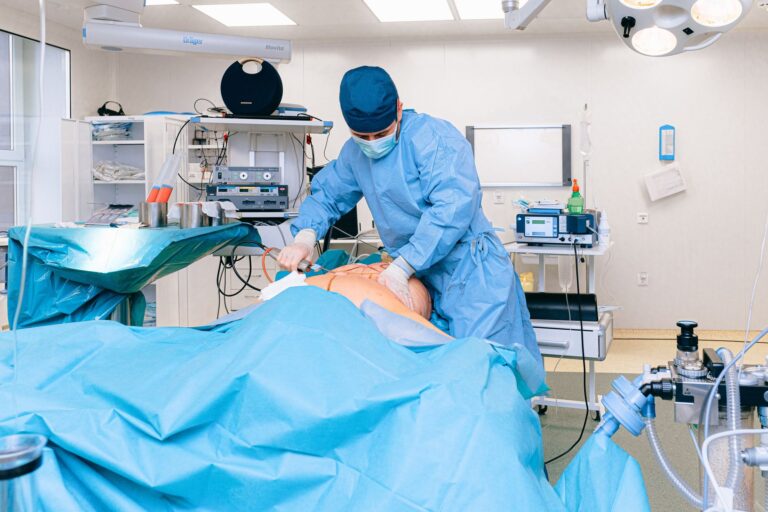
General anesthesia itself has not been shown to raise dementia risk in people with a family history of Alzheimer's disease. What the evidence does show is that family history and the genes behind it — especially the APOE ε4 variant — raise a person's odds of post-surgery complications like delirium and cognitive decline, regardless of which anesthesia type they receive. That distinction matters for anyone facing surgery while worried about a parent's or sibling's Alzheimer's diagnosis. The anesthesia choice appears to matter less than most people assume; the underlying genetic risk is what actually changes the odds.
Medical information disclaimer: This article is for general educational purposes only and does not provide medical advice, diagnosis, or treatment. Always consult a physician or other qualified health professional about symptoms, medications, tests, or treatment decisions.
Table of Contents
- Does general anesthesia itself cause dementia?
- Does regional anesthesia protect the brain better than general?
- What does family history and the APOE ε4 gene actually predict?
- What this means for someone with a family history facing surgery
- Where the evidence still falls short
- Frequently Asked Questions
Does general anesthesia itself cause dementia?
The strongest direct evidence says no. A 2013 Mayo Clinic Rochester Epidemiology Project study compared roughly 900 Olmsted County, Minnesota dementia patients against matched residents without dementia and found that general anesthesia for procedures after age 45 was not a risk factor for later dementia, according to the Mayo Clinic study. A separate Ontario cohort study tracked 7,499 matched pairs of adults 66 and older through elective surgery and found no difference in five-year dementia risk between general and regional anesthesia, with a hazard ratio of exactly 1.0, as reported in the Journal of the American Geriatrics Society.
Not every study agrees. A 2020 meta-analysis pooling 23 studies and about 412,000 patients found a statistically significant association between general anesthesia exposure and later Alzheimer's diagnosis, though the studies it combined varied widely in design and quality, per this systematic review. That gap between the large, well-matched cohort studies and the mixed meta-analysis is why researchers now look past the anesthesia type itself and toward who is more vulnerable to begin with.
Does regional anesthesia protect the brain better than general?
A 2024 systematic review pooling eight cohort studies found regional anesthesia linked to somewhat lower dementia risk than general anesthesia overall. But that signal weakened substantially once a study with younger patients was removed from the analysis, according to the 2024 meta-analysis.
That pattern suggests age changes the relationship more than the type of anesthesia does. For an older patient already carrying genetic risk, switching to regional anesthesia is not established as a way to meaningfully lower dementia odds. The more useful question is what actually does predict trouble after surgery — and that answer centers on genetics, not anesthesia type.
What does family history and the APOE ε4 gene actually predict?
Having a first-degree relative with Alzheimer's raises a person's own lifetime risk by roughly 30% compared with someone with no family history, and that risk climbs further if the affected relative carries the APOE ε4 gene variant — independent of any surgery at all, according to Harvard Health Publishing. Surgery appears to interact with that existing genetic risk rather than create it from scratch. A June 2025 Mass General Brigham Biobank study followed 33,526 surgical patients aged 40 to 89 with no prior Alzheimer's diagnosis.
Among the roughly 25% of patients who carried the APOE ε4 variant, odds were significantly higher for postoperative delirium (1.32 times higher), mild cognitive impairment (1.70 times higher), and an eventual Alzheimer's diagnosis (3.42 times higher), compared with non-carriers, per the British Journal of Anaesthesia. The same study found that among patients of European ancestry, a higher calculated Alzheimer's polygenic risk score independently predicted greater odds of an Alzheimer's diagnosis after surgery — more than double the odds — separate from APOE status alone, per the same source. A 2026 UK Biobank genome-wide study reinforces this: among 1,016 postoperative delirium cases and 139,148 controls, the APOE variant rs429358 was the leading genetic signal. One copy of the ε4 variant raised delirium odds 1.75-fold, and two copies raised odds 4.19-fold, with the study reporting shared genetic risk between postoperative delirium and Alzheimer's disease, according to PLOS Medicine.
What this means for someone with a family history facing surgery
A patient with a family history of Alzheimer's or known APOE ε4 status is not shown to face higher anesthesia-specific risk from choosing general anesthesia over regional. What they do appear to face is higher baseline odds of delirium and cognitive complications from surgery itself — a distinction that shifts where attention should go before an operation, per the 2025 biobank researchers.
That is also why those researchers propose using APOE and polygenic risk data for preoperative counseling, rather than steering patients toward one anesthesia type over another. Practical points to raise with a surgical team:.
- Mention a parent's or sibling's Alzheimer's diagnosis during pre-surgical evaluation, even though it does not change the anesthesia decision itself.
- Ask specifically about delirium-prevention protocols, since genetic risk predicts delirium odds more strongly than it predicts the anesthesia type's safety.
- Expect monitoring for confusion or memory changes in the days after surgery to matter more than the anesthetic chosen.
- Understand that genetic testing for APOE status is not a routine pre-surgical requirement; it is a research tool being proposed for risk counseling, not yet standard practice.
Where the evidence still falls short
Nearly all of this research is observational — cohort, case-control, or biobank association studies — and none of it is a randomized trial directly testing whether anesthesia causes dementia in genetically predisposed people, per the same systematic review. The genetic studies measure association with delirium, mild cognitive impairment, or an eventual Alzheimer's diagnosis; they do not prove that anesthesia itself triggers these outcomes in people who carry elevated genetic risk.
That gap is why the practical guidance focuses on monitoring and counseling rather than on avoiding general anesthesia. A family history of Alzheimer's remains a reason to flag genetic risk to a surgical team, not a reason to decline a medically necessary procedure or insist on a different anesthetic.
Frequently Asked Questions
Should someone with a family history of Alzheimer's request regional anesthesia instead of general?
The evidence does not show regional anesthesia lowers dementia risk enough to justify switching; its apparent advantage weakened once younger patients were excluded from the 2024 meta-analysis.
Does carrying the APOE ε4 gene mean surgery will cause dementia?
No. It means delirium and later Alzheimer's diagnosis are more likely compared with non-carriers, not that surgery causes dementia outright.
Is genetic testing before surgery recommended for people with a family history of Alzheimer's?
It is not yet standard practice; the 2025 biobank researchers are proposing it as a future tool for preoperative counseling, not a current requirement.