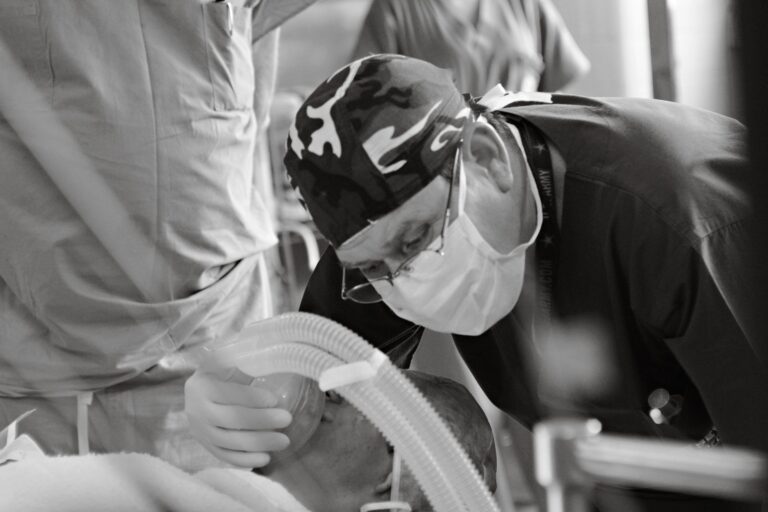
General anesthesia does not raise or lower the odds of developing Alzheimer's disease, even for someone with a family history, and switching to regional anesthesia does not change that risk either. The strongest predictor of future risk is inherited genetics, not which drugs put a patient to sleep during surgery. A 2011 meta-analysis of 15 case-control studies found no significant link between prior exposure to general anesthesia and later Alzheimer's diagnosis, with a pooled odds ratio near 1.0 (NCBI/PMC systematic review). That null result has held up as more rigorous research has been done, even in people who already carry elevated genetic risk for the disease.
Medical information disclaimer: This article is for general educational purposes only and does not provide medical advice, diagnosis, or treatment. Always consult a physician or other qualified health professional about symptoms, medications, tests, or treatment decisions.
Table of Contents
- Does the Type of Anesthesia Change Alzheimer's Risk?
- Why Family History Matters More Than the Anesthesia Choice
- What Surgery Itself Appears to Do in Genetically Vulnerable Patients
- What Someone With a Family History Can Actually Do
- Frequently Asked Questions
Does the Type of Anesthesia Change Alzheimer's Risk?
No study has shown that choosing general anesthesia over regional anesthesia, or the reverse, changes a person's odds of developing Alzheimer's disease. A 2024 systematic review pooling eight cohort studies initially found general anesthesia linked to a higher dementia hazard than regional anesthesia, but that association became non-significant once one study with younger patients was excluded, and regional anesthesia showed no different dementia risk than having no surgery at all (PMC meta-analysis). The same reviewers point out that no randomized trial has ever tested anesthesia type specifically to prevent Alzheimer's or dementia onset, and the available randomized evidence on long-term cognitive decline after surgery shows no advantage for regional anesthesia over general anesthesia (PMC meta-analysis).
Requesting regional anesthesia as a dementia-prevention strategy is not supported by the evidence, including for patients with a family history of Alzheimer's. This was tested directly in older adults having hip-fracture surgery, a population where cognitive complications are common and family history is often a concern. The RAGA-delirium randomized trial, run across nine centers in China, found that regional anesthesia did not significantly reduce postoperative delirium compared with general anesthesia (Li T et al., JAMA 2021). Delirium and Alzheimer's are related but distinct; even on delirium, where regional anesthesia was expected to help, it did not.
Why Family History Matters More Than the Anesthesia Choice
The genetic risk a person inherits plays a far larger role than how they're anesthetized. A 2025 Mass General Brigham biobank study of surgical patients aged 40 to 89 with no prior Alzheimer's diagnosis found that carrying the APOE-ε4 gene variant was associated with markedly higher odds of a later Alzheimer's diagnosis, with an odds ratio of 3.42 (medRxiv preprint). An Alzheimer's polygenic risk score, which combines many smaller genetic risk factors, was independently associated with higher odds as well, at an odds ratio of 2.25 in patients of European ancestry. APOE is a gene involved in fat transport in the body, and its ε4 variant is the best-established inherited risk factor for Alzheimer's disease.
People with a parent or sibling who had Alzheimer's are more likely to carry this variant, which is one reason family history and genetic testing often point to the same underlying risk. That same genetic risk also shapes how a person responds to surgery itself. A UK Biobank genome-wide study of postoperative delirium, published in Anesthesiology in June 2026, identified APOE as a genetic risk locus for delirium after non-cardiac surgery and found a strong genetic correlation between delirium risk and Alzheimer's disease, with a correlation coefficient of 0.68 (UK Biobank/Anesthesiology). In that analysis, carrying one copy of the APOE-ε4 variant raised the odds of postoperative delirium 1.75-fold, and carrying two copies raised it 4.19-fold compared with people who carried none, after accounting for age and sex (UK Biobank/Anesthesiology). The dose-response pattern — more copies, more risk — points to inherited vulnerability driving the outcome, not the anesthetic itself.
What Surgery Itself Appears to Do in Genetically Vulnerable Patients
Animal research helps explain why genetic background matters so much. A University of Pennsylvania mouse study found that surgery, not the inhaled anesthetic itself, produced lasting memory impairment, and this happened only in mice bred to carry human Alzheimer's-associated genes; mice without those genes were unaffected by the same surgery (Scientific American).
The surgical process and the body's inflammatory response to it, rather than the drugs used to maintain unconsciousness, appear to be what interacts with existing genetic risk. This lines up with the human delirium data: postoperative delirium is strongly tied to APOE status, and delirium risk is genetically correlated with Alzheimer's risk. For someone with a family history of Alzheimer's, the relevant exposure may be surgery in general, not the specific anesthetic technique chosen for it.
What Someone With a Family History Can Actually Do
Because no anesthesia choice has been shown to lower Alzheimer's risk, the more useful questions for a patient with a family history are about managing surgery itself and tracking cognitive recovery afterward, not about which drug to request. A family history of Alzheimer's is a reason to flag genetic risk to a care team and watch for delirium after any surgery, not a reason to decline a recommended anesthesia technique in favor of another.
- Tell the surgical and anesthesia team about a family history of Alzheimer's before the procedure, since this can inform monitoring for postoperative delirium, a known complication tied to the same APOE gene variant linked to Alzheimer's risk.
- Do not request regional anesthesia specifically to protect long-term memory; trial evidence has not shown it reduces delirium or long-term cognitive decline compared with general anesthesia.
- Ask about delirium-prevention protocols around the surgery itself, such as minimizing certain sedating medications and supporting early mobility, since these address the surgical stress response rather than the anesthetic type.
- Consider genetic or risk discussions with a physician separately from any surgical decision, since APOE status and polygenic risk scores carry more predictive weight for Alzheimer's than anesthesia exposure does.
Frequently Asked Questions
Should someone with a parent who had Alzheimer's avoid general anesthesia?
No. No study has shown that avoiding general anesthesia lowers Alzheimer's risk, even in people with a family history, and regional anesthesia has not outperformed it in trials.
Is postoperative delirium the same as Alzheimer's disease?
No. Delirium is a temporary state of confusion after surgery, but the UK Biobank study found its genetic risk, via the APOE gene, correlates strongly with Alzheimer's risk, which is why it is worth monitoring in anyone with a family history.
Does carrying the APOE-ε4 gene mean someone will develop Alzheimer's?
No. It raises the odds, including a 3.42-fold higher odds of an Alzheimer's diagnosis found in the Mass General Brigham biobank study, but it does not guarantee the disease will occur.