
Reagan administration sits at the center of this dementia and brain health question.
The Reagan administration’s response to the Tanker War in the 1980s and today’s approach to the Strait of Hormuz crisis represent fundamentally different strategies for protecting shipping and American interests in the Persian Gulf. During the 1980s, Reagan pursued a measured protective strategy: reflagging Kuwaiti tankers under the U.S. flag and deploying naval convoys to defend them against Iranian attacks, avoiding direct military strikes on Iranian territory while maintaining diplomatic channels. By contrast, the current crisis—triggered by coordinated U.S. and Israeli airstrikes on February 28, 2026, that killed Supreme Leader Ali Khamenei—has escalated into direct American military participation and retaliatory Iranian attacks, representing a more aggressive posture with far greater escalation potential.
This article examines how these two periods diverged in strategy, scale, and consequences, and what the differences reveal about shifting American approaches to Middle Eastern crises. The comparison matters because it shows how U.S. policy toward Iran has changed dramatically over four decades. Where Reagan chose to contain threats through naval protection rather than regime change, today’s administration took the fight directly to Iranian leadership. The consequences of each approach—measured in terms of casualties, economic impact, and long-term stability—offer crucial lessons for understanding how current decisions might unfold.
Table of Contents
- How Did Reagan’s Tanker War Strategy Differ From Today’s Direct Military Approach?
- What Was the Scale of the 1980s Tanker War Compared to Today’s Crisis?
- How Have Oil Prices Responded Differently in Each Crisis?
- What Do the Military Response Patterns Reveal About American Strategy Then and Now?
- How Have International Alliances and Coalition Support Changed?
- What Do Economic Disruptions Look Like in Each Scenario?
- What Are the Prospects for De-escalation and Long-Term Stability?
- Conclusion
How Did Reagan’s Tanker War Strategy Differ From Today’s Direct Military Approach?
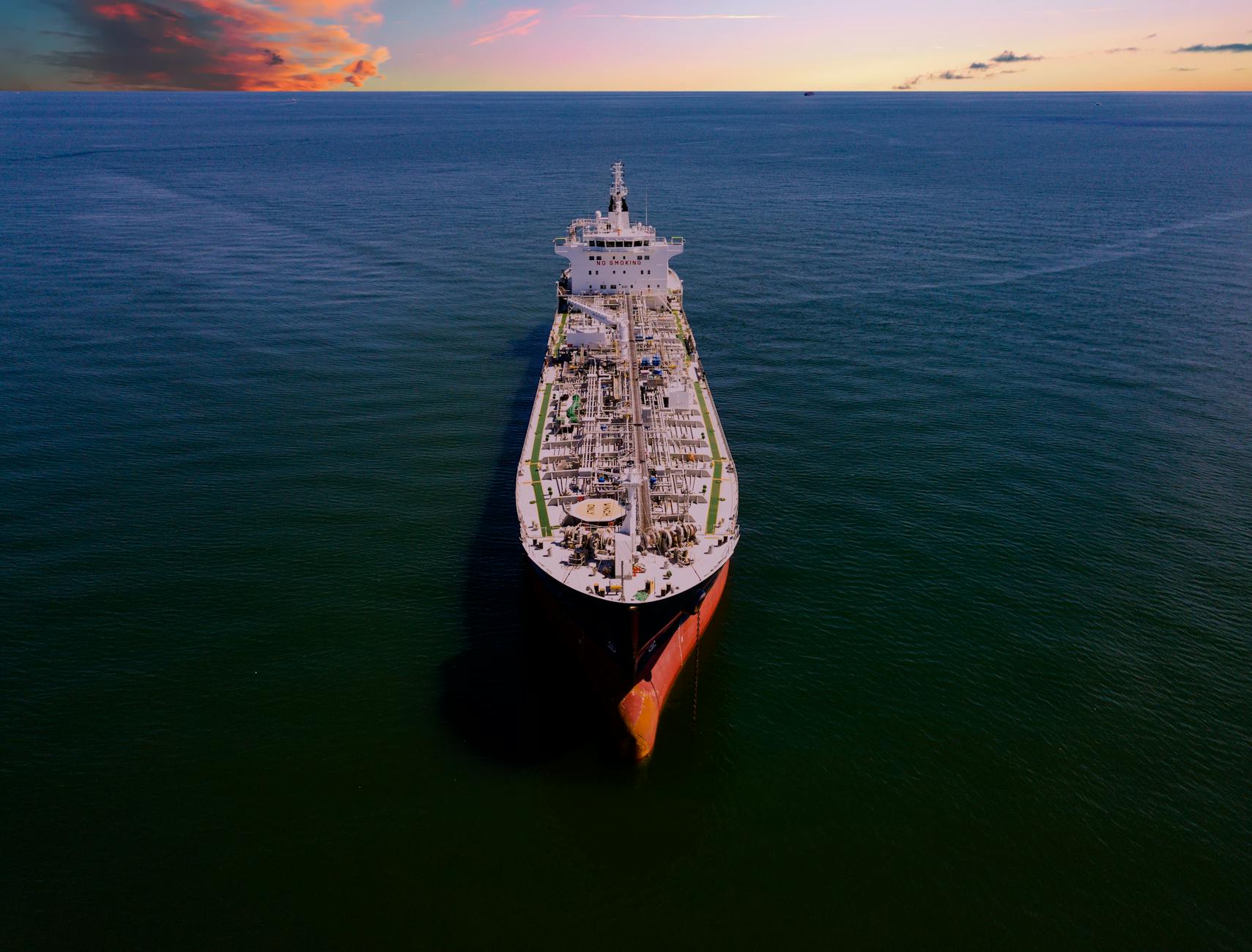
Reagan’s administration approved Operation Earnest Will on March 7, 1987, in response to Kuwait’s December 1986 request for U.S. protection against Iranian attacks. The operation ran from July 24, 1987, through September 26, 1988, and represented the largest naval convoy operation since World war II. Rather than striking Iranian targets, Reagan’s team chose a diplomatic and defensive solution: reflagging Kuwaiti tankers under the American flag. This legal maneuver allowed U.S. Navy warships to provide direct protection without being accused of violating international law. American destroyers, cruisers, and frigates escorted convoys through the Persian Gulf, using their presence and firepower as a deterrent against Iranian attacks. When incidents did occur, the U.S. responded with targeted measures—such as Operation Praying Mantis in April 1988, which destroyed Iranian vessels and oil platforms in response to the USS Samuel B. Roberts striking a mine—but these responses were specific and proportional to direct threats.
Today’s approach is fundamentally different. On February 28, 2026, the U.S. and Israel launched Operation Epic Fury: coordinated airstrikes against Iranian military facilities, nuclear sites, and leadership positions. These strikes were not defensive responses to merchant ship attacks but preemptive offensive operations that directly targeted Iran’s leadership structure. The death of Supreme Leader Ali Khamenei represented the most significant escalation in U.S.-Iran military confrontation in the 40-year history of their conflict. This shift from “protecting shipping” to “removing Iranian leaders” shows how dramatically American strategy has changed. Where Reagan sought to contain the threat, today’s administration sought to decapitate it—a riskier approach with unknown consequences. The key difference comes down to strategic philosophy. Reagan believed the Tanker War could be managed through naval presence and careful restraint. Today’s administration believed only fundamental regime change could address the threat. History suggests both approaches carry risk: Reagan’s patience eventually led to a ceasefire, but it took years. Today’s aggressiveness has already escalated beyond shipping attacks to full-scale military confrontation.
What Was the Scale of the 1980s Tanker War Compared to Today’s Crisis?
The 1980s Tanker War lasted seven years, from 1981 to 1988, and devastated commercial shipping in the Persian Gulf. Iraq conducted 283 attacks on merchant vessels, while Iran conducted 168 attacks—a total of over 450 strikes against commercial shipping. These attacks killed over 100 sailors and wounded a similar number, with damage exceeding 30 million tons of cargo between 1981 and 1987. Attacks escalated in 1987, with Iran conducting roughly as many strikes as Iraq for the first time, responding to Iraq’s March 1984 intensification with attacks two months later. The constant threat forced shipping companies to pay higher insurance premiums, route ships inefficiently, and face the loss of vessels and crew with alarming regularity. Yet the crisis unfolded slowly, with the human and economic costs accumulating year after year rather than in dramatic spikes.
The current Strait of Hormuz crisis is moving at a different pace and scale. As of March 12, 2026, there have been 21 confirmed attacks on merchant ships—a fraction of the 1980s numbers, but compressed into a period of just two weeks. Tanker traffic has dropped approximately 70 percent at its peak, with over 150 ships anchored outside the Strait to avoid transit risks. The IRGC officially declared the Strait closed on March 2, 2026, and narrowed that closure on March 5 to ships specifically from the U.S., Israel, and Western allies. This represents a more absolute and declared blockade than anything attempted during the 1980s Tanker War, where Iran and Iraq attacked ships but didn’t claim the right to close the waterway entirely. The difference is crucial: the 1980s crisis was a grinding war of attrition; today’s crisis is a sudden, deliberate closure with explicit rules. However, if the current crisis continues or escalates beyond shipping to include port infrastructure or onshore facilities, the cumulative damage could exceed anything seen in the 1980s within a matter of months rather than years.
How Have Oil Prices Responded Differently in Each Crisis?
The 1980s Tanker War affected oil prices gradually. Iraq’s initial attacks in 1984 triggered a modest increase, but prices climbed incrementally over the next four years as attacks accumulated and supply uncertainty grew. By the time Reagan deployed the convoy operation in mid-1987, oil prices had already been elevated for years. The impact was real but distributed across a long timeframe, allowing markets and economies time to adjust and find alternatives. Consumers in the U.S. and Europe saw higher gas prices, but the pain was chronic rather than acute—the kind of economic headwind that governments could manage through policy adjustments and energy conservation campaigns.
The 2026 crisis has compressed this timeline dramatically. On February 27, 2026, Brent crude oil was trading at $71.32 per barrel. By March 2, 2026—just three days after Operation Epic Fury began—the price had jumped to $77.24 per barrel, an 8 percent spike in 72 hours. Oil prices subsequently climbed further, breaking the $100 per barrel threshold at their peak. This rapid escalation reflects how markets now process geopolitical risk instantly, using algorithms and financial derivatives that didn’t exist in the 1980s. A 1980s-style crisis unfolding over years would still spike prices, but a 2026 crisis that reaches comparable economic impact in weeks creates immediate pressures on airline fuel costs, shipping expenses, heating oil bills, and transportation costs. Economies that adapted to higher oil prices over years may struggle to adjust when the increase hits in days.

What Do the Military Response Patterns Reveal About American Strategy Then and Now?
Reagan’s military response to the Tanker War evolved from defensive to tactical but remained limited in scope. From 1987 onward, U.S. Navy ships escorted convoys, establishing rules of engagement that allowed self-defense but discouraged first strikes. When Iranian Revolutionary Guard speedboats attacked U.S. vessels, American ships returned fire with proportional force. The April 1988 incident involving the USS Samuel B. Roberts, which struck an Iranian mine and suffered significant casualties, finally triggered Operation Praying Mantis—a larger American operation in which the U.S. Navy attacked Iranian vessels and destroyed Iranian oil platforms in the Gulf. But even this operation, while significant, was carefully calibrated to damage Iranian military capability without striking Iranian territory, killing senior Iranian leaders, or attacking nuclear facilities. The operation lasted hours, not days. By July 18, 1988, Iran had agreed to a ceasefire, and by August 20, 1988, the Iran-Iraq War formally ended.
Today’s Operation Epic Fury is several orders of magnitude larger and more aggressive. The February 28, 2026, airstrikes targeted not just Iranian naval vessels or oil platforms, but military facilities across Iran, nuclear sites, and the Supreme Leader himself. This represents the first time since the 1979 Iranian Revolution that the U.S. has directly attacked Iran’s political leadership. The operation didn’t conclude after a few hours; Iranian retaliation began immediately with missile and drone attacks on U.S. bases, Israeli territory, and U.S. allies in the Gulf. As of March 25, 2026, the crisis remains active and unresolved. The Trump administration is reportedly in talks with Iran, but Iran denies any ceasefire negotiations, suggesting neither side is ready to back down. This open-ended escalation stands in stark contrast to Reagan’s bounded, tactical approach. Where Reagan accepted a years-long crisis that he could manage militarily, today’s administration apparently believed only a sudden, massive strike could resolve the situation—though the outcome remains uncertain.
How Have International Alliances and Coalition Support Changed?
During the 1980s Tanker War, Reagan faced pressure to protect Kuwait but limited allied support for direct action. Western European nations were wary of deepening involvement in Iran-Iraq conflicts. Japan and other Asian nations depended on Gulf oil but preferred to stay out of direct confrontation. The reflagging operation was essentially a bilateral U.S.-Kuwait arrangement, with the U.S. Navy providing protection and assuming the risks. Arab Gulf states—Saudi Arabia, Bahrain, the UAE—supported the American presence but remained cautious about their own visibility. This meant the burden of protecting shipping fell heavily on American naval forces, with limited allied participation. The operation succeeded partly because Reagan was willing to bear the costs and risks largely alone. However, if one of Reagan’s escorted tankers had been sunk with major American casualties, the political pressure to expand the war would have been enormous.
Today’s crisis involves direct Israeli participation in Operation Epic Fury, marking the first openly coordinated U.S.-Israeli military strike on Iran. This transforms the nature of the conflict from a bilateral U.S.-Iran dispute to a trilateral U.S.-Israel-Iran confrontation. Arab Gulf allies face pressure from both sides: the U.S. expects them to support the airstrikes or at least remain neutral, while Iran threatens retaliation against any country that permits American use of bases or airspace. Some Gulf states have already reported Iranian attacks. This creates a more complex alliance picture than the 1980s, where the U.S. was protecting Kuwaiti shipping but Arab states could pretend neutrality. Today, being neutral is becoming impossible. The inclusion of Israel as an open combatant also raises the stakes: Israeli involvement increases the ideological charge of the conflict in the Arab and Muslim world, potentially drawing in non-state actors like Hezbollah, the Houthis, and militias in Iraq and Syria. Reagan’s 1980s crisis was compartmentalized; today’s is threatening to expand regionally.

What Do Economic Disruptions Look Like in Each Scenario?
In the 1980s Tanker War, economic disruption came through oil price increases, higher insurance costs for Gulf shipping, and the loss of individual cargo shipments. Insurance premiums for ships transiting the Gulf spiked, sometimes doubling or tripling. Companies rerouted ships around Africa or through the Suez Canal to avoid the Strait of Hormuz, adding weeks to voyages and raising transportation costs. Global oil refining adapted to higher crude prices through efficiency improvements and fuel switching. The crisis affected economic growth in oil-importing countries but didn’t cause sudden, acute shortages. Consumers paid more at gas pumps, but supply generally kept flowing, albeit at higher cost.
The current crisis threatens more acute disruptions. With 70 percent of tanker traffic suspended and over 150 ships waiting outside the Strait, global oil supplies could face genuine shortages if the closure persists for weeks. Refineries that depend on Gulf crude will exhaust their inventories and face production cuts. Petrochemical plants that depend on oil feedstocks will shut down. Airlines will cut routes as fuel costs spike. The economic damage could exceed the 1980s experience not because of higher prices alone but because of actual supply interruptions. An economy can adjust to $100 oil if it’s still flowing; it struggles far more with no oil at any price.
What Are the Prospects for De-escalation and Long-Term Stability?
The 1980s Tanker War resolved through a combination of factors: Iran’s military exhaustion after eight years of war with Iraq, the U.S. Navy’s demonstrated capability to protect shipping and punish Iranian aggression, and the willingness of both Iran and Iraq to accept a ceasefire. The resolution wasn’t dramatic—there was no peace treaty, no formal agreement between Iran and the U.S., just a mutual understanding that the costs of continuing had become prohibitive. The Gulf remained tense, but shipping resumed, and oil prices eventually settled. The lesson of the 1980s is that even protracted crises can resolve through persistence and patience, without regime change or massive escalation. Today’s crisis is less certain. The Trump administration is reportedly seeking talks with Iran, but Iran is denying these negotiations exist, suggesting both sides are still in confrontational postures.
The death of Supreme Leader Khamenei means Iran’s political system is in transition, with competing factions potentially holding different views on how to respond. The U.S. has achieved tactical military superiority through Operation Epic Fury, but it’s unclear what endgame the administration envisions. If the goal is to punish Iran and deter further attacks, the strategy might work. If the goal is to establish a new government friendly to American interests, the path is far less certain. Iran has a long history of rallying behind national unity in the face of foreign strikes. The current crisis could lead to a quick negotiated settlement, to a long standoff resembling the 1980s, or to further escalation if either side feels cornered. The unpredictability itself—compared to Reagan’s relatively bounded crisis—is the most troubling aspect of today’s approach.
Conclusion
The Reagan administration’s approach to the Tanker War focused on defensive protection, diplomatic patience, and limited military escalation. By reflagging tankers and deploying convoys, Reagan protected American allies and commercial interests without attempting regime change. The strategy worked, eventually leading to a ceasefire and the resumption of normal shipping, though it required years to resolve and cost lives in the interim. Today’s crisis represents a fundamentally different approach: direct airstrikes on Iranian leadership, open alliance with Israel, and explicit acknowledgment that the U.S.
intends to reshape Iran’s political future. This strategy achieved surprise and tactical military advantage but has opened a more unpredictable confrontation with unknown endpoints. The 1980s teach that crisis management is possible even in the Persian Gulf, but they also suggest that strategies seeking to resolve conflicts quickly through massive force can create longer problems if the underlying conditions that drive the conflict remain unaddressed. Whether today’s crisis follows the Reagan-era path of eventual negotiated settlement or charts a more dangerous course remains to be seen.
You Might Also Like
- What Is the Decapitation Strategy in the Iran War and Did It Actually Work
- How Did the Bush Administration Get It Wrong on Iraq WMDs and Why Is Iran Different
- Why Is the Iran War Focused Only on Nuclear Weapons and Not on Regime Change
For more, see Alzheimer’s Association — clinical trials.




