
Quadruple amputee sits at the center of this dementia and brain health question.
Dayton James Webber, a 27-year-old quadruple amputee and professional cornhole player, was charged with first-degree and second-degree murder following a fatal shooting on a Sunday night in La Plata, Maryland. The incident occurred in a vehicle while Webber was driving, with the victim—27-year-old Bradrick Michael Wells—sitting in the front seat as a passenger.
According to reports, the shooting happened during an argument between the two men while the car was in motion, with two other passengers present who refused to help Wells and instead called police around 10:30 p.m. The case gained widespread attention not because of the charges themselves, but because of Webber’s remarkable backstory: he is a nationally recognized athlete who won the Maryland State Championship in cornhole and competed in the American Cornhole League with matches broadcast on ESPN, all despite being a quadruple amputee since infancy. This article examines how a man who overcame extraordinary physical limitations to achieve athletic success became entangled in a serious criminal case, and what the incident reveals about disability, public perception, and the judicial system.
Table of Contents
- From Medical Crisis to Professional Athlete—Who Is Dayton Webber?
- The Incident—A Fatal Argument in Motion
- Who Was Bradrick Michael Wells?
- First-Degree and Second-Degree Murder Charges—The Legal Distinction
- Arrest and Extradition—The Investigation After La Plata
- The Role of Disability in Public Perception
- Questions Ahead and the Legal Process
- Conclusion
From Medical Crisis to Professional Athlete—Who Is Dayton Webber?
Dayton James Webber’s life has been defined by overcoming obstacles that would have seemed insurmountable to most people. As a baby, he contracted a blood infection that resulted in the amputation of all four limbs, an outcome that could have confined him to a life of severe limitations. Instead, Webber pursued athletic endeavors that defied expectations about what disabled individuals could accomplish. He became a professional cornhole player—a sport that might seem counterintuitive for someone without arms or legs, yet he excelled at it through adaptation and determination.
His success was not merely anecdotal; Webber earned his place as a competitor in the American Cornhole League and secured victories that placed him among the sport’s recognized athletes. Webber’s cornhole achievements brought him national visibility, including appearances on ESPN during televised matches. This level of recognition is rare for any athlete in a niche sport, and for a quadruple amputee, his prominence represented both an inspiring narrative and a challenge to conventional assumptions about disability. His professional cornhole career created a public persona that contrasted sharply with the private circumstances that led to his arrest in Charlottesville, Virginia, in connection with Wells’ death. The case illustrates a critical reality: professional success and public achievement do not insulate anyone from personal crises, conflict, or criminal allegations.

The Incident—A Fatal Argument in Motion
On a Sunday night in March 2026, Webber was driving a vehicle with Bradrick Michael Wells seated in the front passenger position and two additional passengers in the car. The specific details about where they were traveling or why they were together remain unclear from available reports, but what is documented is that a verbal argument erupted between Webber and Wells while the vehicle was moving. During this confrontation, Webber used a firearm to shoot Wells fatally. The incident occurred in the Radio Station Road and Llano Drive area of La Plata, Maryland—a populated area in Charles County.
The behavior of the other passengers in the vehicle provides a stark detail: they did not attempt to help Wells after he was shot. Instead, they called emergency services around 10:30 p.m. to report the shooting. This decision—to call police rather than seek immediate medical intervention—suggests either that the passengers recognized Wells was fatally wounded or that they made a rapid judgment to let law enforcement respond. The presence of witnesses who were present at the moment of the shooting but did not intervene may prove significant in any trial proceedings, as their testimony about the argument, Webber’s demeanor, and the exact sequence of events could determine whether prosecutors can prove the intent required for first-degree murder charges.
Who Was Bradrick Michael Wells?
Bradrick Michael Wells was 27 years old at the time of his death, the same age as Webber. Beyond these basic facts—his name, age, and the circumstances of his death—publicly available information about Wells remains limited. He was a resident of Maryland and was present in the vehicle with Webber on the night of the incident, but his background, occupation, relationship to Webber, and the nature of their acquaintance have not been extensively reported.
This gap in public reporting is not unusual in early stages of murder investigations, as law enforcement agencies often withhold details about victims and their circumstances while investigations remain ongoing. What is certain is that Wells’ death has become inseparable from Webber’s identity as a public figure. The narrative of the case—a well-known athlete charged with murder—has overshadowed Wells’ own story. In media coverage and public discourse, Wells is often referenced primarily in relation to Webber’s background and achievements, a phenomenon that reflects how victims of crimes can sometimes become secondary to the dramatic circumstances surrounding their deaths, particularly when the accused party has a compelling personal narrative.

First-Degree and Second-Degree Murder Charges—The Legal Distinction
Webber faces charges for both first-degree and second-degree murder, a prosecutorial strategy that reflects the uncertainty that often characterizes serious criminal cases. First-degree murder requires that prosecutors prove Webber acted with premeditation and deliberation—that he formed an intent to kill Wells before the shooting occurred. Second-degree murder, by contrast, requires proof of an intentional killing but without the element of premeditation. The decision to charge Webber with both degrees provides prosecutors with multiple pathways to conviction and gives a jury options if evidence supports an intentional killing but not necessarily one that was planned in advance.
The fact that the fatal shooting occurred during an argument in a moving vehicle presents challenges and opportunities for both the prosecution and defense. An argument that escalated to violence suggests a spontaneous act rather than a premeditated one, which could undermine a first-degree murder conviction but would still support a second-degree charge. However, if prosecutors can establish that Webber brought a firearm into the vehicle with knowledge that he might use it against Wells, this could support a premeditation argument. The presence of the two other passengers—who can testify about what was said and how the conflict developed—will likely be crucial to determining which charge, if either, juries ultimately accept.
Arrest and Extradition—The Investigation After La Plata
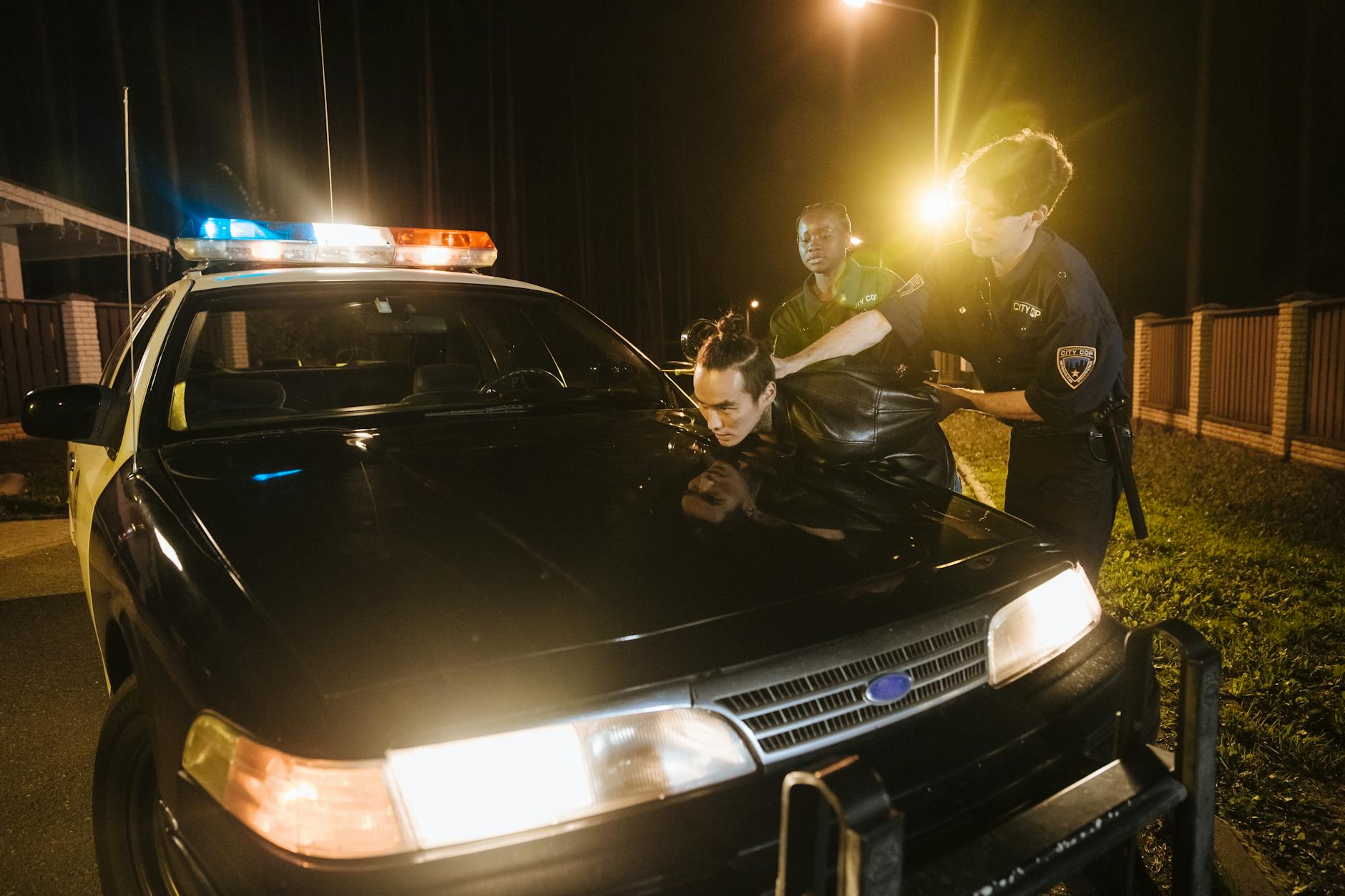
Following the shooting in La Plata, Maryland, law enforcement began investigating the incident. Webber did not remain in the immediate area but fled the state, eventually crossing into Virginia where he was arrested in Charlottesville. At the time of his arrest, he was awaiting extradition back to Charles County, Maryland, to face charges.
The fact that he left the state suggests either an attempt to evade immediate arrest or a flight from the scene that prosecutors might use to suggest consciousness of guilt—though legal experts note that flight-related evidence is complex and can be interpreted in multiple ways. The investigation phase would have included interviews with the two passengers present in the vehicle, an examination of the firearm, and an analysis of the scene and circumstances. Investigators also likely examined the relationship between Webber and Wells, looking for any history of conflict that might provide motive. For a case involving an argument that escalated to fatal violence, establishing what the dispute was about—whether it was personal, financial, related to a perceived slight, or something else entirely—becomes central to understanding whether the shooting was a spontaneous reaction or a calculated act.
The Role of Disability in Public Perception
Webber’s status as a quadruple amputee who became a professional athlete has shaped how this case is perceived and discussed. His remarkable achievements created a narrative of overcoming adversity that is genuinely compelling—and that same narrative makes his arrest for murder more jarring and counterintuitive to the public. There is a tendency in media and public discourse to view individuals with visible disabilities as either purely inspirational figures or as somehow more vulnerable and less capable of harmful acts.
The reality, as this case demonstrates, is far more complex: disability does not determine character, moral behavior, or the capacity to commit crimes. This case serves as a reminder that individuals should not be categorized or assumed to be incapable of harmful behavior based on their physical circumstances. At the same time, the case raises questions about how media coverage and public interest in cases like this reflects and reinforce existing biases about disability. Does the fact that Webber is a quadruple amputee make this case more newsworthy? Does it influence how people evaluate the evidence and his presumption of innocence?.
Questions Ahead and the Legal Process
The case against Dayton Webber will proceed through the Maryland criminal justice system, beginning with initial appearances and preliminary hearings. The presence of two eyewitnesses who were in the vehicle represents both significant evidence for prosecution and an opportunity for the defense to present alternative interpretations of events.
What exactly did the argument concern? Did Wells initiate the violence in some way not immediately apparent? Did Webber reasonably believe he was in danger? These questions and many others will be explored during the legal process. The case also raises broader questions about how society treats individuals with disabilities who are accused of crimes. Will Webber’s disability be considered a mitigating factor, a neutral fact, or a complicating factor in how the case is prosecuted and judged? Will his achievements as an athlete influence jurors’ perception of his character, or will they be deemed irrelevant to the specific allegations? The answers to these questions will likely extend beyond this single case, influencing how similar cases are handled in the future.
Conclusion
The case of Dayton James Webber—a quadruple amputee and professional cornhole champion charged with murder—exists at the intersection of multiple significant issues: disability and capability, public perception and individual reality, and the circumstances under which violence erupts during personal conflict. Webber’s remarkable achievements in professional sports do not erase the serious allegations against him, nor do the allegations erase his genuine accomplishments and the determination he has demonstrated throughout his life.
The case will proceed through the Maryland courts, where evidence will be evaluated and legal standards applied regardless of Webber’s disability status or athletic achievements. For observers of this case, it serves as a sobering reminder that adversity and achievement are not moral safeguards, and that public narratives about individuals—whether inspirational or controversial—often obscure the complex realities of criminal cases. The outcome will depend on what evidence prosecutors can present to prove their charges beyond a reasonable doubt, and how a jury weighs that evidence in light of the law.
You Might Also Like
- Why Did a Residential Building in Tel Aviv Get Hit by an Iranian Missile?
- How Did an Air Canada Jet Get Ripped Apart After Hitting a Fire Truck at 30 MPH?
- How Did Over 82,000 Civilian Buildings in Iran Get Damaged or Destroyed in 25 Days?
For more, see Alzheimer’s Association.




