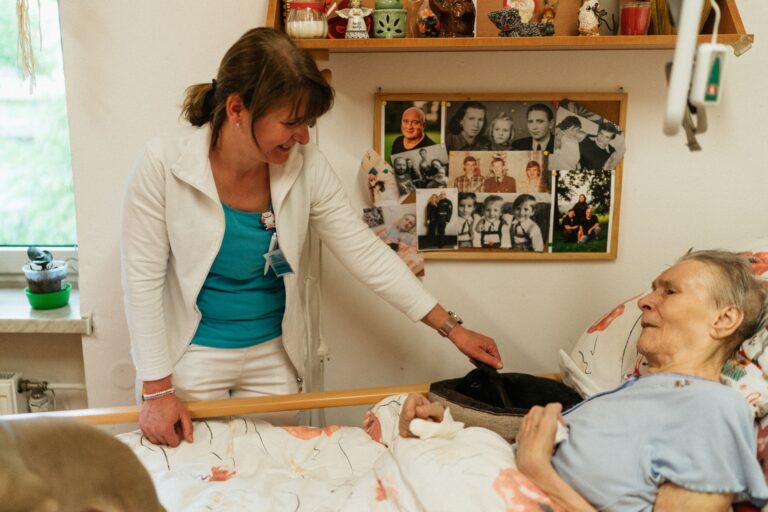
Hospice does provide extensive end-of-life care for dementia patients, but the phrase “24-hour care” requires clarification. Most hospice programs offer continuous access to nurses and care coordinators by phone, visits from hospice staff multiple times per week, and emergency support around the clock. However, in-home hospice typically does not station a caregiver in the patient’s home 24 hours a day, seven days a week, unless that level of care is specifically arranged and usually requires significant out-of-pocket costs.
For a dementia patient receiving in-home hospice, a visiting nurse might come three times a week while family caregivers or hired companions provide daily supervision. Hospice becomes an option when a physician certifies that a patient has a terminal illness with a life expectancy of six months or less. For dementia patients, this certification often comes at the late stages of the disease when cognitive decline has become severe, swallowing becomes difficult, and infections become frequent. Understanding what “24-hour care” actually means in the hospice context—and what gaps may exist—is essential for families making care decisions.
Medical information disclaimer: This article is for general educational purposes only and does not provide medical advice, diagnosis, or treatment. Always consult a physician or other qualified health professional about symptoms, medications, tests, or treatment decisions.
Table of Contents
- What Does “24-Hour Care” Actually Mean in Hospice Settings?
- Types of Hospice Care and Their Coverage Hours
- How Hospice Addresses Dementia-Specific Needs
- In-Home Hospice Versus Residential or Facility-Based Options
- Limitations and Coverage Gaps in Hospice Care
- Timing and Eligibility: When Hospice Becomes Appropriate
- Questions to Ask When Evaluating Hospice Services for Dementia
- Frequently Asked Questions
What Does “24-Hour Care” Actually Mean in Hospice Settings?
The term “24-hour care” in hospice refers to access and responsiveness rather than constant bedside presence. Hospice agencies maintain 24-hour telephone support so that family members or caregivers can call with urgent questions or concerns at any time of day or night. A nurse can provide immediate guidance over the phone, make an emergency visit if necessary, or arrange for paramedics if the situation becomes critical. For example, if a dementia patient develops rapid breathing or becomes unresponsive at 2 a.m., the family member can call their hospice agency and speak with a nurse within minutes rather than waiting until morning. Regular in-home visits are typically scheduled based on the patient’s needs.
Early in the hospice enrollment period, visits might occur once or twice weekly. As the patient declines, visits may increase to several times per week or daily. Some hospice agencies also offer what’s called “continuous care”—24-hour in-home coverage—but this service is usually reserved for patients in active dying (expected to die within days) and may not be covered by Medicare or insurance without meeting strict criteria. The practical reality for many families is that while professional hospice support is available around the clock by phone, day-to-day care still relies on family members or hired caregivers present in the home. A dementia patient receiving hospice at home will need someone to provide hygiene assistance, medication reminders, toileting help, and supervision throughout the day and night. If the family cannot provide this support, hiring private caregivers becomes necessary to fill that gap.
Types of Hospice Care and Their Coverage Hours
Hospice services are typically delivered through several care models, each with different availability and cost structures. Routine home care is the most common level, where hospice staff visit the home and provide medical oversight, symptom management, emotional support, and family education. Under Medicare, routine home care includes an unlimited number of visits, though in practice these are usually scheduled based on patient need rather than true 24-hour presence. Continuous home care is available for patients in crisis or actively dying. This level provides a nurse or aide in the home continuously (24 hours per day) for a limited period, typically a few days to a week.
Medicare and most insurance plans cover continuous care, but access depends on medical necessity and must be coordinated through the hospice agency. A limitation here is that families often must request continuous care explicitly or have a change in the patient’s condition that triggers the recommendation—it is not automatic. Inpatient hospice care (in a dedicated hospice facility or hospital unit) provides round-the-clock nursing and monitoring. Patients transferred to inpatient hospice receive immediate access to staff at all times, which can be essential for severe pain management, behavioral symptoms, or when family caregivers are exhausted. However, availability of inpatient beds is often limited, and not all geographic areas have dedicated hospice facilities. A family choosing between in-home and inpatient hospice for a dementia patient must weigh the comfort of the home environment against the medical support and respite that inpatient settings provide.
How Hospice Addresses Dementia-Specific Needs
Dementia creates unique challenges in end-of-life care because cognitive decline often means patients cannot communicate their needs, may resist care, and can experience severe behavioral disturbances. Hospice teams trained in dementia care are equipped to manage these symptoms—agitation, sundowning, refusal to eat, wandering behavior—without relying solely on medication. Staff may use therapeutic approaches like validation therapy, redirecting attention, or creating calming environments to reduce distress. Pain and discomfort are particularly difficult to assess in advanced dementia because patients may lose the ability to report pain verbally. Hospice nurses learn to recognize nonverbal pain signals: grimacing, rapid breathing, restlessness, or sudden behavioral changes.
Medication is carefully titrated to keep the patient comfortable without over-sedation, though this balance is not always easy to maintain. For example, morphine is commonly used to ease breathing difficulties and pain in late-stage dementia, but it can also mask subtle signs that a patient’s condition has changed. Hospice also supports family members through what is often an emotionally exhausting period. The combination of watching a loved one lose their cognitive abilities and approaching death creates profound grief and sometimes guilt about care decisions. Hospice counselors, social workers, and chaplains provide ongoing support. This emotional component of care—though essential—is less visible than medical interventions, and families sometimes underestimate its importance until they are in the midst of crisis.
In-Home Hospice Versus Residential or Facility-Based Options
In-home hospice allows dementia patients to remain in familiar surroundings, which can reduce confusion and agitation. Many families and patients prefer this option for dignity and comfort. However, in-home hospice places significant responsibility on family caregivers. A spouse caring for a dementia patient at home faces sleep deprivation, physical strain from assisting with toileting and transfers, and the emotional weight of being the primary decision-maker about medical changes. If the patient requires feeding assistance, medication management, and constant supervision, one family member alone cannot provide round-the-clock care safely. Residential hospice facilities or specialized dementia units within nursing homes provide an alternative.
Staff are present 24 hours a day, and patients have access to immediate medical attention. The trade-off is loss of home environment and, in some cases, reduced family involvement if visiting is limited. Additionally, residential hospice care often requires the family to move the patient from their current living situation, which may involve financial transition, logistics, and emotional adjustment for the patient if they have any understanding of the move. A hybrid approach exists in some areas: adult day care with hospice services, where the patient spends daytime hours in a facility with professional care and returns home in the evening. This option is less common and not universally available, but it can reduce caregiver burden while maintaining the patient’s presence in their home environment. The practical challenge is coordinating multiple care entities and managing transportation.
Limitations and Coverage Gaps in Hospice Care
Medicare and most private insurance cover core hospice services—nursing visits, medications, medical equipment, and counseling. However, coverage does not include 24-hour in-home aide services, meal preparation, or non-medical support unless continuous care criteria are met. If a family needs someone in the home 24 hours a day to handle activities of daily living (dressing, bathing, toileting), they must hire private caregivers at their own expense, which can cost $15,000 to $30,000 per month depending on location and qualifications. Another gap appears when dementia patients have behavioral needs that require specialized management but do not meet the threshold for continuous professional care. A patient who becomes combative or tries to leave the home needs active supervision and redirection, but if pain and other medical symptoms are controlled, the hospice team may visit only a few times per week.
The family is then left managing significant behavioral challenges with limited professional support between visits. Support groups and respite care programs can help, but these are not standard hospice services and may require separate arrangements. Geographic variation in hospice availability is substantial. Rural areas often have limited hospice agencies and may not offer inpatient facilities, specialty dementia care, or continuous care services. Families in these areas may face long travel distances for support or be unable to access the level of care they need. Additionally, insurance coverage varies by plan and by state, so families should not assume their specific situation will be covered without explicit confirmation.
Timing and Eligibility: When Hospice Becomes Appropriate
Determining when to transition to hospice for a dementia patient is one of the hardest decisions families face. Dementia is progressive but unpredictable; some patients decline slowly over years, while others experience rapid deterioration. Hospice eligibility officially requires a prognosis of six months or less, but identifying this point in a dementia patient’s course is difficult. A patient may be bedridden, unable to swallow, and appearing very near death, yet still survive many months.
Families are sometimes encouraged to pursue hospice sooner rather than later to maximize the benefits of the service while the patient is still in relatively stable condition. Earlier enrollment allows time for goals-of-care conversations, family education, and advance planning for symptom management. However, some families view hospice as “giving up,” and this misconception can delay timely enrollment and leave the patient suffering avoidable symptoms during their final months. A candid conversation with the patient’s physician about the trajectory, timing, and goals of care is essential before making the decision.
Questions to Ask When Evaluating Hospice Services for Dementia
Before enrolling in hospice, families should ask specific questions about what “24-hour care” means for their situation. Inquire about the frequency of scheduled visits, the process for requesting urgent visits, and the availability of continuous care if the patient’s condition deteriorates. Ask whether the hospice team has expertise in dementia management and behavioral symptoms. Clarify which services are covered by insurance and which require out-of-pocket payment, especially regarding aide services, equipment, and medications.
Discuss realistic expectations for symptom management in advanced dementia. Ask how the team will recognize pain and address it, what medications will be used, and how the family will be taught to recognize changes indicating the patient is entering the final days of life. Ask about the role of family caregivers and what support the hospice will provide to prevent caregiver burnout. A good hospice team will provide honest answers about limitations and will not promise 24-hour in-home presence if they cannot deliver it.
Frequently Asked Questions
Does Medicare cover 24-hour in-home hospice care for dementia?
Medicare covers hospice services including regular visits, nursing care, and medications. True 24-hour continuous in-home care is covered only when the patient is in active dying (expected to pass within days) and this is documented as medically necessary. Standard hospice visits are typically scheduled several times per week based on patient need, not continuous presence.
What happens at night if my dementia-hospice patient has a problem?
Most hospice agencies provide 24-hour phone support. You can call a nurse at any time, who will provide guidance, arrange an emergency visit if needed, or advise you to call 911. However, unless continuous care has been arranged in advance, you should not expect a staff member to be physically present in the home at night.
How often do hospice nurses visit a dementia patient at home?
Frequency depends on the patient’s condition and needs. Early enrollment might include weekly visits, while a patient in decline may receive two to three visits per week. As the patient approaches death, visits may increase to daily. The hospice team and family determine the schedule together based on medical and practical needs.
Do I need to hire a private caregiver if my dementia parent is on hospice at home?
In most cases, yes. Unless continuous professional care has been approved (which is rare), hospice does not provide 24-hour aide services for activities of daily living. If family members cannot provide supervision and assistance with eating, toileting, and hygiene, hiring a private caregiver becomes necessary.
What is the difference between hospice at home and hospice in a facility?
Home hospice allows the patient to remain in a familiar environment but requires substantial family caregiving. Facility hospice (inpatient or nursing home-based) provides 24-hour staff presence and medical support but removes the patient from their home and may limit family involvement.
Can hospice manage dementia behavioral problems like aggression or wandering?
Hospice teams trained in dementia care can address behavioral symptoms through non-medication approaches and targeted medication use. However, active behavioral management—constant redirection and supervision—still relies primarily on family or hired caregivers present in the home, as hospice staff are not continuously present.