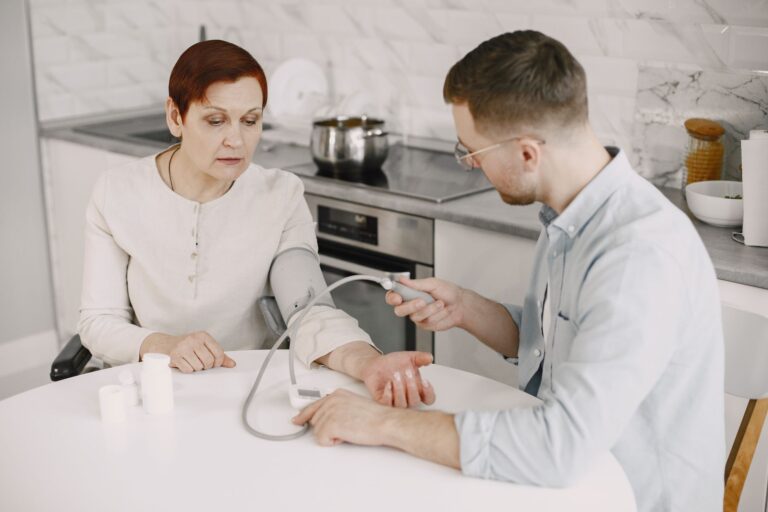
A Do Not Resuscitate (DNR) order in dementia is a medical instruction that tells healthcare providers not to perform cardiopulmonary resuscitation (CPR) if a person’s heart stops beating or breathing ceases. In the context of dementia, this decision becomes particularly complex because a person in moderate to advanced dementia may no longer be able to communicate their wishes clearly, and the outcomes of CPR in this population differ significantly from the general population. The care team needs to understand not just what a DNR order is, but how it applies specifically to someone whose cognitive abilities are declining—and what questions families and guardians should be asking to ensure the decision aligns with that person’s values and medical reality. Consider a scenario: Margaret, a 78-year-old woman with advanced Alzheimer’s disease, lives in a memory care facility.
She can no longer speak in sentences and has difficulty swallowing. Six months ago, before her condition deteriorated, Margaret had a conversation with her daughter about what kind of medical care she would want if she became very ill. Now her daughter faces a decision about whether to sign a DNR order. The question isn’t just “Should Margaret have a DNR?” but rather “What would Margaret have wanted, and what does CPR actually mean for someone in her condition?” These are the conversations that matter.
Medical information disclaimer: This article is for general educational purposes only and does not provide medical advice, diagnosis, or treatment. Always consult a physician or other qualified health professional about symptoms, medications, tests, or treatment decisions.
Table of Contents
- What Questions Should You Ask About DNR Orders in Dementia Care?
- Understanding How Dementia Changes the Equation for CPR
- When the Person Cannot Speak for Themselves
- Having the Conversation with Your Care Team
- Common Misconceptions That Confuse Families
- Legal and Ethical Frameworks Across Different Settings
- Revisiting the Decision as Dementia Progresses
What Questions Should You Ask About DNR Orders in Dementia Care?
The fundamental question families often miss is not whether to sign a DNR, but rather what a DNR means for the specific person in your care. One essential question to ask the care team is: “If CPR is performed on my family member, what are the realistic outcomes?” In people with advanced dementia, CPR has a low survival rate and often results in serious complications including broken ribs, internal bleeding, and permanent hospitalization on a ventilator. The survival-to-discharge rate for nursing home residents with advanced dementia who receive CPR can be dramatically lower than for younger, healthier individuals.
Yet many families haven’t heard these statistics and make decisions based on the assumption that CPR is always a reasonable attempt to save life. Another critical question is: “What was my family member’s own value system before they developed dementia?” Did they express fears about being on life support? Did they prioritize comfort over extending life at all costs? Did they worry about burdening their family? A DNR order should ideally reflect the person’s previously expressed wishes, not the family’s anxiety in the moment. This is why advance care planning—before significant cognitive decline—is so important, though it’s often done too late. If the person never had that conversation, the care team should ask what values guided their life, what activities brought them joy, and what situations they found undignified or frightening.
Understanding How Dementia Changes the Equation for CPR
The relationship between dementia stage and CPR outcomes is often misunderstood by patients and families alike. In mild cognitive impairment or early dementia, a person might still survive CPR with reasonable quality of life. But as dementia progresses to moderate or advanced stages, the medical literature shows that CPR outcomes worsen, complication rates increase, and the person is unlikely to return to their baseline level of function. This doesn’t mean CPR should never be attempted, but it means the conversation should be grounded in what “success” would actually look like for someone at that particular stage of dementia. A crucial limitation to understand is that a DNR order doesn’t mean “do nothing.” It specifically addresses CPR and resuscitation, not other forms of medical care.
A person with a DNR order can still receive antibiotics for pneumonia, pain medication, oxygen, feeding support, and comfort measures. Some families mistakenly believe that signing a DNR means their loved one will be abandoned or receive inferior care. In reality, a DNR often allows the care team to focus on comfort, dignity, and quality of life rather than pursuing aggressive interventions unlikely to restore the person to their previous state. The warning here is important: make sure your care team understands the difference between a DNR and a “do not treat” order. Your family member should receive excellent palliative care, not neglect.
When the Person Cannot Speak for Themselves
One of the hardest scenarios in dementia care occurs when someone cannot express their wishes and never completed advance directives. In these cases, surrogate decision-makers—usually family members—must make choices based on what’s called the “substituted judgment” standard: What would this person have wanted if they could tell us? This requires honest conversations with family members who may have different opinions about what Mom or Dad would have wanted. A daughter might remember her father saying, “I never want to be a vegetable,” while her brother isn’t sure their father ever said anything like that.
These disagreements are real and common. Some care teams introduce a scenario-based conversation to help clarify values. Rather than asking yes-or-no questions about CPR, they ask: “If your mother had a stroke and couldn’t swallow, would she want a feeding tube?” or “If your father developed pneumonia and couldn’t breathe on his own, would he want a ventilator?” These concrete scenarios help families think through what trade-offs their loved one might accept. A real example: One family discovered through these conversations that their mother had mentioned in casual conversation years earlier that she never wanted to “end up on machines.” That small detail, once remembered, made the DNR decision feel like honoring her wishes rather than giving up on her.
Having the Conversation with Your Care Team
The most effective DNR conversations happen when families come prepared with specific questions and the care team dedicates time to the discussion without rushing. One practical approach is to ask the care team to walk you through what they observe about your loved one’s current medical status. Can they swallow safely? How often do they experience pain? How responsive are they to their environment? This grounds the conversation in reality rather than abstract medical hypotheticals.
The care team should also explain what would trigger a CPR situation—does your family member have a condition that makes cardiac arrest likely, or is it relatively unlikely given their current health? A major difference between DNR conversations that work well and those that don’t often comes down to who leads the discussion. If the doctor briefly mentions “We should probably get a DNR signed” and hands you a form, that’s inadequate. If instead a nurse, social worker, or physician sits down to understand your family member’s story—who they were, what mattered to them—and uses that to inform the medical recommendations, the decision usually feels more aligned. Some families find it helpful to write down their loved one’s values on paper before meeting with the care team, so the conversation centers on those values rather than veering into medical jargon or pressure to decide quickly.
Common Misconceptions That Confuse Families
Many families believe that having a DNR order means their loved one will receive worse care or that the doctors have given up. This is false. In fact, research shows that patients with DNR orders often receive better palliative care and more attention to comfort measures because the care team isn’t focused on resuscitation protocols. The misconception often stems from guilt—families worry that signing a DNR is “letting them go” or “choosing death.” It’s worth reframing: A DNR is not a choice to end life; it’s a choice not to pursue a specific medical intervention that has low odds of success and high odds of causing suffering in this population.
Another widespread misunderstanding is that DNR orders are permanent and unchangeable. In reality, a DNR can be revoked at any time, and it should be revisited if the person’s condition improves unexpectedly or if family members develop new information about the person’s wishes. Some care teams recommend reviewing the DNR order every three to six months, especially early in the dementia journey. The warning here is that families sometimes feel locked into their original decision, even when circumstances change or their understanding evolves. You retain the right to change your mind, and the medical team should support that flexibility without judgment.
Legal and Ethical Frameworks Across Different Settings
The legal authority to make DNR decisions varies depending on whether your family member is in a hospital, nursing home, assisted living facility, or at home, and it differs by state and country. In most U.S. states, a legally appointed healthcare proxy or power of attorney can sign a DNR order on behalf of someone who lacks capacity. If no proxy exists, some states have a hierarchy of surrogate decision-makers (spouse, then adult children, then parents). It’s essential to know your local laws because they shape who has authority to make this decision and what documentation is required.
Some states require the DNR to be signed by a physician; others require witnessed signatures. A specific example: In New York, a “Do Not Resuscitate Order” has specific legal language, and families must use the state’s official form to ensure it’s honored across different care settings. Ethically, the care team should use a framework that balances autonomy (respecting what the person would have wanted), beneficence (doing what benefits them), and non-maleficence (avoiding harm). In dementia, these principles don’t always align neatly. Pursuing CPR might seem like “doing good,” but if it causes harm and the person couldn’t have wanted it, it violates both autonomy and non-maleficence. The care team should be able to articulate this reasoning with you, not just give you a form to sign.
Revisiting the Decision as Dementia Progresses
A DNR order made in early dementia may or may not remain appropriate as the disease progresses. The care team should initiate conversations about revisiting the decision if the person’s condition changes significantly—either for better or worse—or if new medical problems emerge. One example: A man with mild cognitive impairment signed a DNR because he didn’t want aggressive interventions. Two years later, he has advanced dementia, has fallen and fractured his hip, and now requires surgery. The surgical team might ask: Does the DNR still apply? Should it? These conversations are uncomfortable but necessary.
Some families discover that their loved one’s declining condition makes them more protective of what time remains, while others become more certain that their loved one wouldn’t want to be kept alive under these circumstances. The practical challenge is that care transitions—hospital to nursing home, nursing home to hospice—are moments when DNR orders can get lost, misunderstood, or contradicted. A patient’s chart might show a DNR, but the ER doctor who receives them in an acute crisis might not see it, or might interpret it differently. Families should carry a copy of the DNR order, ensure it’s in the medical record at every facility, and ask directly whether everyone on the care team knows about it. Some areas use medical alert bracelets or wallet cards to communicate DNR status. The most effective families stay engaged, ask questions repeatedly, and don’t assume that a decision made once will be correctly remembered and honored months later.
- —