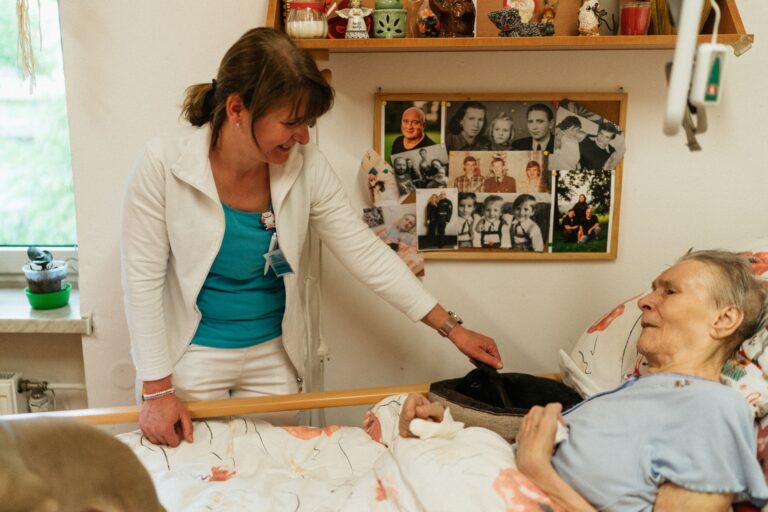
Families should begin discussing hospice when a person with dementia reaches the moderate-to-advanced stages, typically after a diagnosis has been confirmed and the trajectory toward cognitive and functional decline becomes clear. This conversation ideally happens before a crisis occurs—when the person with dementia may still be able to participate in preferences, when emotions are less raw, and when there is time to process information and options without urgency. Consider a 72-year-old man diagnosed with Alzheimer’s disease three years ago who can no longer manage his finances, needs prompting for basic hygiene, and has begun wandering.
His family’s primary care doctor raises the subject of advance planning at a routine visit, suggesting that now is a meaningful time to discuss what comfort-focused care might look like in the future, before he loses the ability to communicate his wishes. Waiting until a medical crisis—a fall, a hospitalization, a severe infection—often forces families into reactive decisions without clarity about what the person with dementia would have wanted. The evidence strongly suggests that earlier conversations, even when uncomfortable, reduce family conflict, decrease aggressive medical interventions at end of life, and increase the likelihood that the person receives care aligned with their values and dignity.
Medical information disclaimer: This article is for general educational purposes only and does not provide medical advice, diagnosis, or treatment. Always consult a physician or other qualified health professional about symptoms, medications, tests, or treatment decisions.
Table of Contents
- Why Early Conversations About Hospice Matter in Advanced Dementia
- Recognizing the Clinical Triggers for Discussing Hospice
- The Role of Family Dynamics and Advance Directives
- How to Initiate the Conversation Without Crisis
- Common Barriers and Misunderstandings
- The Role of Healthcare Providers in Guiding Timing
- Advance Planning Beyond Hospice Discussion
- Frequently Asked Questions
Why Early Conversations About Hospice Matter in Advanced Dementia
The right time to discuss hospice is not a specific date on a calendar but rather a recognition of clinical and personal circumstances. Dementia progresses in stages, and by the moderate stage—typically 2 to 10 years after diagnosis depending on type—families often notice that their loved one is becoming increasingly dependent. At this point, medical complications become more frequent: difficulty swallowing, repeated infections, weight loss, and increased vulnerability to pneumonia or other acute illnesses. Starting the hospice conversation during this window, rather than when the person is actively dying, allows families to absorb information and make deliberate choices. Many families mistakenly believe that discussing hospice means “giving up” or hastening death.
This misunderstanding delays crucial conversations. Hospice is not surrender; it is a shift in medical goals from curative treatment to comfort, symptom management, and quality of life. A family might decide to pursue hospice because they realize that repeat hospitalizations are distressing and that their loved one would prefer to be at home, surrounded by familiar surroundings and loved ones, even if that means a shorter timeframe. Another family might choose to wait longer or pursue a combination of medical treatment and hospice principles. The point is that the conversation itself clarifies values and makes the eventual decision less burdensome.
Recognizing the Clinical Triggers for Discussing Hospice
Certain medical markers in dementia suggest the conversation should happen soon. These include inability to ambulate without assistance, difficulty feeding oneself or refusing food, increased infections, incontinence, inability to recognize family members, and the need for full-time care assistance. When a person with advanced dementia requires 24-hour supervision and can no longer express their basic needs in words, the burdens and benefits of aggressive medical treatment shift. An infection that once would have been treated with antibiotics might now mean hospitalization, restraints to prevent the person from removing IV lines, and distress—or it might be managed at home with comfort-focused care.
These scenarios warrant a direct conversation with the person’s healthcare team about whether ongoing acute care intervention aligns with quality of life. One critical limitation is that dementia itself makes timing difficult: the conversation may need to happen long before the person can meaningfully participate. A person in moderate dementia might still have opinions about comfort and family presence, but by advanced stages, decision-making authority shifts to family members and healthcare proxies. This is why having the conversation earlier—when the person can still speak to their preferences—is so valuable. If that window has passed, families still benefit from discussing what they believe their loved one would want, but they carry the heavier burden of interpretation and decision-making.
The Role of Family Dynamics and Advance Directives
Families are not monolithic, and dementia discussions often surface disagreements that have simmered for years. One adult child might advocate for “everything possible” while another believes their parent would not want prolonged suffering. A spouse might be unable to accept that their partner is dying, while adult children are more ready to plan for comfort care.
The presence of a documented advance directive—a written expression of the person’s wishes regarding end-of-life care—can anchor these conversations in the person’s own values rather than family conflict. However, advance directives are only useful if they actually address dementia specifically and if the person with authority to interpret them (a healthcare proxy or surrogate) is clearly designated. Families should discuss hospice together, ideally including the person with dementia when possible, and certainly involving the primary healthcare provider who can explain the medical realities. A family meeting with a hospice care coordinator before a crisis can answer practical questions: What does hospice actually provide? Would our loved one die sooner with hospice? Can hospice happen at home or in a facility? What will physical decline look like? These conversations normalize planning rather than treating it as taboo, and they often reduce the guilt and second-guessing that can plague families after difficult medical decisions.
How to Initiate the Conversation Without Crisis
Initiating this discussion requires sensitivity and clear language. Rather than framing the conversation as “When do we pull the plug?” or “Is he dying?” a better opening might be: “Your mother has advanced dementia, and I want to talk about what kind of care would feel most important to her if she became very ill. Has she ever said what matters to her—being at home, spending time with family, being comfortable?” This approach centers the person’s values and avoids the combative framing of life versus death. Healthcare providers play a crucial role.
A geriatrician, palliative care specialist, or primary care doctor can introduce the topic with clinical authority, explaining how dementia typically progresses and when complications become common. Families are often more receptive to this conversation when it comes from a trusted medical professional rather than from within the family itself. Some programs, such as serious illness conversations frameworks, provide doctors with language to open these discussions without doom or fatalism. The conversation may need to happen more than once; processing the reality that dementia is terminal takes time, and new questions emerge as the disease progresses.
Common Barriers and Misunderstandings
Denial is a powerful barrier. Some families struggle to accept that dementia is a terminal illness, preferring to focus on managing the current day rather than planning for a future they find unbearable. This is understandable but often leads to last-minute crisis decisions under stress—emergency room visits, intubation, or aggressive interventions that may not align with the person’s wishes or comfort. Another barrier is the fear that discussing hospice will accelerate death. Medical evidence shows that hospice does not shorten life and often supports better symptom management and comfort, potentially supporting survival as long as non-hospice care in many dementia cases.
Financial concerns also complicate discussions. Some families worry that choosing hospice means losing access to beneficial treatments or that hospice is expensive. In reality, Medicare and most insurance plans cover hospice services for people with a prognosis of six months or less, removing cost as a barrier. A significant limitation, however, is that the six-month prognosis is notoriously difficult to predict in dementia; some people live much longer, which can create awkwardness if someone on hospice outlives the expected timeline. Families should know this uncertainty upfront rather than discovering it later.
The Role of Healthcare Providers in Guiding Timing
Primary care doctors, geriatricians, and specialists in dementia care have a responsibility to raise the hospice conversation proactively, not waiting for families to do so. Some practices have formal systems for this—designated touchpoints in care where prognosis and goals are revisited. Others rely on individual provider judgment. A palliative care specialist can be invaluable; they are trained specifically in these conversations and can explain options without the emotional weight that primary care relationships sometimes carry.
Some healthcare systems offer palliative care services concurrent with ongoing medical treatment, bridging the gap between acute care and full hospice, which can ease families into the transition. Timing also depends on the type of dementia. Alzheimer’s disease typically progresses over 8 to 10 years, allowing a longer window for discussion. Frontotemporal dementia or dementia with Lewy bodies often progress more rapidly, compressing the timeline and making earlier conversations even more urgent. A 55-year-old with frontotemporal dementia might need to discuss hospice preferences within one to two years of diagnosis, whereas a 78-year-old with Alzheimer’s might have several more years before the conversation becomes medically imminent.
Advance Planning Beyond Hospice Discussion
The hospice conversation is part of a larger planning process. Families should also clarify financial and legal arrangements—who has durable power of attorney, who is the healthcare proxy, are there assets to protect or debts to address? Some families benefit from meeting with an elder law attorney to ensure that legal documents are in place and clearly understood. The hospice discussion specifically addresses medical goals and comfort priorities, while these other conversations address the practical machinery of care and decision-making authority.
Families should also consider their own values and whether they align with what they believe their loved one would want. A person might have strong feelings about being at home versus a facility, about pain management with opioids, about feeding tubes, or about infection treatment. If these preferences were never explicitly discussed, families will interpret them through their own lens, which can lead to decisions that inadvertently conflict with what the person would have chosen. The earlier these preferences are surfaced—whether through conversation with the person themselves or through educated guesses based on their expressed values—the clearer the path forward when difficult medical decisions arise.
Frequently Asked Questions
Does choosing hospice mean my family member will die sooner?
No. Hospice focuses on comfort and quality of life, not hastening death. Studies show that hospice does not shorten survival in dementia and often improves comfort and symptom management.
When exactly is the “right time” to have this conversation?
The right time is typically during moderate dementia, when functional decline is clear but before a medical crisis. This allows meaningful participation and thoughtful decision-making rather than reactive choices.
Can we change our mind if we choose hospice?
Yes. Hospice is not irreversible. Families can adjust care plans, pursue different interventions, or discontinue hospice services if circumstances or preferences shift.
What if my family member can no longer communicate their wishes?
This is common. Advance directives and healthcare proxies exist to address this gap. If no advance directive exists, family members and the medical team should discuss what the person’s values were and try to make decisions consistent with their known preferences.
Does hospice mean no more doctor visits or medical care?
Hospice includes regular medical oversight. Hospice doctors and nurses manage symptoms, provide medications, and coordinate care. The difference is that the focus shifts from life-prolonging treatment to comfort and quality of life.
Is hospice expensive, or will insurance cover it?
Medicare and most insurance plans cover hospice for people with a prognosis of six months or less, so cost is typically not a barrier for families.