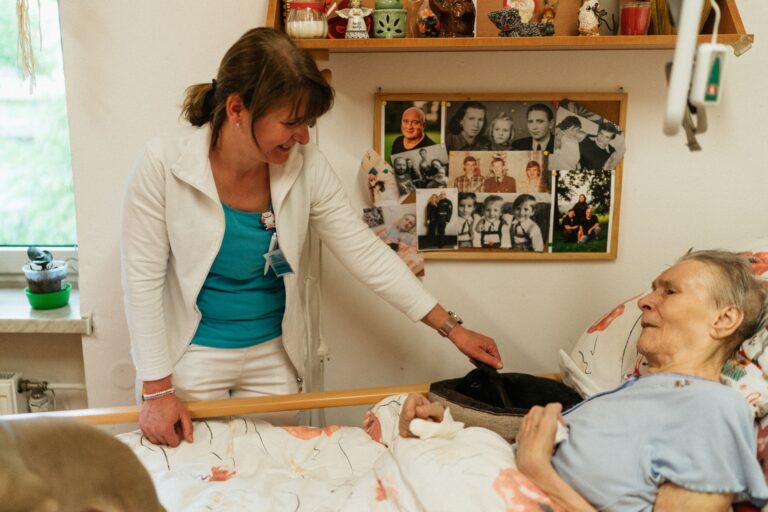
Hospice for dementia at home provides medically supervised comfort care focused on managing symptoms, maintaining dignity, and supporting families through advanced illness. For someone like Margaret, a 78-year-old in late-stage dementia who no longer recognizes family members, hospice delivers skilled nursing visits to manage pain and breathing difficulties, medications delivered to the home, and trained aides who help with personal care and hygiene.
Rather than pursuing treatments aimed at cure, hospice teams redirect care toward quality of life, addressing the specific challenges dementia creates—confusion, agitation, difficulty swallowing, and eventual loss of function. The services vary depending on individual needs and the hospice organization, but core offerings include nursing care, physician oversight, pain and symptom management, aide support, counseling, and 24/7 access to hospice staff. Most hospice patients with dementia remain at home during this care, supported by family and professional caregivers working as a coordinated team.
Medical information disclaimer: This article is for general educational purposes only and does not provide medical advice, diagnosis, or treatment. Always consult a physician or other qualified health professional about symptoms, medications, tests, or treatment decisions.
Table of Contents
- What Specific Medical Care Does Hospice Provide for Dementia Patients?
- Pain Management and End-of-Life Symptom Control
- Support for Family Caregivers and Emotional Care
- Aide Services and Activities of Daily Living Support
- Medication Management and Equipment Provision
- 24/7 Access and Crisis Support
- Planning and Clarifying the Hospice Scope
What Specific Medical Care Does Hospice Provide for Dementia Patients?
hospice nurses visit regularly—typically weekly, though frequency increases as death approaches—to assess comfort, monitor vital signs, and adjust medications as symptoms change. They listen for signs of pain that a dementia patient cannot always express verbally: a grimace, muscle tension, or agitation may indicate discomfort that requires medication adjustment. Physicians (either the patient’s own doctor or the hospice medical director) oversee the care plan and make decisions about which medications to continue, modify, or discontinue.
A significant part of dementia hospice care involves managing the neurological and behavioral symptoms of the disease itself. Medications may address agitation, anxiety, or sleep disturbances that become severe in advanced dementia. Some hospice providers offer different approaches: a hospice team in the Midwest might emphasize low-dose antipsychotics for severe agitation, while another focuses more on environmental changes and comfort measures to reduce the need for heavy medication. Hospice staff can also manage feeding challenges, including discussions about feeding tubes—informing families that such tubes rarely prevent aspiration in advanced dementia and often create complications that reduce comfort.
Pain Management and End-of-Life Symptom Control
Pain management in hospice dementia care addresses both obvious pain from medical conditions (like arthritis or pressure sores) and the quieter, harder-to-identify pain that dementia patients experience but cannot report. Hospice clinicians are trained to recognize pain behavioral cues and to adjust comfort medications proactively rather than waiting for a crisis. A limitation families should understand: not all pain in advanced dementia has a clear medical source.
Sometimes restlessness or agitation stems from fear, confusion, or the neurological disease itself rather than physical pain, and medications alone cannot resolve these sources of distress. Some hospice teams have social workers, chaplains, or music therapists who address these non-pharmacological dimensions of suffering. Others rely primarily on medications and basic comfort measures. The quality and depth of this support varies significantly between hospice providers, and families should ask explicitly what non-drug approaches a hospice offers before enrolling.
Support for Family Caregivers and Emotional Care
Hospice recognizes that dementia places enormous strain on the primary caregiver—often a spouse or adult child—and includes counseling and respite care as formal services. A social worker checks in regularly, helps families navigate grief, and connects them to financial assistance or other resources. Some hospice teams offer memory care consultants who help families understand dementia behavior and adapt their communication and home environment.
One often-overlooked service is bereavement support, which typically extends for about a year after the patient’s death. Hospice staff, having worked closely with the family, continue to offer counseling, support groups, and resources to address the complicated grief that follows a prolonged dementia decline. For many caregivers who have been “anticipatory grieving” for years as their loved one declined, this formal support can help process what comes next.
Aide Services and Activities of Daily Living Support
Hospice provides trained aides who assist with bathing, dressing, toileting, and other personal care tasks. For families struggling with the physical demands of dementia—turning a loved one in bed, managing incontinence, bathing someone who resists—aide support can be transformative. An aide might visit multiple times per week, freeing the family from the most physically demanding tasks and providing a break from the emotional weight of constant caregiving.
However, the amount and frequency of aide support is often limited. A typical Medicare hospice benefit might provide aide services, but not every day, and not all hours. Some families find that once their loved one needs help 24/7, they need to hire private aides in addition to hospice services, creating out-of-pocket expenses. Families with resources might blend hospice support with private-pay caregivers to fill gaps.
Medication Management and Equipment Provision
Hospice delivers medications to the home and manages the complexity of which drugs to continue and which to stop. A dementia patient on five blood pressure medications and a statin may no longer benefit from these—the goal shifts to comfort, not longevity. Hospice helps families understand that discontinuing some medications is not abandonment but rather a realistic shift in priorities. They also supply comfort medications like anti-anxiety drugs, pain relievers, and medications to manage secretions or breathing difficulty.
A significant challenge arises when symptoms emerge that fall outside typical comfort care, or when families disagree about priorities. Some families want everything possible done for symptom relief, including interventions that hospice might consider aggressive. Others withdraw even faster than clinical changes warrant. Hospice staff should communicate clearly about what they can and cannot do, and help families make decisions aligned with their values—but some hospice organizations are better at this conversation than others. Families should feel empowered to ask hard questions and change providers if they sense misalignment.
24/7 Access and Crisis Support
Hospice provides round-the-clock on-call support, meaning families can reach a nurse at any hour if symptoms worsen or concerns arise. This lifeline prevents many emergency room visits and hospital admissions. For families caring for someone at home, knowing that expert help is available at 2 a.m.
if breathing becomes labored or agitation spikes offers crucial peace of mind. When an actual emergency occurs—severe bleeding, seizure, or respiratory distress—hospice nurses can often manage it at home with comfort medications and skilled support, though some families still choose to call 911. The availability of this immediate phone support distinguishes hospice from many other care models and addresses one of caregivers’ deepest fears: being alone with an unmanageable crisis.
Planning and Clarifying the Hospice Scope
Before enrolling in hospice, families should understand exactly what the organization will provide. Reputable hospice programs require a detailed initial assessment, a formal care plan in writing, and clear explanations of what is and is not included.
Some hospices excel at coordination with the patient’s existing doctors; others may communicate poorly. Some have robust volunteer programs; others have few. Asking about specific services—music therapy, pet visits, volunteer support, chaplaincy, bereavement groups—during the enrollment process helps set realistic expectations and reveals which organization might be the best fit for a family’s values and needs.