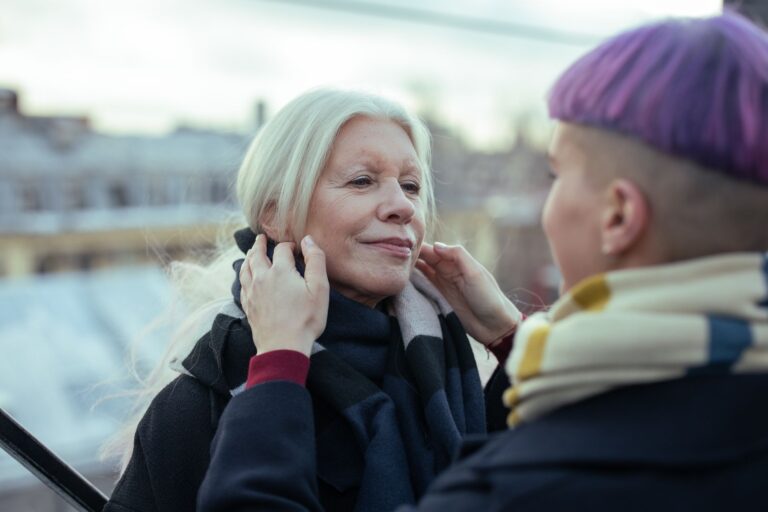
Refusing a coat is not, by itself, a diagnostic sign of dementia. Before insisting, look for discomfort, confusion, fear, communication difficulty, or an environmental trigger. A person with dementia may resist a coat because it feels hot, cold, scratchy, restrictive, or painful. The refusal may also reflect difficulty understanding the request or completing the steps needed to dress.
Medical information disclaimer: This article is for general educational purposes only and does not provide medical advice, diagnosis, or treatment. Always consult a physician or other qualified health professional about symptoms, medications, tests, or treatment decisions.
Table of Contents
- What might coat refusal mean?
- Check comfort before correcting behavior
- How should you respond in the moment?
- When should a refusal prompt medical advice?
- Frequently Asked Questions
What might coat refusal mean?
dementia care guidance does not treat coat refusal as proof of dementia or as a specific symptom. The Alzheimer's Association identifies several possible contributors to resistance, including discomfort, impaired sequencing, fear, communication problems, and surroundings that feel confusing or threatening. Alzheimer's Association guidance on behavior changes Clothing can also become harder to manage as cognitive and sensory changes progress.
A person may struggle to recognize what the coat is for, remember how to put it on, or tolerate its texture and weight. Refusal also does not necessarily mean the person is being difficult. It may be the clearest available way to communicate that something feels wrong.
Check comfort before correcting behavior
Start with the coat itself and the immediate environment. Ask whether it feels too warm, too cold, scratchy, tight, heavy, or difficult to move in. Check for uncomfortable seams, labels, fasteners, or layers underneath. Then consider other basic needs.
The Alzheimer's Association advises checking for pain, hunger, thirst, constipation, a full bladder, fatigue, infection, skin irritation, and room temperature before responding to behavioral symptoms. Arthritis pain may also make dressing movements painful, even when the person cannot explain the problem. A 2013 observational study of 179 agitated nursing-home residents with dementia found an average of three discomfort sources per resident. Cold was observed in 15.1%, while tiredness, immobility, restraints, and poor lighting occurred more often. This suggests that cold can matter, but it is only one possible contributor.
How should you respond in the moment?
Reduce pressure and make the task simpler. offer one choice at a time, use a calm explanation, and allow extra time. The National Institute on Aging recommends preserving independence, reducing choices, presenting one clothing item at a time, and choosing loose, comfortable clothing.
National Institute on Aging dressing guidance Try a practical adjustment rather than repeating the demand: If the person appears frightened or angry, pause. Insisting may increase distress and make future dressing more difficult. Safety still matters, but the immediate goal is to understand what the refusal communicates.
- Offer a softer or lighter coat.
- Remove a scratchy layer or irritating tag.
- Warm the coat indoors before offering it.
- Demonstrate the first step without rushing.
- Offer the coat again later if the person is tired or distressed.
When should a refusal prompt medical advice?
Look for a sudden change from the person's usual behavior. Pain, poor sleep, sensory problems, constipation, hunger, thirst, medication effects, or a noisy environment can all contribute to behavior changes, according to the National Institute on Aging. National Institute on Aging guidance on behavior and communication Contact a doctor when the change is sudden, rapidly fluctuating, or follows an infection or medication change.
These patterns can signal a treatable illness or an adverse medication effect. Research can show associations without explaining an individual case. A UK study found more refusal of personal care among people with greater agitation and less refusal among those with greater independence in daily activities, but it did not assess pain or delirium. Therefore, it cannot establish why a particular person refuses a coat.
Frequently Asked Questions
Should I insist if it is cold outside?
Address the safety concern calmly, but first check whether the coat causes pain, irritation, confusion, or overheating. Try a more comfortable option and pause if distress escalates.
Does refusing a coat mean dementia is getting worse?
Not necessarily. Refusal can have many causes, including discomfort, fatigue, illness, medication effects, or difficulty with the dressing task.
What if the person cannot explain what is wrong?
Observe facial expressions, movement, changes in mood, and responses to different garments. A sudden or fluctuating change warrants medical advice.