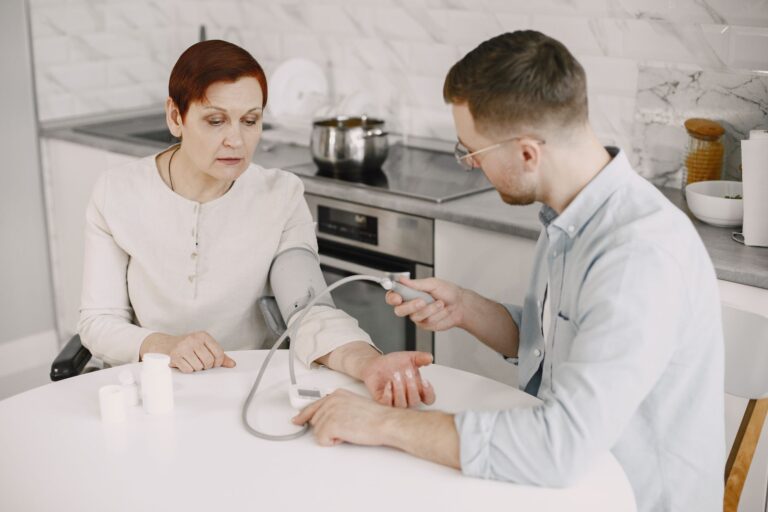
Waiting between courses has not been shown to cause confusion in people with dementia. The safer approach is predictable meal timing, a familiar setting, and serving the next food when the person is ready. Confusion may reflect memory loss, difficulty understanding the meal, distractions, or an unpredictable routine. The available evidence does not establish a specific waiting time that prevents confusion.
Medical information disclaimer: This article is for general educational purposes only and does not provide medical advice, diagnosis, or treatment. Always consult a physician or other qualified health professional about symptoms, medications, tests, or treatment decisions.
Table of Contents
- What does the evidence show?
- Why might someone ask for food again?
- How should courses be served?
- When does waiting become a service problem?
What does the evidence show?
A March 2025 review of mealtime interventions found that most evidence was very low or low quality. It did not identify waiting between courses as a tested cause of confusion or as a proven intervention for preventing it. The PubMed-indexed review therefore does not support a fixed rule about how long courses should take.
This does not mean delays never cause problems. A person may lose interest, forget what they are waiting for, or leave before the meal is complete. These practical risks differ from proving that the interval itself causes dementia-related confusion. The useful question is not, "What is the correct number of minutes?" It is, "Is this person comfortable, engaged, and ready for the next part of the meal?".
Why might someone ask for food again?
People with dementia may forget that they have recently eaten or worry about when the next meal will come. This can lead to repeated requests for food or eating more often, according to the Alzheimer's Society. Its guidance on appetite and dementia describes the memory and anxiety behind this behavior.
A disrupted routine can also make mealtimes harder to understand. The Alzheimer's Society reports that uncertainty about when meals occur may prompt more frequent food-seeking, supporting predictable meal timing without proving that one particular pause between courses causes confusion. Keep the daily pattern as consistent as practical:.
- Serve meals at familiar times.
- Use the same dining place when possible.
- Explain what is happening in simple, calm words.
- Avoid making the person wait without information.
- Notice whether hunger, anxiety, or boredom is driving repeated requests.
How should courses be served?
The National Institute on Aging advises serving meals at familiar times and in a consistent, familiar place and manner for people with Alzheimer's disease. The NIA caregiving guidance supports consistency as a practical way to make meals easier to recognize. Serving one course at a time can be helpful when a full place setting feels overwhelming. The NIA also recommends offering one food item at a time and not rushing the meal, so the next course can reasonably wait until the person has finished or is ready.
Its mealtime tips do not require a fixed interval. For someone who becomes distracted, present only what is needed. The Alzheimer's Association advises quiet surroundings, simple contrasting table settings, necessary utensils only, and one or two food items at a time for people who have difficulty eating in middle-stage Alzheimer's disease. Watch for the person's cues:.
- They are still eating or looking at the current food.
- They appear tired, distracted, or unsure what to do.
- They ask what comes next.
- They seem ready for another course.
- They want to stop rather than continue.
When does waiting become a service problem?
A long or poorly managed delay can harm the meal even when it does not directly cause dementia-related confusion. In one care-home inspection, a resident waited 40 minutes for a main course and another 15 minutes after receiving the wrong meal. Another resident received dessert before finishing the main course. The Care Quality Commission inspection report documents service failures and poor sequencing, not a proven confusion mechanism.
Prompt, individualized service is especially important when a person tires easily or tends to leave the table. Another Care Quality Commission inspection found that reducing the time between courses helped residents stay long enough to complete their meals. That inspection report supports adapting the pace to the person. If waiting repeatedly leads to distress, leaving, or an unfinished meal, shorten the interval, offer the next item sooner, or serve a simpler one-course meal. If the person remains comfortable and engaged, a brief pause is not automatically a problem.