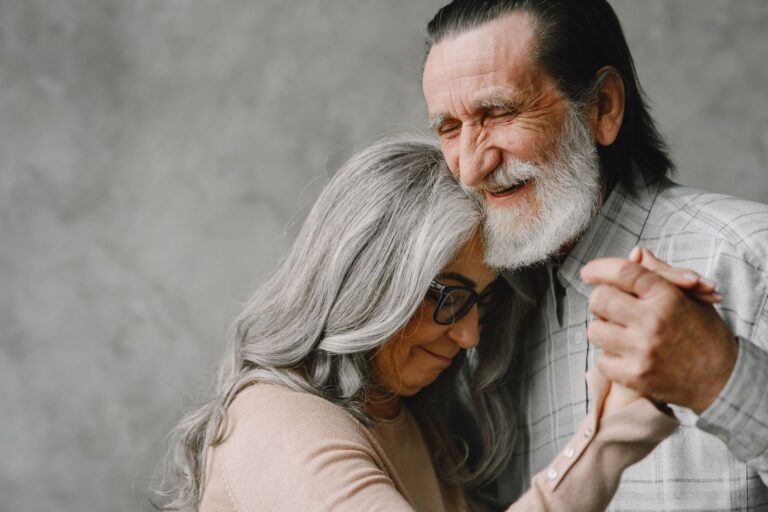
Dancing is linked to lower dementia risk after age 65, but the evidence has clear limits. Dementia means a decline in memory and thinking that interferes with daily life, and dance appears to support brain health rather than prevent dementia outright. This article explains what studies found, where results fall short, and how older adults can use dance safely. It is written for people planning activity for themselves or for someone they support.
Medical information disclaimer: This article is for general educational purposes only and does not provide medical advice, diagnosis, or treatment. Always consult a physician or other qualified health professional about symptoms, medications, tests, or treatment decisions.
Table of Contents
- What did the long-term study find?
- Why does that result not prove cause?
- What do controlled trials add?
- How can adults over 65 use dance safely?
- Who should take extra care?
What did the long-term study find?
In 469 community-dwelling adults over age 75 without dementia, frequent dancing stood out. It was the only physical leisure activity tied to lower new cases of dementia, with about 76% lower risk, according to the BMJ summary of Verghese and colleagues BMJ summary of the 2003 NEJM study.
That pattern drew attention because walking, swimming, and other exercise did not show the same link. Dance combines movement with music, timing, memory for steps, and often a partner or group.
Why does that result not prove cause?
The 2003 finding was observational, so it cannot establish cause and effect. The TORRTA review notes that early undiagnosed decline may reduce dancing before diagnosis, and other differences between dancers and non-dancers may explain part of the link.
This matters for decisions after 65. Dance remains a promising habit, not a proven shield. People with memory concerns should still seek medical advice and keep other health care in place.
What do controlled trials add?
Across 13 randomized trials with 1,174 adults averaging 70.7 years, dance programs produced a small but significant overall gain in thinking skills, according to the American College of Sports Medicine meta-analysis in Medicine & Science in Sports & Exercise ACSM meta-analysis of dance and cognition. The same 2025 analysis found that dance significantly reduced depression in older adults, with a nearly moderate effect size.
A separate 18-month trial averaging age 68, reported by Rehfeld and colleagues in Frontiers in Human Neuroscience, found that both dance and fitness training increased hippocampal volume, while only constantly changing dance routines improved balance. Mood, balance, and memory matter together. Better mood supports participation, and better balance lowers fall risk during daily movement.
How can adults over 65 use dance safely?
Health guidance frames dance as one part of an active routine. The World Health Organization advises at least 150 minutes of moderate aerobic activity or 75 minutes of vigorous activity each week for adults 65 and older WHO activity guidance via Penn Memory Center.
The Alzheimer's Association guidance also urges combining habits for maximum benefit: aerobic exercise, mentally challenging activity, and social engagement such as a dance class. A weekly plan can be simple and steady.
- Pick a style with clear steps, such as ballroom, line dancing, folk, or low-impact social dance.
- Start with one or two classes per week, plus short practice walks on other days.
- Choose a level class, supportive shoes, water, and a clear floor with handholds nearby.
- Learn new routines over time, since changing steps trains memory and balance.
- Stop and check with a clinician for chest pain, dizziness, falls, or worsening memory.
Who should take extra care?
Begin slowly after a long inactive period, joint replacement, heart condition, or repeated falls. Tell the instructor about limits before class, and ask for seated warm-ups or simpler turns when needed.
Bring a partner, friend, aide, or family member when supervision helps. Review medicines, vision, hearing, footwear, and home lighting as well, because these affect steadiness on the dance floor.