Reviewed by the Help Dementia Editorial Team — our editors review every article for accuracy against guidance from the National Institute on Aging, the Alzheimer’s Association, and peer-reviewed sources.
Combining wearing sits at the center of this dementia and brain health question.
Research suggests that combining hearing aids with playing a musical instrument could offer powerful protection against cognitive decline and dementia, though it’s important to note that current studies examine these two interventions separately rather than together. A person who uses hearing aids starting before age 70 shows a 61% lower risk of developing dementia over 20 years, while someone who plays an instrument at least weekly has a 35% lower dementia risk over seven years. Consider Margaret, a 68-year-old who noticed her hearing fading after years working in a hospital. When she got her first hearing aids and dusted off her neglected violin, she wasn’t just addressing hearing loss—she was engaging two of the most evidence-backed cognitive protection strategies available.
The potential power of this combined approach lies in how each intervention addresses dementia risk through different mechanisms. Hearing aids reduce the cognitive burden of struggling to understand speech and sounds, freeing up mental resources for other tasks and strengthening social connections. Playing an instrument demands active engagement from multiple brain regions simultaneously—auditory processing, motor control, memory, and emotional regulation all fire together. While no published research yet specifically measures the combined effect of both interventions in the same population, the cumulative evidence suggests that pairing better hearing with intentional musical engagement could meaningfully influence dementia trajectory.
Table of Contents
- How Do Hearing Aids and Musical Instruments Each Reduce Dementia Risk?
- Understanding How Hearing Aids Reduce Cognitive Decline
- The Brain-Boosting Benefits of Playing a Musical Instrument
- Creating Your Personalized Hearing and Music Strategy
- Important Limitations and What the Research Doesn’t Tell Us
- Getting Started with Hearing Aids and Music
- The Broader Picture of Dementia Prevention
- Conclusion
How Do Hearing Aids and Musical Instruments Each Reduce Dementia Risk?
hearing aids have been shown to reduce cognitive decline by almost 50% in older adults at high risk of dementia, according to research from the National Institutes of Health. This protection emerges because untreated hearing loss forces the brain to work harder just to process basic sounds and speech—a phenomenon researchers call “cognitive load.” When your brain exhausts itself interpreting fragmented audio, fewer cognitive resources remain available for memory formation, executive function, and other protective thinking skills. Johns Hopkins research found that adults who adopted hearing aids before age 70 experienced a 61% lower dementia risk compared to those who never used them, a finding that held even accounting for other risk factors like education and cardiovascular health. Playing a musical instrument engages the brain differently but equally intensely.
A 2025 study found that people who played instruments at least once weekly had a 35% lower dementia risk over seven years. When you play an instrument, your brain simultaneously processes visual information (reading music), auditory feedback (hearing what you produce), motor commands (finger and hand movements), memory (recalling pieces and techniques), and emotional content (interpreting musical expression). The brain regions activated during instrumental music overlap significantly with those affected by early cognitive decline, essentially providing a form of cognitive exercise specifically targeting dementia risk zones. Interestingly, when people combined playing instruments with frequent music listening, the dementia risk reduction reached 33%—demonstrating that music engagement in multiple forms offers compound benefits.
Understanding How Hearing Aids Reduce Cognitive Decline
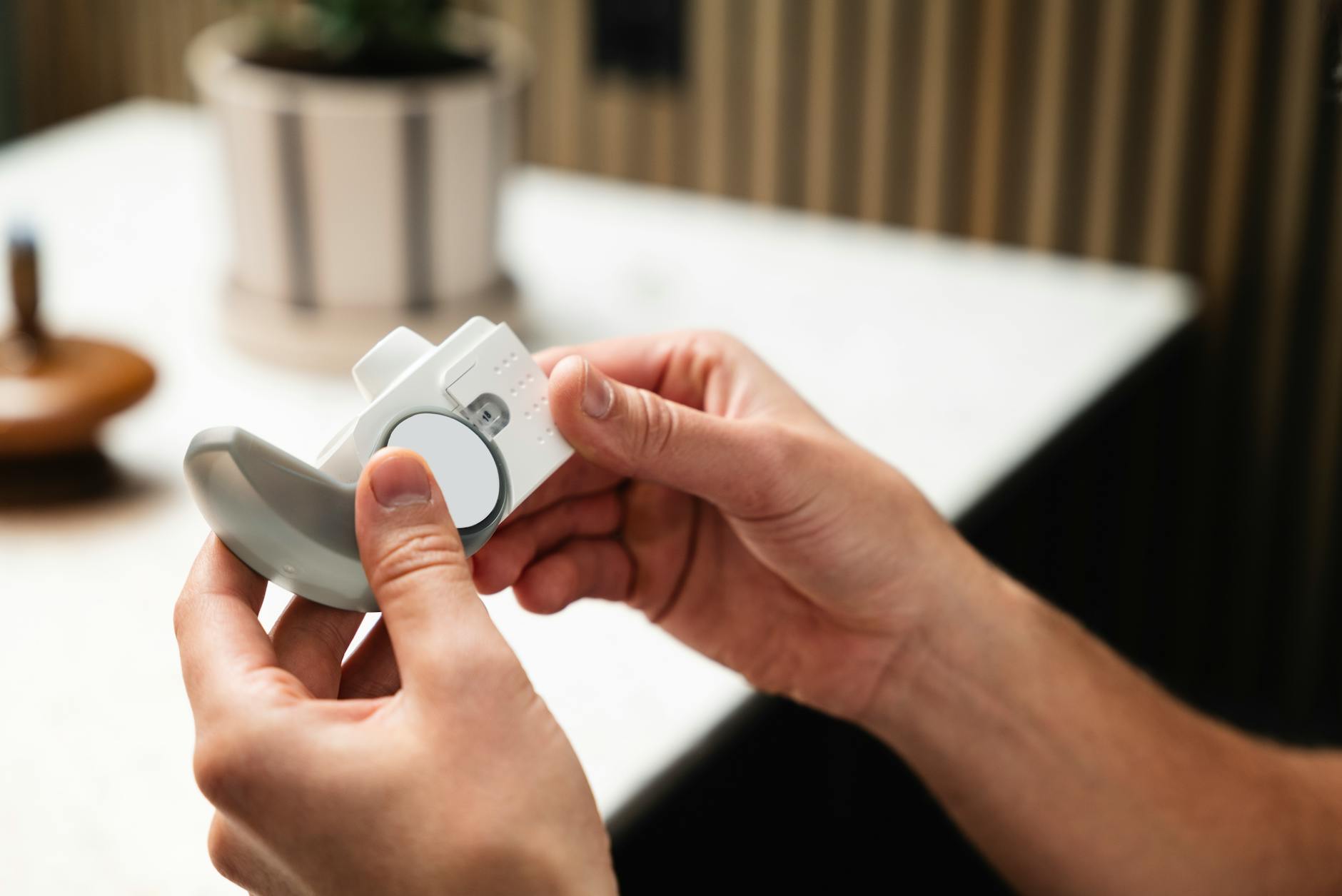
The mechanism behind hearing aids‘ protective effect centers on reducing “listening effort”—the mental strain required to extract meaning from degraded or incomplete sound signals. When hearing loss goes unaddressed, the brain allocates disproportionate cognitive resources just to basic auditory processing. This cognitive taxation appears to accelerate aging-related cognitive decline, creating a kind of premature depletion of mental reserves. UCLA Health researchers explain that hearing aids work not by restoring perfect hearing, but by reducing the unnecessary cognitive load, allowing the mind to maintain capacity for other important functions like memory consolidation and social processing. Beyond simply making sounds audible, hearing aids restore social engagement—one of the most powerful protective factors against dementia.
Someone who struggles to hear withdraws from conversations, family gatherings, and community involvement. Over years, this social withdrawal correlates with cognitive decline independent of any other factor. By making conversation and social participation accessible again, hearing aids protect cognitive health through multiple pathways simultaneously. However, it’s crucial to understand that hearing aids must be fitted properly and worn consistently to deliver these benefits. A hearing aid gathering dust in a drawer provides no protection; the brain’s neuroplasticity requires sustained engagement with improved auditory input over months and years to cement cognitive benefits.
The Brain-Boosting Benefits of Playing a Musical Instrument
playing an instrument represents one of the most comprehensive forms of cognitive exercise available to older adults, engaging nearly every brain region involved in higher-order thinking. Musicians demonstrate structural differences in brain regions associated with memory, attention, and executive function compared to non-musicians—differences that appear to accumulate over decades of playing. This constant recruitment of multiple neural networks essentially “cross-trains” the brain, building redundancy and resilience against the specific patterns of neural loss seen in dementia. Unlike passive activities like watching television, instrumental music demands active decision-making, problem-solving, and real-time correction, all of which strengthen neural connections.
Consider Thomas, a former accountant who took up piano at age 71 after his wife suggested he needed a new hobby. Two years into lessons, his neuropsychological testing showed significant improvements in attention span and processing speed—areas where he’d been showing subtle decline. Thomas practiced 45 minutes most days, and he reported that mastering a difficult piece felt more satisfying than anything he’d accomplished in decades. The physical coordination required by instrumental playing also engages motor regions of the brain that, when stimulated regularly, appear to have protective effects against cognitive aging. Research suggests that even beginners starting instrumental music later in life can access these protective benefits—you don’t need to be a concert pianist to help your brain.

Creating Your Personalized Hearing and Music Strategy
For someone considering both hearing aids and instrumental music, the timing and implementation matter. Most hearing professionals recommend beginning hearing aid use as soon as hearing loss is detected, rather than waiting for “significant” loss to develop. Waiting allows years of unaddressed hearing loss to burden cognition, and the brain adapts poorly to sound once it has adjusted to quietness. In contrast, instrumental music can begin at any age and requires only a modest initial investment—a decent beginner’s guitar costs less than a year of hearing aid batteries, and rental programs allow you to try instruments inexpensively. The practical tradeoff involves consistency versus perfection.
Someone with limited time might benefit more from 20 minutes of violin practice three times weekly than from searching endlessly for the “perfect” instrument or waiting for the “right moment” to start. Similarly, wearing hearing aids imperfectly—occasionally rather than consistently—provides less benefit than consistent daily use, but even imperfect hearing aid use shows measurable cognitive advantages over no use. Many people combine these interventions gradually: perhaps adopting hearing aids first to improve communication and daily function, then adding instrumental music as a secondary cognitive investment. Others discover that hearing aids make music more enjoyable, which motivates them to learn an instrument. There is no single optimal sequence; consistency and engagement matter more than perfect timing.
Important Limitations and What the Research Doesn’t Tell Us
A critical limitation exists in the current research: no published studies yet examine the specific combined effect of hearing aids and instrumental music playing in the same population. The 61% reduction from hearing aids and the 35% reduction from instrumental music come from separate research populations and may not add together in simple arithmetic. The true combined effect could be greater, lesser, or similar to the sum of individual effects—we simply don’t know yet. This distinction matters because it means anyone adopting both interventions is based on strong independent evidence for each, but not on demonstrated synergy between them.
Future research specifically measuring outcomes in people using both interventions simultaneously would answer this crucial question. Another important limitation involves who benefits most and who might benefit less. The 61% hearing aid reduction came from people who adopted aids before age 70, which raises questions about whether starting later provides equivalent protection. Similarly, instrumental music research includes people of various ages and experience levels, but we lack clarity on minimum practice thresholds—how much playing is necessary to activate protective effects? Some people with severe arthritis cannot physically play certain instruments, and some individuals have cognitive or neurological conditions that make instrumental learning difficult. Additionally, access remains unequal: hearing aids can cost thousands of dollars and insurance coverage varies widely, while quality music instruction requires time and money not all individuals can invest.

Getting Started with Hearing Aids and Music
Beginning with a hearing test provides the foundation for both interventions. An audiologist can identify hearing loss, discuss hearing aid options, and create a fitting plan tailored to your specific hearing profile. Modern hearing aids offer adjustable settings for different environments—quieter settings for music listening, amplification profiles for conversation—allowing you to optimize your auditory experience across different contexts. Many people report surprise at how quickly their brains readjust once sounds return, often within days to weeks of consistent hearing aid use.
For instrumental music, consider what draws you personally rather than what “should” be good for cognition. Someone drawn to guitar will practice more consistently than someone forcing themselves to learn piano because it ranks higher on cognitive benefit lists. Many communities offer older-adult music classes specifically designed for beginners, creating social connection alongside musical learning. Research suggests starting with a teacher rather than self-teaching increases the likelihood of sustained practice and reduces the risk of developing poor technique that could lead to injury or frustration. David, a retired mechanic, started trumpet lessons at 74 and found the structured practice and weekly accountability crucial—without the appointment time with his teacher, he admitted he likely would have abandoned the instrument within months.
The Broader Picture of Dementia Prevention
Hearing and music represent two modifiable risk factors in a growing list of dementia prevention strategies. Unlike risk factors you cannot change—family history, age, genetic predisposition—hearing loss and music engagement respond to intervention. This distinction gives them unusual practical value in dementia prevention. The broader dementia prevention evidence suggests that interventions most effective at scale involve sustainable, enjoyable activities that people can maintain for years.
Hearing aids improve your immediate quality of life through better communication and safety, while instrumental music provides continuing enjoyment and social opportunity. These co-benefits mean people often maintain both interventions not primarily from cognitive fear, but because they genuinely improve daily life. Future research will likely clarify the specific combined impact of hearing aids and instrumental music, potentially opening conversations about these interventions as prescription-level cognitive medicine. As neuroscience increasingly reveals that the aging brain remains plastic and responsive to sustained engagement, the outdated notion that cognitive decline is inevitable continues to fade. Your hearing and your music engagement are not luxuries for a privileged few—they represent actionable cognitive health tools available to most people willing to address hearing loss and invest in musical engagement.
Conclusion
Combining hearing aids with instrumental music leverages two independently proven dementia-prevention pathways: reducing the cognitive burden of untreated hearing loss while simultaneously engaging multiple brain systems through active musical participation. The evidence shows hearing aid users experience 61% lower dementia risk and instrumental musicians show 35% risk reduction, representing substantial protection that compounds when both interventions are maintained over years. Your next step depends on your current situation.
If you haven’t had your hearing tested recently, scheduling an audiological evaluation provides the foundation. If you already wear hearing aids, exploring instrumental music offers an additional cognitive investment. Neither intervention requires you to become an expert or performer—consistency and engagement matter far more than proficiency. The goal is not to become a concert musician or to restore perfect hearing, but to maintain the active engagement and cognitive stimulation that your aging brain needs to resist decline.
You Might Also Like
- Combining playing an instrument and high intensity interval training Cuts Dementia Risk Dramatically
- Combining socializing weekly and reducing air pollution exposure Cuts Dementia Risk Dramatically
- Combining sauna use and reducing air pollution exposure Cuts Dementia Risk Dramatically
For more, see National Institute on Aging.