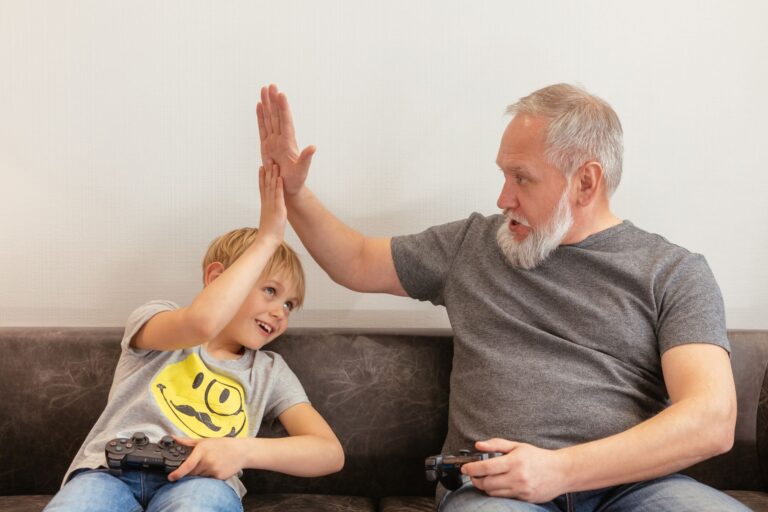
Yes, caregivers can use games to reduce agitation in dementia care. Games work as a form of engaging, personalized activity that shifts attention and offers pleasure, interest, and social contact. Agitation means restlessness, worry, irritability, or distress that can lead to pacing, shouting, or resistance to care. The Alzheimer's Association advises caregivers to involve the person in art, music, or other activities to engage them and divert attention from anxiety and agitation, as described in Alzheimer's Association guidance on anxiety and agitation.
Medical information disclaimer: This article is for general educational purposes only and does not provide medical advice, diagnosis, or treatment. Always consult a physician or other qualified health professional about symptoms, medications, tests, or treatment decisions.
Table of Contents
- What do care guidelines recommend?
- How well do tailored activities work for agitation?
- Which types of games show promise?
- How can caregivers use games during agitation?
What do care guidelines recommend?
Major care guidelines place engaging activities first for distress. The United Kingdom's National Institute for Health and Care Excellence says non-drug care for distress can include personalized activities that promote engagement, pleasure, and interest, including calming and distracting an agitated person, according to the NICE quality standard on managing distress. That advice applies across dementia types and severity levels.
A review in Translational Psychiatry notes that British, American, Canadian, and European geriatric-psychiatry bodies recommend non-drug approaches as first-line treatment for agitation. For caregivers, this means games are not a distraction trick. They are part of accepted distress care, alongside music, art, walks, simple tasks, and calm reassurance.
How well do tailored activities work for agitation?
Personally tailored activities may help manage agitation in people with moderate or severe dementia in long-term care. A 2023 Cochrane review found the benefit may be small and may last only while the activities continue, as summarized in the 2023 Cochrane review summary. That pattern matters for planning.
Short, pleasant engagement often brings the clearest change, and stopping the activity can allow restlessness to return. Regular brief sessions usually help more than one long session. Match the game to past interests, current abilities, and time of day. A former card player may respond to sorting large cards, while a music lover may settle faster with sing-along or rhythm games.
Which types of games show promise?
Simple interactive light games have reduced withdrawal and raised social contact. In a two-month study of 25 residents with moderate or severe dementia, Tovertafel interactive light games reduced apathy and increased social activity and interaction, reported in the 2024 Tovertafel study report. Calming virtual-reality nature scenes have also reduced specific agitation behaviors during use in a very small study of two women with dementia.
Video games and serious games designed for health show potential for dementia care, mainly for short-term gains in thinking, mood, and daily function. The practical point is to choose calm, failure-free play. Look for large images, clear sounds, simple choices, familiar themes, and no timers, scores, or complex rules.
How can caregivers use games during agitation?
Start before distress peaks when possible, and keep the setting quiet. Offer one clear choice, sit beside the person, and join the play.
Stop and change course if the person withdraws, pushes materials away, or becomes louder. Try a walk, quiet music, hand massage, folding towels, or sitting together instead, then offer a different game later.
- Watch for early signs: pacing, frowning, picking at clothes, raised voice, or repeated questions
- Offer a familiar game: picture dominoes, large-piece puzzles, sorting buttons by color, balloon tap, or nature videos with simple narration
- Keep turns short: play for 10 to 20 minutes, praise effort, and pause if frustration rises
- End with comfort: offer water, a snack, fresh air, or a preferred song, then note what worked for next time