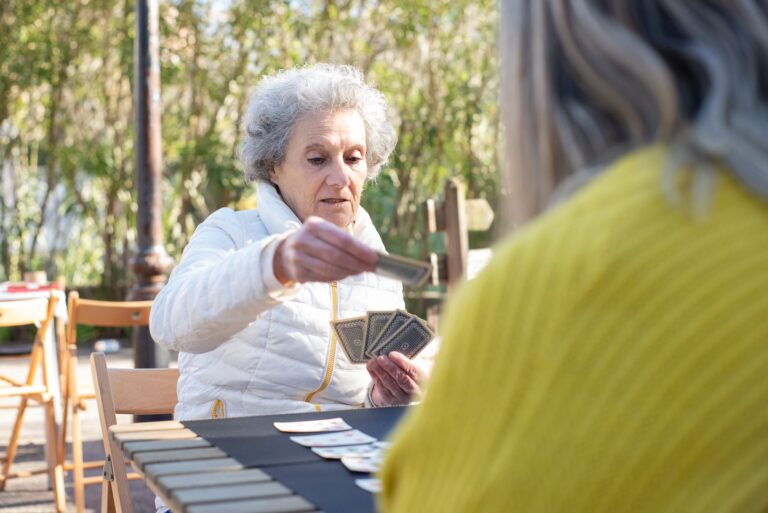
Caregivers adapt bingo for someone with memory loss by simplifying the card, playing as a partner, and slowing the pace. They use large print, fewer squares, pictures, help with marking, and short, social rounds. Here, adaptation means changing materials and rules so the person can still take part with less strain. The aim is engagement, routine, and enjoyment rather than winning or competition.
Medical information disclaimer: This article is for general educational purposes only and does not provide medical advice, diagnosis, or treatment. Always consult a physician or other qualified health professional about symptoms, medications, tests, or treatment decisions.
Table of Contents
- What does an easier bingo card look like?
- How do you help without taking over?
- Should you slow down or try musical bingo?
- When should you change course or stop?
What does an easier bingo card look like?
Many caregivers start with sight and choice. They pick large-print numbers with strong contrast, such as black on white or yellow. They use fewer squares so each card holds less to scan. They also replace some numbers with familiar pictures or words.
Examples include animals, foods, household objects, or family photos. ONELIFE Senior Living describes these simpler picture and personal-photo versions in its dementia activities guide. A practical setup is one card per player, plus large markers that are easy to grip. Thick chips, bottle caps, or Velcro squares work better than small beans. Keep spare cards ready in case print size or picture style feels wrong.
How do you help without taking over?
Sit beside the person and play as a team. Follow the same card together, point to each called number, and let the person place the marker. This keeps the person active instead of watching or falling behind. Help only as much as needed.
You might sort the markers, hold the card steady, or cover a square after they find it. Let them call "bingo," show the card, or pick a small prize. Keep your tone calm and upbeat. Praise effort, laugh together, and treat near-misses as part of the fun. If they lose track, gently guide them back to the next call.
Should you slow down or try musical bingo?
Short, steady rounds fit shorter attention spans. Call each number clearly twice, show it on a large board or card, then pause for marking. Aim for about 10 to 15 minutes, with a break before another round. Musical bingo offers another path when numbers feel hard.
Instead of calling numbers, you play short clips of familiar songs for players to name, finish, or match to a title card. The Alzheimer's Society community highlights this music-based version in its forum discussion of games to play. Choose songs the person has long known. Old favorites, hymns, holiday tunes, and early-adult hits often spark recognition and singing.
- Call one item at a time.
- Say it twice and show it visually.
- Pause until marking is done.
- Stop after 10 to 15 minutes.
When should you change course or stop?
Match the game to the person's current stage and mood. Early on, a near-standard card with larger print may work. Later, move to fewer squares, picture cards, partner play, or song clips. Staging guidance from the National Council of Certified Dementia Practitioners advises simplifying further or stopping when frustration, fatigue, or withdrawal appear in its dementia activities guidance.
Watch for sighing, pushing cards away, rubbing eyes, restlessness, or going quiet. Keeping the game social matters on its own. Rush researchers found the most socially active older adults developed dementia an average of five years later than the least active, according to Rush University Medical Center news. Invite one or two familiar players, serve a snack, and end while the mood is still good.
- Frustration or annoyance at missed numbers.
- Tired eyes, yawning, or loss of focus.
- Leaving the table or refusing markers.
- Distress from noise, speed, or rules.