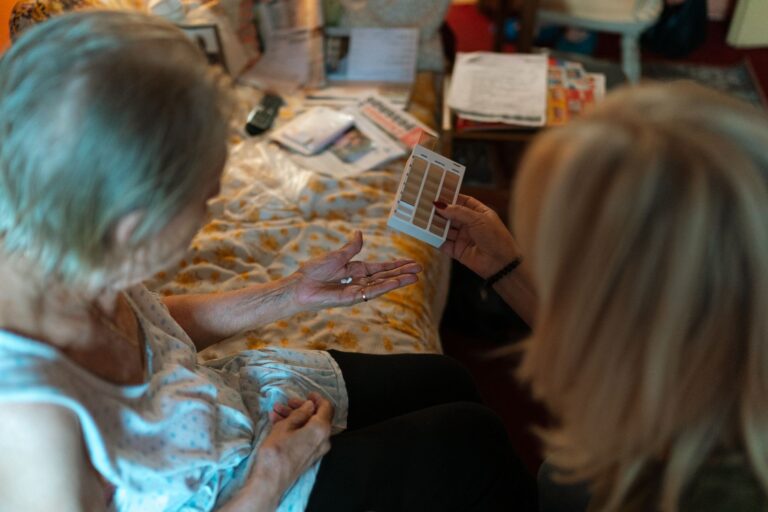
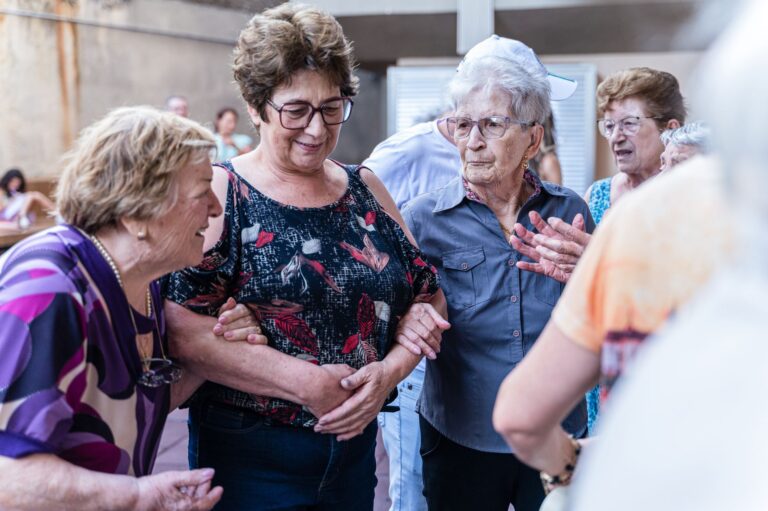
The best activities for dementia are familiar, achievable tasks matched to current abilities: independent choices early, simplified tasks in the middle, and supported sensory or social moments later. The 30 ideas below help caregivers offer meaningful participation without demanding skills the person no longer has. Dementia is a decline in memory, thinking, and behavior that interferes with daily life; Alzheimer's is its most common type. An activity should support identity, comfort, and success rather than test memory or highlight mistakes.
Medical information disclaimer: This article is for general educational purposes only and does not provide medical advice, diagnosis, or treatment. Always consult a physician or other qualified health professional about symptoms, medications, tests, or treatment decisions.
Table of Contents
- Choose by ability, not the stage label
- 10 early-stage activities that preserve independence
- 10 middle-stage activities with simple cues
- 10 later-stage sensory and social activities
- What benefits can activities realistically provide?
Choose by ability, not the stage label
Stage descriptions are starting points, not firm boundaries. The Alzheimer's Society explains that stages can overlap, symptoms may appear in different orders, and abilities can vary from task to task.
Begin with the person's previous interests and current skills. Then adapt the activity using a few practical rules:.
- Offer a simple choice instead of an open-ended question.
- Give one step or one object at a time.
- Demonstrate a difficult step.
- Help only where help is needed.
- Supervise according to current judgment and mobility.
10 early-stage activities that preserve independence
Early-stage activities should let the person make choices and do familiar tasks as independently as possible. The National Institute on Aging's activity-adaptation guide includes familiar movement, household, leisure, and social activities.
Do not take over simply because the person works slowly. Preserve choice where possible, while stepping in when sequencing, judgment, or safety becomes difficult.
- 1. Walks: Choose a known route and accompany the person as needed.
- 2. Stationary cycling: Use an already familiar bike and routine.
- 3. Stretching bands: Demonstrate one familiar movement at a time.
- 4. Soft-ball or balloon toss: Keep the exchange short and relaxed.
- 5. Cooking: Prepare a familiar dish while helping with difficult steps.
10 middle-stage activities with simple cues
In the middle stage, familiar chores can remain useful when each task has a clear beginning and a limited number of steps. Prepare the materials, demonstrate the first action, and avoid correcting harmless differences in how the task is completed.
Finishing the entire job is not the goal. A partial contribution can still preserve the person's connection to familiar roles and routines.
- 11. Set the table: Hand over one place setting or item at a time.
- 12. Wash dishes: Assign one action, such as rinsing cups.
- 13. Fold laundry: Start with towels or other simple shapes.
- 14. Sort socks: Match obvious colors or patterns.
- 15. Sort mail or coupons: Use two clear groups rather than many categories.
10 later-stage sensory and social activities
Later-stage activities can shift away from rules, sequencing, and finished products. Support brief participation through sound, touch, movement, familiar images, and calm company.
Reassess physical safety as abilities change. NIA notes that Alzheimer's can affect judgment and depth perception, increasing fall risk; when someone cannot move independently, obtain clinician, physical therapist, or occupational therapist guidance before transfers or joint exercises in its later-stage care guidance.
- 21. Listen to or sing familiar music.
- 22. Look through photographs together.
- 23. Have a gentle conversation without testing recall.
- 24. Hold or pet a calm animal with supervision as needed.
- 25. Watch a favorite activity being performed.
What benefits can activities realistically provide?
Cognitive stimulation refers to themed mental activities that usually include group or social interaction. A 2021 Psychological Bulletin meta-analysis found a medium immediate benefit for global cognition across 44 randomized-trial comparisons involving 2,444 participants. That result does not mean every puzzle, game, or household task produces the same effect.
The review found no significant global-cognition benefit at follow-ups lasting one to ten months, and many studies lacked strong active, double-blind controls. Activities can support engagement and function, but they are not proven to modify the disease. Judge an activity by the person's response now: comfort, interest, participation, and manageable effort. If attention wanes or frustration appears, pause and try a shorter, simpler version later.