A dementia home safety checklist should address each room according to the risks most likely to occur there: falls, burns, poisoning, medication errors, getting lost, and difficulty recognizing familiar objects. The most effective changes are usually simple and specific, such as removing a loose bathroom rug, adding automatic stove shutoff protection, improving hallway lighting, and placing locks where they are less likely to be noticed. For example, replacing a dark bath mat that looks like a hole with a nonslip mat that closely matches the floor can reduce both tripping and visual confusion. Safety changes should reflect the person’s current abilities rather than the diagnosis alone.
Someone with mild memory loss may need labels and reminders, while a person who no longer recognizes hazards may need locked storage, supervised cooking, or restricted access to stairs. Reassess the home whenever there is a fall, nighttime wandering, a medication mistake, or a noticeable change in vision, balance, judgment, or daily routines. The goal is not to remove every choice or turn the home into an institution. It is to reduce preventable danger while preserving familiar routines and independence wherever possible. Changes introduced gradually are often less distressing than a large, sudden rearrangement of the home.
Medical information disclaimer: This article is for general educational purposes only and does not provide medical advice, diagnosis, or treatment. Always consult a physician or other qualified health professional about symptoms, medications, tests, or treatment decisions.
Table of Contents
- What Should a Dementia Home Safety Checklist Cover in Every Room?
- Kitchen Changes That Reduce Burns, Fires, and Poisoning Risks
- Bathroom Safety for Falls, Scalds, and Confusion
- Practical Bedroom, Hallway, and Stairway Adjustments
- Common Living-Room, Laundry, Garage, and Entryway Hazards
- Outdoor Areas, Wandering, and Emergency Identification
- Medication Storage, Daily Monitoring, and Professional Assessment
- Frequently Asked Questions
What Should a Dementia Home Safety Checklist Cover in Every Room?
Begin with risks that appear throughout the home. Clear walking routes, remove unstable furniture, secure electrical cords, repair uneven flooring, and keep frequently used objects within easy reach. Lighting should be bright and even, especially between the bedroom and bathroom. Night-lights can help, but they should not create harsh shadows that might be mistaken for steps, holes, animals, or unfamiliar people. Contrast matters as much as brightness.
A toilet seat in a color that stands out from the floor may be easier to locate, while a strongly patterned carpet can appear to move or contain obstacles. Glass doors, mirrors, and glossy surfaces may also cause confusion. For example, a person who does not recognize their reflection may believe a stranger is in the room; covering or relocating the mirror may reduce distress. Check smoke alarms, carbon monoxide alarms, door locks, water temperature, and emergency contacts throughout the home. Post the person’s name, address, and key phone numbers near a main telephone, but do not display private information where it can be seen from outside. Safety devices also require maintenance: a disconnected alarm or depleted battery provides reassurance without protection.
Kitchen Changes That Reduce Burns, Fires, and Poisoning Risks
The kitchen combines heat, sharp tools, electricity, food, and household chemicals, making it one of the highest-risk rooms as dementia progresses. Keep knives, matches, lighters, cleaning products, alcohol, and potentially dangerous appliances in locked cabinets when judgment becomes unreliable. Store food in clear, familiar containers and discard spoiled items promptly, since smell, taste, and the ability to recognize unsafe food may change. Stove safety may require several layers of protection. Options include removing or covering control knobs, installing an automatic shutoff device, using appliance locks, or disabling the stove when it cannot be used safely.
A microwave or electric kettle may preserve some independence, but neither is risk-free: metal can be placed in a microwave, and hot liquids can still cause burns. Supervised meal preparation is safer than assuming a simpler appliance eliminates the danger. Avoid making the kitchen so restricted that the person begins forcing locks or searching in unsafe places. If independent cooking is no longer appropriate, create a clearly visible snack area with safe foods, cups, and familiar utensils. For example, a basket containing crackers, fruit, and bottled water may reduce attempts to use the stove between meals.
Bathroom Safety for Falls, Scalds, and Confusion
Bathrooms present a dangerous combination of slippery surfaces, hard fixtures, hot water, and limited space. Install securely anchored grab bars beside the toilet and in the bathing area; towel racks are not designed to support body weight. Use nonslip flooring or firmly secured mats, provide a shower chair when appropriate, and keep toiletries within easy reach so the person does not have to bend, stretch, or climb. Set hot water controls to reduce scalding risk, and consider anti-scald devices if the person may turn taps incorrectly. Remove electrical appliances when they are not being supervised, lock away medications and cleaning products, and use simple labels or pictures to identify the toilet and sink.
A contrasting toilet seat can be easier to see than an all-white fixture against a pale floor. Privacy and fall prevention sometimes conflict. A bathroom door that locks from the inside may leave a person inaccessible after a fall, but removing the lock entirely may feel intrusive. A lock that can be opened from the outside offers a practical compromise. For example, caregivers can wait just outside the door while the person toilets independently, intervening only if they hear a fall or an unusual period of silence.
Practical Bedroom, Hallway, and Stairway Adjustments
Place the bed at a height that allows the person to sit with their feet supported and stand without climbing or dropping down. Keep a stable lamp, glasses, water, and other essentials within reach, but remove clutter from the bedside area. A clear route to the toilet, supported by low-level night lighting, is generally safer than placing several small lamps that create alternating bright and dark patches. Hallways and stairs need continuous, even lighting and visible edges. Install secure handrails, repair loose carpeting, and place contrasting tape on step edges if visual perception is impaired.
A pressure-sensitive alarm or motion alert may notify a caregiver that the person has left bed, but frequent alarms can disturb sleep and contribute to caregiver fatigue. In some homes, moving the bedroom to the main floor is safer than relying on gates or repeated nighttime supervision near stairs. Avoid bed rails unless a qualified professional has assessed their use. Rails can create entrapment and climbing hazards, and a person who tries to climb over one may fall from a greater height. A lower bed, floor mat, better nighttime lighting, and evaluation of the reason for getting up may offer a safer combination.
Common Living-Room, Laundry, Garage, and Entryway Hazards
In living areas, remove low tables, unstable footstools, loose rugs, and furniture that narrows walking routes. Secure televisions and tall shelving, and keep remote controls simple. Excessive noise, flashing screens, or crowded decorations can contribute to agitation and misinterpretation. A dark rug in front of a chair, for instance, may appear to be a hole and prevent the person from crossing the room. Laundry rooms and garages contain concentrated hazards. Lock away detergent pods, bleach, solvents, pesticides, fuel, tools, firearms, and vehicle keys.
Disconnect or restrict access to machinery that may be operated incorrectly. Detergent pods can resemble sweets, and chemicals should never be transferred into beverage containers, even if the original packaging seems difficult to store. Entryway changes can reduce unsafe departures, but no lock should interfere with emergency escape. Consider a door alarm, chime, motion sensor, or lock positioned outside the person’s usual line of sight, subject to local fire-safety requirements. Camouflaging a door may help some people, but it can also cause distress or delay evacuation. Never lock a person inside a home without an alert, an emergency-release plan, and a responsible person able to respond.
Outdoor Areas, Wandering, and Emergency Identification
Secure pools, ponds, sheds, grills, gates, and access to busy roads. Keep paths level, well lit, and free of hoses, leaves, ice, and overgrown plants. A fenced walking area can allow movement with less risk than trying to prevent all outdoor activity.
For example, a looping garden path that returns to the same door may support pacing without leading directly toward the street. Use identification that stays with the person, such as an identification bracelet or clothing label, and keep a recent photograph available for emergencies. Neighbors who understand the situation may be able to report unusual activity quickly, but share only the personal information needed for safety.
Medication Storage, Daily Monitoring, and Professional Assessment
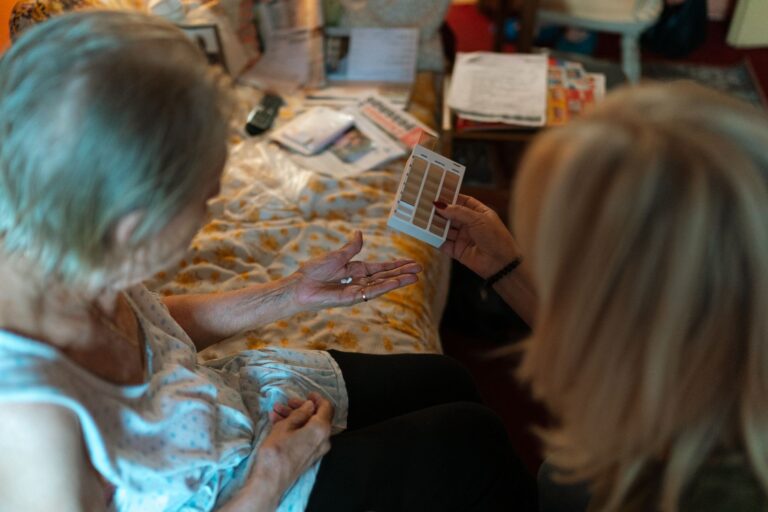
Store prescription drugs, over-the-counter medicines, vitamins, cannabis products, and supplements in a locked location when self-administration is no longer reliable. Pill organizers can help during earlier stages, but they do not prevent a person from taking several compartments at once or confusing one day with another.
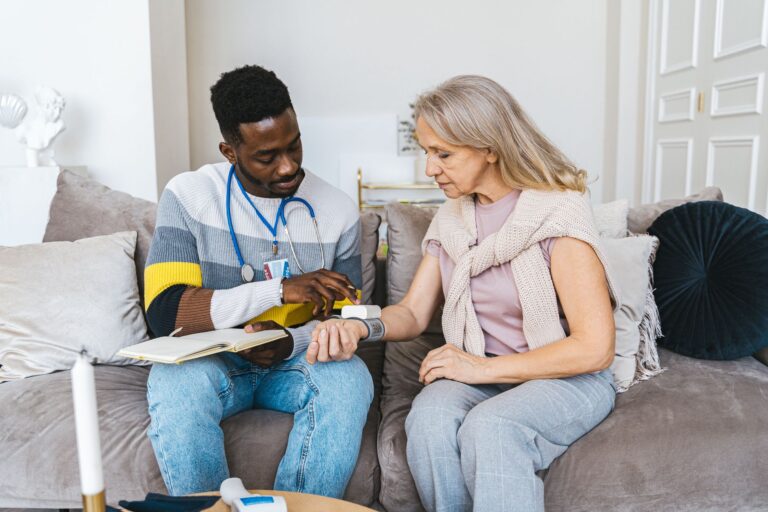
A caregiver-managed dispenser or direct supervision may be needed after missed doses, repeated doses, or unexplained changes in alertness. An occupational therapist can assess how the person actually moves through the home and recommend equipment suited to their height, strength, vision, and habits. A generic grab bar placed where it looks convenient may be useless if the person cannot reach it from the toilet; observing a real transfer often reveals the correct position and angle.
Frequently Asked Questions
How often should a dementia home safety checklist be reviewed?
Review it after any fall, wandering episode, medication mistake, hospitalization, or change in mobility, vision, sleep, or judgment. A scheduled review every few months can also catch gradual changes that are easy to overlook.
Should all doors and cabinets be locked?
No. Lock access to serious hazards, but leave safe foods, clothing, toiletries, and familiar activities available when possible. Too many restrictions can increase frustration and make the home harder to navigate.
Are security cameras appropriate for dementia care?
Cameras may help monitor entrances or shared spaces, but they raise privacy concerns and cannot replace direct assistance. Avoid cameras in private areas such as bathrooms, and follow applicable consent and privacy laws.
What should caregivers do if safety modifications cause agitation?
Introduce changes one at a time when possible, preserve familiar objects, and observe what triggers the reaction. If agitation begins suddenly or is accompanied by pain, fever, weakness, or marked confusion, seek medical advice because illness or medication effects may be involved.
When is living alone no longer safe?
Warning signs include getting lost, leaving cooking unattended, repeated medication errors, falls, unsafe driving, inability to respond to emergencies, and failure to eat or drink adequately. The decision should consider the frequency and severity of risks, available supervision, and an assessment by appropriate health or social-care professionals.