Traveling with someone who has dementia is usually safest when the trip is simple, familiar, and carefully structured around the person’s abilities. Choose direct routes, allow extra time, keep medication and identification within reach, and preserve familiar routines wherever possible. For example, an early-stage traveler who normally becomes restless after dinner may cope well with a nonstop morning flight and an afternoon hotel check-in but struggle with an evening connection in an unfamiliar terminal. The person’s current symptoms should determine whether the trip is reasonable.
Consider how they respond to crowds, disrupted sleep, unfamiliar bathrooms, long periods of sitting, and separation from their usual caregiver. A journey that was manageable six months ago may now create confusion or distress, especially after a recent hospitalization, medication change, fall, or noticeable decline. Discuss longer or more demanding travel with the person’s clinician before booking. Ask about mobility, continence, medication timing, sleep, agitation, and any medical conditions that could worsen during the journey. Postponing or shortening a trip can be the safer choice when delirium, infection, uncontrolled pain, repeated wandering, or severe behavioral symptoms are present.
Medical information disclaimer: This article is for general educational purposes only and does not provide medical advice, diagnosis, or treatment. Always consult a physician or other qualified health professional about symptoms, medications, tests, or treatment decisions.
Table of Contents
- How Can You Prepare for Traveling With Someone Who Has Dementia?
- Airport Planning, Security, and Boarding With Dementia
- Choosing and Setting Up a Dementia-Friendly Hotel Room
- Managing Medication, Meals, and Time-Zone Changes
- Preventing Wandering, Distress, and Other Common Travel Problems
- Keeping Familiar Routines During the Trip
- Creating an Emergency and Backup Travel Plan
- Frequently Asked Questions
How Can You Prepare for Traveling With Someone Who Has Dementia?
Build the itinerary around the traveler’s best time of day. If thinking and mood are usually clearer in the morning, schedule transportation and other demanding activities early. Favor nonstop flights, shorter driving days, familiar destinations, and flexible reservations. A direct flight may cost more than a connecting itinerary, but it eliminates another boarding process, an unfamiliar airport, and the possibility of a missed connection. Create a compact travel information packet containing identification, emergency contacts, insurance details, medication lists, allergies, clinicians’ contact information, and a brief description of the dementia diagnosis.
Keep paper copies separate from digital copies in case a phone loses power. The person should also carry identification and caregiver contact details on their body, such as in a wallet card or identification bracelet, rather than only in luggage. Practice parts of the journey when possible. A short trip to the airport, a meal in a busy restaurant, or one night in a nearby hotel can reveal problems with noise, walking distance, elevators, or unfamiliar bathrooms. A successful practice trip does not guarantee that a longer journey will go smoothly, but it can expose avoidable difficulties before nonrefundable plans are made.
Airport Planning, Security, and Boarding With Dementia
Contact the airline and airport before departure to ask about accessibility assistance, wheelchair service, escort procedures, early boarding, and help navigating security. Assistance programs vary, and staff members may not be trained specifically in dementia care, so explain the person‘s needs in plain terms: “She becomes frightened if separated from me,” or “He may not understand multistep instructions.” Do not assume a dementia diagnosis automatically prevents caregiver separation at every checkpoint. Arrive early enough to avoid rushing, but not so early that the person must wait for hours in a noisy terminal. Keep identification, boarding documents, snacks, water when permitted, medication, and a familiar object in one caregiver-controlled bag. At security, quietly tell an officer that the traveler has a cognitive impairment and may need short, one-step directions.
Avoid correcting or testing the person in public if they cannot answer a question. Use restrooms before security, before boarding, and when connections permit. Family or companion restrooms can make supervision easier where available. Never leave the person alone to guard bags, buy food, or find a gate; a few minutes of separation can become an emergency in a crowded terminal. A warning sign is repeated insistence that the airport is a workplace, former home, or place from the distant past, because arguing about the location may increase distress.
Choosing and Setting Up a Dementia-Friendly Hotel Room
Choose a hotel with straightforward access, dependable front-desk staffing, and a room close to the elevator without being beside a noisy lobby or ice machine. Ask about walk-in showers, grab bars, night-lights, adjoining rooms, and refrigerators for medication if needed. Large resorts may offer more amenities, but long corridors, multiple towers, and several elevator banks can make navigation harder than at a smaller property. Once inside, make the room recognizable.
Place the person’s usual toiletry bag by the sink, set familiar clothing where it can be seen, and keep the bedside arrangement simple. For example, putting a family photograph, familiar clock, and labeled water bottle on the nightstand may provide more orientation than repeatedly explaining the hotel’s name. Inspect the room for hazards such as loose rugs, poorly lit bathroom thresholds, balconies, confusing connecting doors, and easy access to an exterior exit. Keep the room number and hotel address with both travelers, but do not rely on the person to find the room independently. Portable door alarms can alert a caregiver to nighttime movement, though they are not substitutes for supervision and must never block emergency evacuation.
Managing Medication, Meals, and Time-Zone Changes
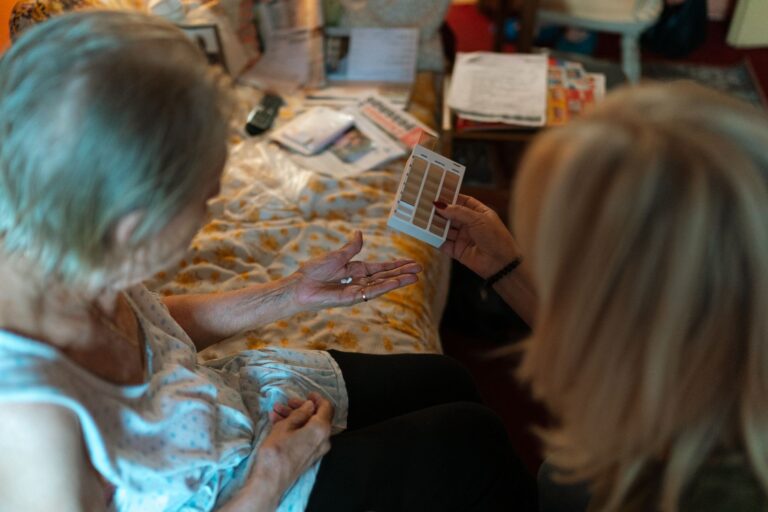
Carry all essential medication in hand luggage, preferably in pharmacy-labeled containers, along with more than the minimum amount required for the scheduled trip. Checked bags can be delayed, and transferring tablets into an unlabeled organizer may create problems if instructions or identification are needed. Keep a written schedule listing the medication name, dose, purpose, and usual administration time. Ask a clinician or pharmacist how to handle time-zone changes, especially for insulin, seizure medication, blood thinners, sedatives, or medicines requiring precisely spaced doses. Simply taking every medication according to the clock at the destination may shorten or lengthen the interval between doses.
Do not double a missed dose unless a qualified professional has given that instruction. Maintain familiar meal and hydration patterns. Pack recognizable snacks if the person may reject unfamiliar food, and watch for constipation, diarrhea, or reduced drinking. Restaurant flexibility offers variety, but a quiet meal at the hotel may be safer when crowds trigger agitation. Alcohol can worsen balance, sleep, confusion, and medication side effects, even when the person previously tolerated it well.
Preventing Wandering, Distress, and Other Common Travel Problems
Crowds, fatigue, pain, hunger, and an urgent need for the toilet can appear as irritability, pacing, refusal, or accusations. Respond first to possible physical needs rather than treating every behavior as a psychiatric symptom. If the person says, “I need to go home,” a calming response such as “You’re safe with me; let’s sit somewhere quiet” is often more useful than insisting that the hotel is home for the week. Use layers of protection against wandering: close supervision, identification, a recent photograph, door alerts, and a plan for contacting local emergency services. Dress the person in distinctive clothing and note what they are wearing each morning.
If separation occurs, notify staff or authorities promptly rather than searching alone for an extended period. Watch for sudden or unusually severe confusion. Delirium can be associated with infection, dehydration, pain, medication effects, sleep deprivation, or other acute illness and requires medical assessment. Do not assume a sharp change is merely dementia or jet lag. New weakness, breathing difficulty, chest pain, a serious fall, loss of consciousness, or stroke-like symptoms warrants urgent medical help.
Keeping Familiar Routines During the Trip
Preserve the sequence of ordinary activities even when exact times change. The familiar order of washing, dressing, breakfast, medication, and a short walk may provide more reassurance than a tightly scheduled sightseeing plan. Limit each day to one main activity and leave room for rest; two short museum visits on separate mornings may be more manageable than one full day of tours.
Bring familiar sleepwear, music, a pillowcase, photographs, and any safe object used in the bedtime routine. If the person normally watches the same program before bed, playing a saved episode may help signal that the day is ending. Avoid introducing unfamiliar sleep aids during the trip unless a clinician has advised their use.
Creating an Emergency and Backup Travel Plan
Identify nearby medical services and keep contact information for family, clinicians, the hotel, transportation providers, and travel insurers where applicable. Decide in advance who will stay with the person if the caregiver becomes ill.
A backup caregiver should understand the medication schedule, communication style, mobility needs, and behaviors that signal pain or fear. Carry enough accessible funds to change transportation or extend a stay, and know which parts of the itinerary can be canceled. If a traveler becomes overwhelmed during a planned three-hour excursion, the practical backup may be a prearranged taxi to the hotel, a familiar snack in the room, and the afternoon left unscheduled.
Frequently Asked Questions
Should a person with dementia wear identification while traveling?
Yes. Identification should include the person’s name and a caregiver’s current contact information. A bracelet or wallet card can help, but it should supplement close supervision rather than replace it.
Is air travel safe for someone with dementia?
It may be appropriate when symptoms are stable and the person can tolerate crowds, waiting, security procedures, and schedule changes. Advanced symptoms, recent delirium, severe agitation, or significant medical instability may make air travel unsafe or impractical.
Should dementia medication stay in a carry-on bag?
Essential medication should remain with the caregiver in hand luggage. Keep it protected from temperature extremes and follow any special storage instructions from the pharmacist or manufacturer.
How can a caregiver explain dementia to travel staff discreetly?
Use a short written card or a quiet statement explaining the functional need, such as difficulty following instructions or distress when separated. Share only the information needed to obtain appropriate help.
What should a caregiver do if the person becomes agitated in public?
Move to a quieter place, reduce questions, use simple reassurance, and check for pain, hunger, thirst, fatigue, or toileting needs. Seek medical help when the change is sudden, severe, or accompanied by concerning physical symptoms.