
Year-old egyptian sits at the center of this dementia and brain health question.
Hatshepsut, who ruled Egypt around 1479-1458 BCE, spent centuries painted as a cruel regent who usurped her young stepson’s throne and hoarded power at his expense. But archaeological evidence and modern scholarship have overturned this narrative entirely. Researchers now understand that Hatshepsut and her stepson Thutmose III likely coruled peacefully, with historians of later centuries projecting their own biases onto sparse historical records to create a “wicked stepmother” story that never actually happened. This article explores how a powerful female leader’s reputation was systematically distorted by ancient scribes and modern historians alike—and how archaeologists eventually pieced together the truth.
Table of Contents
- Why Was Hatshepsut Remembered as History’s Ultimate Wicked Stepmother?
- What Did Ancient and Medieval Historians Actually Get Wrong?
- What Archaeological Evidence Actually Reveals About Her Reign?
- How Did Modern Historians Finally Reassess the Evidence?
- Why Did the “Wicked Stepmother” Narrative Persist for So Long?
- What Do We Know About Hatshepsut’s Actual Accomplishments?
- What Can We Learn From How Hatshepsut’s Story Got Rewritten?
- Conclusion
Why Was Hatshepsut Remembered as History’s Ultimate Wicked Stepmother?
For over two thousand years, Hatshepsut’s name was synonymous with female tyranny and betrayal. Ancient Greek historians, writing centuries after her death, described her as manipulative and power-hungry, claiming she manipulated the young Thutmose III and convinced Egyptians she was the rightful pharaoh, not him. Medieval and Renaissance scholars repeated these claims uncritically, and even early Egyptologists in the 1800s accepted the narrative of a scheming woman who had illegitimately seized authority from her rightful male heir.
The “wicked stepmother” label stuck because it fit existing cultural expectations about women in power—the idea that female leaders were inherently illegitimate and could only gain authority through deception or manipulation. However, if you examine the surviving evidence carefully rather than accepting the ancient gossip at face value, the story falls apart. Hatshepsut left behind temples, monuments, and administrative records that paint an entirely different picture of her reign than the one repeated in historical texts written centuries later.
What Did Ancient and Medieval Historians Actually Get Wrong?
The primary source of Hatshepsut’s negative reputation comes from scribes and historians who lived long after her era—people like the Greek historian Manetho, who wrote about Egyptian history in the 3rd century BCE, nearly 1,200 years after Hatshepsut’s death. They had no direct knowledge of her reign and relied on fragmentary records, many of which were already distorted by political circumstances. Some of what later historians claimed about her simply contradicts the physical evidence that has survived.
One critical limitation of relying on ancient texts is that they often reflected the political agenda of whoever commissioned them. If a later pharaoh wanted to diminish Hatshepsut’s accomplishments or erase her from the historical record, scribes obliged—and then later historians, reading only those biased accounts, assumed they were reading objective truth. For example, some historians claimed she seized power from Thutmose III and ruled alone, but inscriptions found on her own monuments consistently refer to Thutmose III as coruler, suggesting a shared authority that later writers simply chose to ignore or misinterpret.
What Archaeological Evidence Actually Reveals About Her Reign?
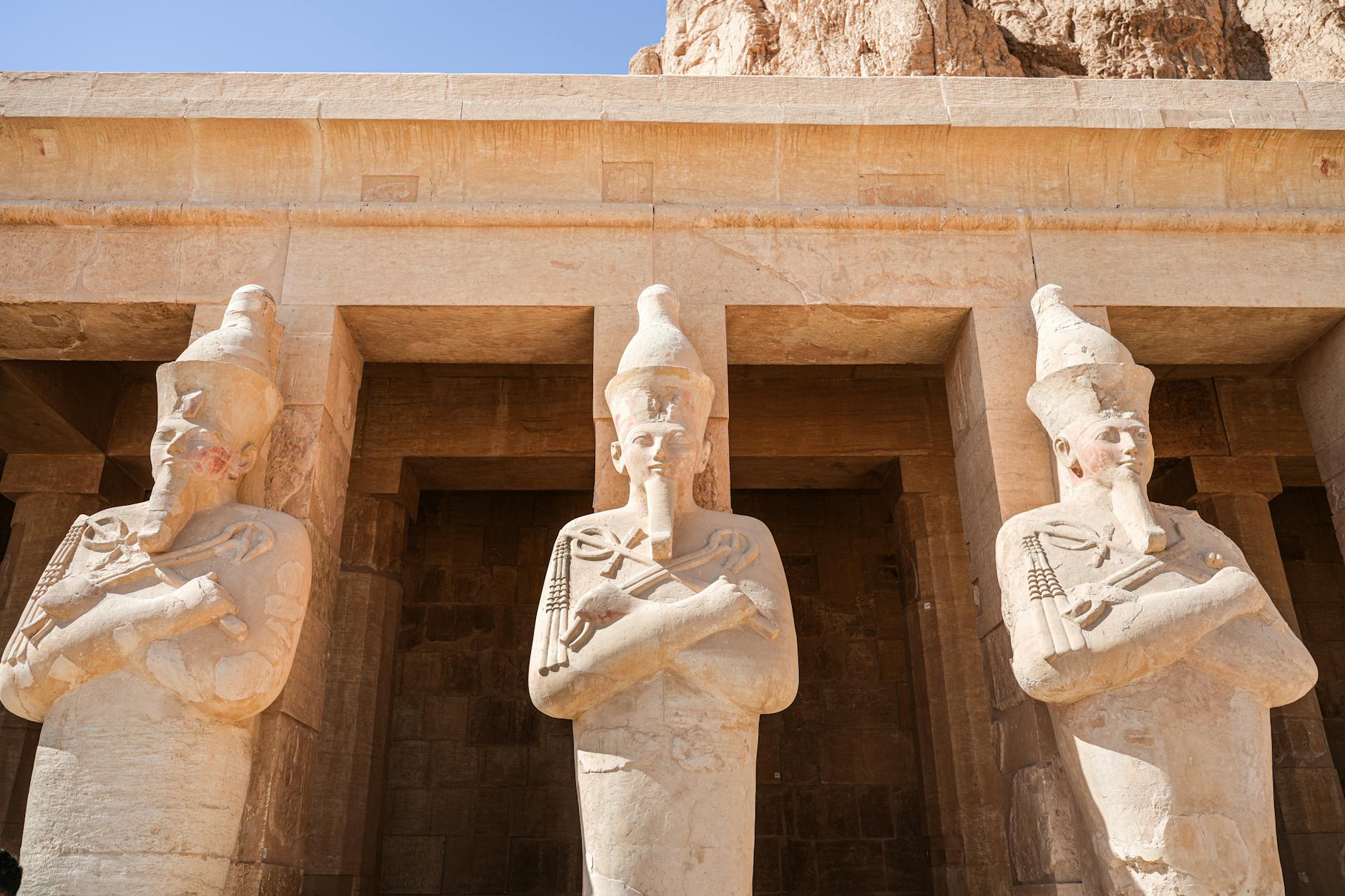
Modern archaeology has fundamentally changed our understanding of Hatshepsut’s rule. Her temple at Deir el-Bahari, one of ancient Egypt’s most magnificent structures, wasn’t built by a paranoid tyrant but by a leader commissioning major public works—something that required broad support and considerable resources. The temple’s inscriptions document her expeditions, building projects, and religious ceremonies with no mention of conflict with Thutmose III or any suggestion of illegitimacy. Archaeological teams have carefully examined the monuments and records Hatshepsut left behind and found no evidence of the chaos, rebellion, or court intrigue that ancient writers claimed characterized her reign.
Notably, when Thutmose III did eventually rule alone (after Hatshepsut’s death), he didn’t wage a war to reclaim power or exact revenge on his “usurper” stepmother. Instead, Egypt experienced continued prosperity and stability. If Hatshepsut had truly been an illegitimate tyrant who oppressed Thutmose III, we would expect his first act as sole ruler to involve some kind of retribution or dramatic policy reversal. Instead, the evidence suggests a smooth succession and continuity in Egypt’s governance, which is only possible if the two rulers had an established understanding and stable working relationship.

How Did Modern Historians Finally Reassess the Evidence?
The reappraisal of Hatshepsut gained serious momentum in the 20th century as Egyptologists began applying more rigorous historical methods. Rather than simply repeating what ancient and medieval writers had claimed, scholars started comparing those claims against the primary sources—the temple inscriptions, administrative records, and artifacts from Hatshepsut’s own era. This approach revealed massive gaps between the narrative (“she was a usurping tyrant”) and the actual historical record (which showed a prosperous reign with coexistent royal authority). A key comparison that emerged was between how Hatshepsut was portrayed and how male pharaohs who actually did seize power illegally were portrayed.
The records of those usurpers showed signs of conflict, rapid policy changes, and defensive justifications for their rule. Hatshepsut’s records showed none of these warning signs. By the late 20th century, scholarly consensus had shifted dramatically. What changed wasn’t the evidence—the evidence had been sitting in temples and museums for centuries. What changed was the willingness of historians to question the ancient accounts and look directly at the archaeological record.
Why Did the “Wicked Stepmother” Narrative Persist for So Long?
The story of Hatshepsut’s villainy persisted for millennia partly because no one bothered to challenge it. Later ancient Egyptians, Greek historians, medieval scholars, and even Victorian Egyptologists all inherited the same distorted narrative and repeated it without verification. Additionally, the narrative fit existing cultural assumptions about women and power—the belief that women were unfit for leadership and could only obtain it through illegitimate means made Hatshepsut’s story seem credible, even when evidence didn’t support it.
One important warning: the Hatshepsut case demonstrates how easy it is for historical narratives to become “common knowledge” without being accurate. Later rulers, particularly Thutmose III’s successors, deliberately chiseled away some of Hatshepsut’s monuments and removed her name from certain records—not out of anger at her rule, but for religious or political reasons that had nothing to do with her actual performance as leader. Yet historians for centuries interpreted this erasure as evidence of her supposed unpopularity, when it was actually standard practice for successive rulers to modify their predecessors’ monuments.

What Do We Know About Hatshepsut’s Actual Accomplishments?
The Egypt that Hatshepsut and Thutmose III inherited was already powerful, but the records show they made it wealthier and more stable. Hatshepsut commissioned a major trading expedition to the Land of Punt (possibly modern-day Somalia or Eritrea), which brought back valuable goods, incense, and resources that strengthened Egypt’s economy and international standing.
She also commissioned significant building projects, including her famous mortuary temple, which required enormous resources and would only have been possible with the cooperation of Egypt’s priesthood and nobility. Her reign was characterized by relative peace and economic prosperity—not the conflict and chaos that ancient writers suggested. Both Hatshepsut and Thutmose III left records of their joint rule, and this collaboration appears to have been stable and mutually beneficial.
What Can We Learn From How Hatshepsut’s Story Got Rewritten?
The Hatshepsut case offers a profound lesson about how narratives can become detached from evidence and persist across centuries. It shows that just because something appears in multiple ancient sources doesn’t necessarily make it true—ancient writers borrowed from each other, repeated rumors, and projected their own biases onto the past.
It also demonstrates the importance of directly examining primary evidence rather than relying on secondhand accounts, no matter how respected those accounts might be. The story is particularly relevant today as a reminder that powerful women in leadership positions have historically faced disproportionate scrutiny and character assassination. Hatshepsut’s “wicked stepmother” reputation tells us as much about the biases of the people writing about her as it does about her actual rule.
Conclusion
Hatshepsut was cleared of her “wicked stepmother” reputation not through some dramatic historical discovery, but through the patient, methodical work of Egyptologists who decided to treat primary sources more seriously than ancient gossip. Archaeological evidence shows she was likely a capable coruler whose reign was marked by economic prosperity, successful diplomacy, and ambitious building projects.
The distortion of her legacy across two thousand years reveals how easily historical narratives can be twisted—particularly when they fit existing cultural assumptions about gender and power. The true significance of Hatshepsut’s story lies not just in correcting the historical record about one ancient pharaoh, but in reminding us to question inherited narratives and examine evidence directly. Her experience shows that what we think we know about history can be profoundly wrong, and that rigorous scholarship eventually corrects even the most entrenched misconceptions.
You Might Also Like
- Why Did a Residential Building in Tel Aviv Get Hit by an Iranian Missile?
- How Did a Quadruple Amputee and Professional Cornhole Player Get Charged with Murder?
- How Did Over 82,000 Civilian Buildings in Iran Get Damaged or Destroyed in 25 Days?
For more, see NIH MedlinePlus — dementia.




