Spine rehab focuses on stability because a stable spine is the foundation for everything your nervous system controls—from balance and coordination to pain-free movement. When your spine lacks stability, small muscles around the vertebrae don’t engage properly, forcing larger muscles to work overtime. This creates chronic tension, restricts movement range, and—critically for aging adults—increases fall risk because your body can’t respond quickly to shifts in position or unexpected changes in your environment. A person recovering from a spinal injury or managing age-related spinal degeneration might start with gentle core activation exercises that seem simple but are designed to “wake up” the deep stabilizer muscles that have gone dormant, gradually rebuilding the support system the spine depends on. This article explores why stability matters more than strength in spine rehab, how it protects your nervous system, and what this means for maintaining independence and cognitive health as you age.
Spinal stability is not the same as spinal rigidity. Many people assume spine rehab should restore or build maximum strength, but research shows that excessive stiffness can actually limit mobility and increase injury risk. Instead, rehab specialists aim for dynamic stability—the ability to control movement while remaining flexible. This distinction becomes especially important for older adults whose nervous systems are already working harder to maintain balance and coordination. Without proper stability training, the spine becomes unstable in some directions and overly rigid in others, a pattern that forces the brain to allocate more cognitive resources just to keep you upright.
Table of Contents
- What Does Spinal Stability Actually Mean in Rehabilitation?
- Why Stability Matters More Than Strength in Spine Rehab
- The Connection Between Spinal Stability and Nervous System Function
- Building Stability Through Graduated Exercise: From Passive to Active
- Common Complications and When Standard Stability Training Doesn’t Work
- Spinal Stability and Fall Prevention in Older Adults
- The Broader Context of Spinal Health in Cognitive Aging
- Conclusion
What Does Spinal Stability Actually Mean in Rehabilitation?
Spinal stability refers to the ability of muscles and connective tissue around the spine to control movement and protect the vertebrae during activity. The spine itself—bones and discs—provides some structural support, but most of the day-to-day stability comes from the deep core muscles like the transverse abdominis, multifidus, and pelvic floor muscles. These muscles work together as a corset, increasing intra-abdominal pressure that braces the spine from inside. When you’re young and active, these muscles naturally stay engaged. But after spinal injury, surgery, prolonged immobility, or even just years of sitting at a desk, they weaken and stop firing automatically. Rehab retrains them to work without conscious effort. For example, a 68-year-old recovering from a lumbar fusion might spend three months on exercises that look deceptively basic—holding a plank variation for 10 seconds, then 15, then 20—because the goal isn’t fitness; it’s restoring automatic neuromuscular control so the stabilizer muscles engage before larger movement muscles do.
The nervous system’s role in stability is often overlooked. Your spine stabilizes partly through mechanical structures and partly through real-time feedback from sensory receptors in muscles and ligaments. These receptors constantly send signals to the brain about spine position and movement. Damage to the spine or its muscles disrupts this feedback loop. Rehab doesn’t just strengthen muscles; it recalibrates this sensory-motor system so your brain has accurate information about spine position. This is why balance training and proprioceptive exercises (exercises that challenge your sense of body position in space) are standard parts of spine rehab. Without this sensory recalibration, even a strong core may not function protectively because the muscles won’t fire at the right moment or with the right timing.

Why Stability Matters More Than Strength in Spine Rehab
Strength without stability is counterproductive. A person might develop strong outer abdominal muscles (the “six-pack” muscles) through crunches or sit-ups while the deep stabilizers remain weak. This creates a dangerous imbalance where superficial muscle dominates and the protective support system underneath doesn’t work properly. During everyday movement—bending, reaching, turning—the spine shifts in ways that strong outer muscles can’t control, leading to micro-injuries that accumulate over time. Some patients report that they feel “better” in terms of visible muscle but actually have more back pain and less functional stability. This happens because the movement pattern is wrong at a neurological level.
A rehab-trained approach avoids this trap by prioritizing the deep muscles first before adding strength training to the outer muscles. However, not all spines benefit from the same stability prescription. Someone with post-surgical stiffness might need mobilization and flexibility work alongside stability training, whereas someone with hypermobility (loose joints) might need aggressive stability work with minimal mobility training. A 72-year-old with moderate osteoarthritis who’s lost spinal mobility due to arthritic changes will progress differently than a 60-year-old recovering from a clean disc herniation. The principle of stability-first training applies to nearly all spinal rehabilitation, but the ratio of stability-to-strength-to-mobility work varies based on your specific condition and imaging findings. If a rehab program prescribes the same exercises to everyone regardless of their baseline spinal mobility and structural changes, it’s likely not addressing your particular needs.
The Connection Between Spinal Stability and Nervous System Function
Your spinal cord sits protected inside the vertebral canal, cushioned by cerebrospinal fluid. When the spine lacks stability, vertebrae can shift slightly—a process called micromotion—that irritates nerve roots and spinal cord tissues. Even small amounts of irritation trigger inflammation and pain signals. Beyond local pain, unstable spinal segments can interfere with nerve function throughout the entire body. Nerves that exit the spine carry signals to muscles, organs, and sensory receptors. Compromise the nerve’s pathway, and that signal becomes distorted. This is why people with spinal instability sometimes experience symptoms that don’t match their imaging—referred pain, tingling in limbs, or even digestive changes—because the irritation is affecting nerve transmission more broadly.
By stabilizing the spine, you reduce pressure on these nerve pathways and allow normal nerve function to resume. A patient with chronic lower back pain and occasional leg numbness might find that 8 weeks of stability training resolves both the back pain and the numbness because the source—spinal instability irritating the nerve—has been addressed. For people living with dementia or cognitive decline, this nervous system connection matters in unexpected ways. The brain’s proprioceptive system—its sense of where the body is in space—depends on accurate sensory feedback from the spine and throughout the body. A person with poor spinal stability sends confused proprioceptive signals to a brain that’s already struggling with cognitive processing. This can worsen balance issues, increase fall risk, and make physical therapy harder overall. Stabilizing the spine improves the clarity of sensory feedback, which can help preserve balance function and reduce fall-related injuries even when cognitive decline cannot be reversed.
Building Stability Through Graduated Exercise: From Passive to Active
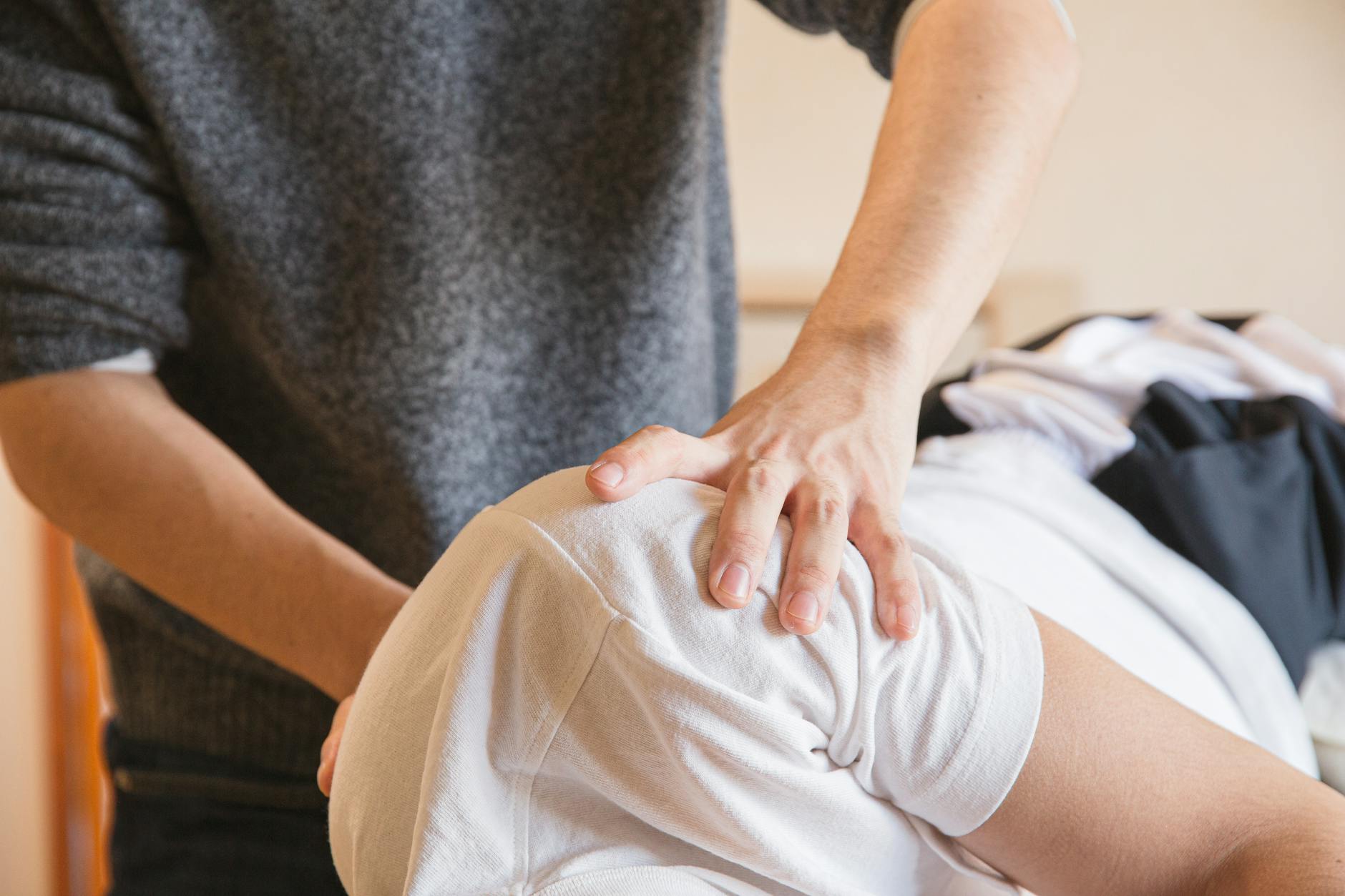
Spine rehab progresses through predictable stages, each building on the previous one. The first stage is awareness and activation of deep stabilizers. Exercises are often small-range, performed in neutral spine positions, sometimes lying down where gravity isn’t a factor. A patient might do breathing exercises with manual cues to feel the deep abdominal muscles engage, or perform small pelvic tilts to practice spine control. This stage typically lasts 2-4 weeks and seems slow, but neurologically it’s critical—the brain and muscles are relearning how to work together. The second stage adds movement while maintaining stability.
The person now does exercises like quadruped shoulder lifts (on hands and knees, raise one arm while keeping the spine still) or bird dogs, where spinal stability is challenged but not overwhelmed. The third stage introduces unstable surfaces—a stability ball, a foam pad—to add proprioceptive challenge. The fourth stage integrates stability into functional movements like standing, walking, and reaching, where the rehab goal is invisible—you don’t consciously think about spine stability while you bend to pick up groceries; the muscles simply work. A comparison illustrates the difference between effective and ineffective approaches: one rehab program might prescribe planks for everyone starting at day one, under the assumption that longer duration means better progress. Another program might start a patient with quadruped spine stabilization work, progress to static planks only after the patient demonstrates proper activation patterns, and then add variations that challenge stability in different planes. The second program takes longer to get to “holding a plank for 60 seconds,” but the neurological changes—actual stabilizer muscle control—happen faster and more completely. Patient compliance also improves because early exercises match the patient’s current capability, reducing pain or frustration that causes them to quit.
Common Complications and When Standard Stability Training Doesn’t Work
Not everyone responds to standard spine rehab on a typical timeline. Some patients have scar tissue from previous surgery that restricts muscle movement. Others have advanced degenerative disc disease where the structural damage is so extensive that no amount of stabilizer training will fully protect the spine—they also need activity modification and potentially pain management. A few people have central sensitization, a condition where the nervous system becomes overly reactive to sensory input. For these patients, aggressive rehab can actually increase pain because the nervous system interprets intensive exercise as a threat. Instead, they benefit from gentler progression, pain management, and psychological approaches alongside stability training.
If you’re in a spine rehab program and your pain is increasing week to week despite doing the exercises correctly, this might indicate that the rehab prescription isn’t right for your specific neurology. Another limitation: spinal stability training alone doesn’t address all causes of back pain or spine problems. If your pain stems from referred pain (pain traveling from the hip, sacroiliac joint, or elsewhere) that mimics spinal pain, spine-focused stability work might help but won’t fully resolve the issue. This is why comprehensive rehab often includes assessment of the whole kinetic chain—hips, pelvis, shoulders, ankles—to identify whether poor movement elsewhere is forcing compensation patterns that destabilize the spine. Additionally, psychological factors like fear of movement, depression, or chronic stress can interfere with rehab progress. The spine might be mechanically stabilized through exercise, but if the nervous system remains in a protective, guarded state due to fear or mood changes, functional improvement lags behind structural improvement.
Spinal Stability and Fall Prevention in Older Adults
Falls are the leading injury-related cause of death in adults 65 and older, and spinal stability plays an underappreciated role in fall prevention. When you trip or stumble, your body has a narrow window—milliseconds—to respond. Deep core muscles must instantly brace the spine while leg muscles react to catch your balance. If the stabilizer muscles are weak or don’t fire automatically, your body can’t respond fast enough, and a stumble becomes a fall. A person with poor spinal stability might lose their balance during normal activities like turning around in the kitchen or reaching for something on a shelf, not because their legs are weak but because their spine can’t provide the foundation for rapid postural adjustment.
This is especially relevant for people with dementia or mild cognitive impairment, who already have slower reaction times and increased fall risk from cognitive factors. Stability training combined with balance training creates a synergistic effect. A person doing spinal stability exercises plus balance challenges—standing on one leg, walking with head turns—develops the reflexive spine control needed to prevent falls. One 70-year-old with a history of lumbar strain started a combined program after nearly falling twice in one month. After 10 weeks of stability and balance training, her proprioceptive awareness improved enough that she caught herself during a near-trip in her home, preventing what would likely have been a significant fall. Stability work transformed how her nervous system responded to unexpected movements.
The Broader Context of Spinal Health in Cognitive Aging
As cognitive decline progresses, maintaining physical stability becomes increasingly important for quality of life and independence. A person with early dementia who falls and sustains a hip fracture or spinal compression fracture often experiences rapid decline in both physical and cognitive function. Preventing falls through spinal stability training and related interventions can slow this cascade. Research suggests that maintaining balance and proprioceptive function helps preserve cognitive reserve—the brain’s ability to find alternate pathways to perform functions.
A brain that constantly receives clear sensory feedback about body position and movement has more cognitive resources available for memory and thinking, while a brain managing unclear or distorted proprioceptive signals is working inefficiently. From this perspective, spine rehab is not just about back pain; it’s a form of brain health investment. Looking forward, personalized spine rehab will likely combine imaging (MRI, CT) that reveals exact structural issues with motion analysis that shows neuromuscular control patterns, creating tailored protocols that address the specific stability deficits each person has. For people with concurrent cognitive decline, this individualized approach becomes especially valuable because it maximizes rehabilitation benefit while minimizing frustration or pain that could worsen mood or motivation.
Conclusion
Spine rehab focuses on stability because the spine is not a standalone structure but the central pillar of your nervous system and movement control. Stability protects nerves, enables balance, and supports independence—especially critical as you age and your nervous system becomes less efficient at compensating for structural problems. The specific exercises matter less than the underlying principles: starting with deep stabilizer muscles, progressing gradually, and maintaining awareness that stability is about control and neural feedback, not just muscular strength.
If you’re facing spinal issues or recovering from spinal injury or surgery, working with a rehab specialist who prioritizes stability-first training gives you the best chance of returning to function without chronic pain. For older adults or those with cognitive concerns, spine stability work is preventive medicine—it reduces fall risk and supports the proprioceptive feedback that keeps your brain working efficiently. Talk with your doctor or physical therapist about whether spinal stability assessment and training are appropriate for your situation.