Core stabilization exercises can meaningfully reduce fall risk and improve daily functioning for older adults, including those living with dementia. Seven of the most effective and accessible options are the dead bug, bird dog, seated marches, modified plank, pelvic tilts, pallof press, and bridge. These movements strengthen the deep muscles of the trunk — the transverse abdominis, multifidus, and pelvic floor — that act as the body’s internal scaffolding for balance and posture. A 2019 study published in the Journal of Aging and Physical Activity found that adults over 65 who performed structured core exercises three times per week reduced their incidence of falls by roughly 30 percent over six months.
For someone with early-stage Alzheimer’s who has started stumbling on uneven surfaces, that kind of improvement can be the difference between maintaining independence and needing supervised care. This article breaks down each of those seven exercises with clear instructions, explains why core stability matters more than raw abdominal strength for aging populations, and addresses the specific considerations that come with cognitive decline. We will also cover how to modify these movements for different ability levels, when to involve a physical therapist, and what the research actually says about exercise and brain health. Not every exercise suits every person, and some popular core movements — like traditional crunches — can do more harm than good for older adults with osteoporosis or spinal stenosis.
Table of Contents
- Why Are Core Stabilization Exercises Critical for Dementia Prevention and Fall Reduction?
- The Dead Bug and Bird Dog — Two Foundational Moves for Any Ability Level
- Seated Marches and Pelvic Tilts — Core Work That Requires Only a Chair
- Modified Planks and Bridges — Building Endurance Without Spinal Compression
- The Pallof Press — An Underused Exercise That Trains Rotational Stability
- How to Adapt Core Exercises for Different Stages of Cognitive Decline
- What Current Research Says About Exercise, Core Strength, and Brain Health
- Conclusion
- Frequently Asked Questions
Why Are Core Stabilization Exercises Critical for Dementia Prevention and Fall Reduction?
The core is not just the abdominal muscles most people picture when they think of sit-ups. It is a cylinder of muscles that wraps around the entire trunk, including the deep spinal stabilizers, the diaphragm, and the pelvic floor. When these muscles weaken — as they reliably do with aging and sedentary living — the body loses its ability to make the rapid micro-adjustments that keep a person upright during normal activities like turning to answer a doorbell or stepping over a curb. Falls are the leading cause of injury-related death in adults over 65, according to the Centers for Disease Control and Prevention, and the consequences are especially devastating for people with dementia, who may not remember to use assistive devices or follow post-injury rehabilitation protocols. The connection between core strength and cognitive health runs deeper than fall prevention alone. Research from the University of British Columbia has demonstrated that resistance training, including core-focused work, can slow the progression of white matter lesions in the brain — the small areas of damage associated with vascular dementia.
Exercise increases blood flow to the hippocampus, promotes the release of brain-derived neurotrophic factor (BDNF), and reduces systemic inflammation, all of which support neuronal health. A sedentary 72-year-old with mild cognitive impairment who begins a consistent core stabilization program is not just building muscle; they are actively investing in the biological infrastructure their brain needs to function. However, it is important to distinguish between core stabilization and core strengthening. Traditional abdominal exercises like crunches and leg raises prioritize the rectus abdominis — the “six-pack” muscle — and generate spinal flexion that can aggravate degenerative disc disease. Stabilization exercises, by contrast, train the muscles to resist unwanted movement and maintain spinal alignment under load. For older adults, especially those with osteoporosis or compression fractures, this distinction is not academic. It is the difference between a helpful exercise and a trip to the emergency room.

The Dead Bug and Bird Dog — Two Foundational Moves for Any Ability Level
The dead bug and the bird dog are arguably the two most important core stabilization exercises for older adults, and they share a common principle: they force the deep stabilizing muscles to work while the arms and legs move independently. In the dead bug, a person lies on their back with arms extended toward the ceiling and knees bent at 90 degrees, then slowly lowers one arm overhead while extending the opposite leg toward the floor, all while keeping the lower back pressed flat against the ground. The bird dog reverses the orientation — starting on hands and knees, extending one arm forward and the opposite leg back without allowing the hips to rotate or the spine to sag. Both exercises are low-impact, require no equipment, and can be scaled to almost any fitness level. A person with moderate dementia who cannot follow multi-step instructions might begin with just the arm movement of the dead bug while a caregiver provides tactile cues to keep the back flat.
Someone more capable might hold each extended position for five seconds or add a light ankle weight. Physical therapist Dr. Stuart McGill, whose research at the University of Waterloo shaped modern spine rehabilitation, considers the bird dog one of the “big three” exercises for spinal health and recommends it for virtually all populations. The limitation worth noting is that both exercises require the person to get down to the floor and back up again, which can be a barrier for older adults with severe knee arthritis or those who become disoriented when changing positions. If getting to the floor is not feasible, the bird dog can be performed standing while holding onto a counter, and the dead bug can be adapted to a reclined position in a sturdy armchair. The key is maintaining the anti-rotation and anti-extension demand on the core, not replicating the exact position shown in a textbook illustration.
Seated Marches and Pelvic Tilts — Core Work That Requires Only a Chair
Not every effective core exercise demands athletic ability or even the willingness to get on the floor. Seated marches — performed by sitting tall in a firm chair and alternately lifting each knee toward the chest while maintaining an upright posture — activate the hip flexors and deep abdominal muscles in a way that directly translates to walking stability. For a person with mid-stage dementia living in a memory care facility, this exercise can be embedded into a daily routine with music, making it feel less like therapy and more like participation in an activity. Occupational therapists at the Mayo Clinic have documented that rhythmic seated exercises improve both engagement and compliance among residents with cognitive impairment. pelvic tilts are similarly accessible. Sitting or lying down, the person gently rocks their pelvis forward and backward, flattening the lower back against the chair or floor and then releasing.
This seemingly minor movement activates the transverse abdominis and multifidus — muscles that most people cannot consciously contract on command without practice. Over time, pelvic tilts teach the nervous system to recruit these stabilizers automatically, which is exactly the kind of unconscious motor pattern that protects against falls when a person is distracted or cognitively loaded. A specific example illustrates the value of these simpler exercises. A 2021 pilot study at the University of Queensland followed 40 adults with mild cognitive impairment through an eight-week chair-based core program. Participants showed measurable improvement in the Timed Up and Go test — a standard clinical measure of fall risk — and reported greater confidence during daily tasks like carrying groceries and climbing stairs. The gains were modest compared to what a younger, healthier population might achieve with more demanding training, but for this group, modest gains had outsized practical significance.
Modified Planks and Bridges — Building Endurance Without Spinal Compression
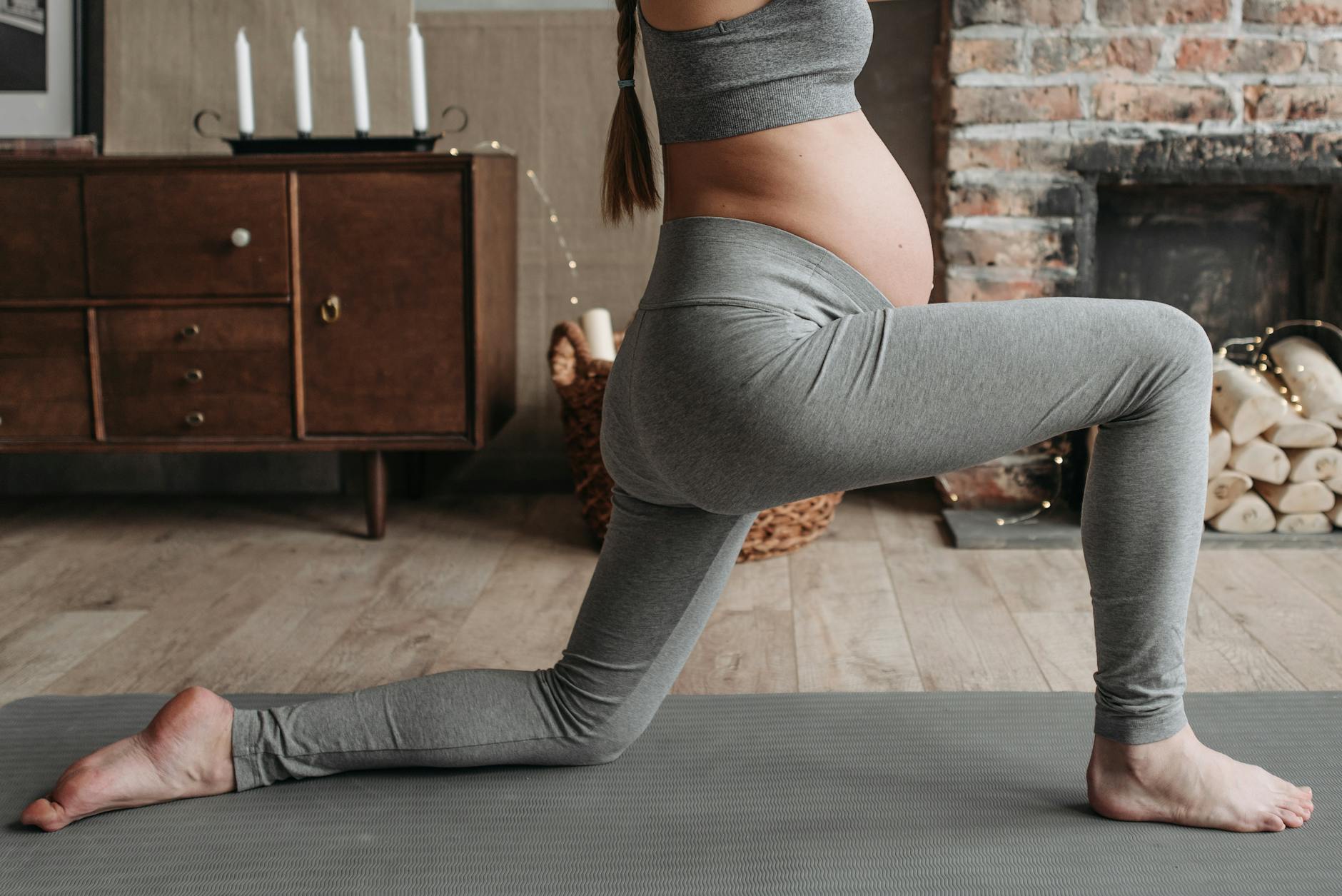
The plank is one of the most widely recommended core exercises in fitness, but the standard version — holding a rigid, face-down position on forearms and toes — is often too demanding and too uncomfortable for older adults. A modified plank performed on the knees, or even against a wall at an incline, provides the same anti-extension challenge at a fraction of the intensity. The goal is not to hold the position for minutes at a time but to maintain proper alignment for 10 to 20 seconds, rest, and repeat. Dr. McGill’s research suggests that multiple short holds are more effective and safer than single prolonged holds, particularly for people with a history of back pain. The bridge — lying on the back with knees bent and feet flat, then lifting the hips toward the ceiling — targets the glutes and posterior core chain.
Weak glutes are a widely underappreciated contributor to falls in older adults; when the gluteus medius cannot stabilize the pelvis during single-leg stance (which is what every step of walking actually is), the entire kinetic chain compensates, often leading to knee pain, hip pain, or a shuffling gait pattern. The bridge addresses this directly and can be progressed by marching the feet alternately while the hips remain elevated. The tradeoff between planks and bridges is worth considering when designing a program. Planks primarily train anterior core endurance and are better for people who tend to overextend their lower back. Bridges emphasize posterior chain activation and are more appropriate for individuals with a flat-back posture or weak hip extensors. Most older adults benefit from both, but someone with spinal stenosis — a narrowing of the spinal canal that causes pain during extension — may find bridges aggravating and should prioritize the plank variations instead. This is where individualized assessment by a physical therapist becomes genuinely important rather than just a liability disclaimer.
The Pallof Press — An Underused Exercise That Trains Rotational Stability
Most falls do not happen while a person is standing still and facing forward. They happen during transitions — turning, reaching, stepping sideways — when rotational forces act on the trunk. The Pallof press is one of the few exercises that specifically trains the core to resist rotation, and it is dramatically underused in programs designed for older adults. Performed with a resistance band anchored at chest height, the person stands sideways to the anchor point, holds the band at their sternum, and presses it straight out in front of them. The band tries to pull the body into rotation; the core muscles fire to prevent it.
This exercise has a meaningful advantage over exercises like Russian twists or woodchops, which generate rotation through the spine. For older adults with facet joint arthritis or disc degeneration — which includes the majority of people over 70 — repeatedly rotating the lumbar spine under load is a recipe for pain flares. The Pallof press loads the anti-rotation muscles without requiring spinal movement, making it far safer for degenerative spines. The limitation is that the Pallof press requires a resistance band and an anchor point, plus the cognitive ability to understand the setup and maintain form. For someone with moderate to advanced dementia, the coordination demands may be too high, and the exercise may need to be replaced with a simpler anti-rotation task, such as carrying a weighted object (like a water jug) with both hands while walking a short distance. The principle — resist rotation — is what matters, not the specific exercise.
How to Adapt Core Exercises for Different Stages of Cognitive Decline
The stage of dementia fundamentally changes how exercise should be delivered. In early stages, when a person can still follow verbal instructions and learn new movement patterns, the full range of exercises described above is appropriate with normal cueing. A retired schoolteacher diagnosed with early Alzheimer’s might follow along with a group exercise class at the local senior center and perform bird dogs, planks, and Pallof presses with minimal modification. As dementia progresses into middle and later stages, the approach must shift from instruction-based to cue-based.
Verbal commands should be simplified to one step at a time. Demonstration becomes more effective than explanation. Tactile guidance — gently placing a hand on the abdomen to cue engagement, or guiding a leg through the range of motion — becomes essential. The exercises themselves may need to be reduced to seated marches, supported standing balance holds, and assisted bridges. The Australian Physiotherapy Association’s dementia exercise guidelines emphasize that maintaining any level of physical activity, even brief and heavily assisted, provides cognitive and physical benefits that exceed what no activity delivers.
What Current Research Says About Exercise, Core Strength, and Brain Health
The evidence connecting physical exercise to slower cognitive decline is now substantial enough that the World Health Organization includes it in their formal recommendations for dementia risk reduction. A 2023 meta-analysis in The Lancet Healthy Longevity, pooling data from 38 randomized controlled trials, concluded that structured exercise programs reduced the rate of cognitive decline by approximately 20 percent in adults with mild cognitive impairment, with the strongest effects seen in programs that combined resistance training with aerobic activity. Core stabilization falls squarely within the resistance training category.
What remains less clear is the optimal dose. Most studies showing cognitive benefits used programs of 150 minutes per week or more, but whether 10 minutes of daily core work alone moves the needle on brain health is not yet established. The practical takeaway is that core exercises should be viewed as one essential component of a broader movement practice, not a standalone intervention. Pairing a daily core routine with regular walking, balance challenges, and social engagement creates the kind of multi-domain stimulation that the aging brain appears to need most.
Conclusion
Core stabilization is not a luxury for older adults — it is a medical priority. The seven exercises outlined here — dead bug, bird dog, seated marches, pelvic tilts, modified plank, bridge, and Pallof press — represent a practical toolkit that can be adapted to nearly any physical and cognitive ability level. The research supporting their role in fall prevention is strong, and the emerging evidence linking resistance exercise to slower cognitive decline adds another compelling reason to make these movements a non-negotiable part of daily life for aging adults and dementia caregivers. Starting does not require a gym, expensive equipment, or a background in fitness.
It requires a chair, a small section of floor space, and ideally the guidance of a physical therapist who can assess individual limitations and design an appropriate progression. For caregivers supporting someone with dementia, embedding even two or three of these exercises into a daily routine — after breakfast, before a favorite television program, during a structured activity period — can yield benefits that compound over months and years. The best time to begin was years ago. The second best time is today.
Frequently Asked Questions
Can someone with moderate dementia safely do core exercises without supervision?
Generally, no. People with moderate dementia may forget proper form mid-exercise, lose balance, or become confused by transitions between movements. A caregiver, family member, or trained aide should be present to provide cueing and ensure safety. Chair-based exercises like seated marches are the safest option for less supervised settings.
How often should older adults perform core stabilization exercises?
Most physical therapy guidelines recommend three to five sessions per week, with each session lasting 10 to 20 minutes. Daily practice of a few simple movements is preferable to longer, less frequent sessions, especially for people with cognitive impairment who benefit from routine and repetition.
Are crunches and sit-ups appropriate for older adults?
For most older adults, no. Traditional crunches generate repeated spinal flexion, which increases pressure on intervertebral discs and can worsen osteoporotic compression fractures. The stabilization exercises described in this article achieve better functional outcomes without that spinal loading risk.
What signs indicate that an exercise is too difficult or causing harm?
Sharp pain during or after the movement, inability to maintain proper form even with modification, significant increases in blood pressure (visible as facial flushing or dizziness), and worsening balance in the hours following exercise are all signals to stop and consult a healthcare provider. Mild muscle soreness the next day is normal and expected.
Can core exercises actually slow dementia progression?
The evidence suggests that regular physical exercise, including resistance training, can slow the rate of cognitive decline in people with mild cognitive impairment. However, no exercise program has been shown to reverse dementia or halt its progression entirely. Core exercises are best understood as one component of a comprehensive approach that includes medical care, cognitive stimulation, social engagement, and proper nutrition.
You Might Also Like
For more, see Alzheimer’s Association — medical tests.