Spine stabilization sits at the center of this dementia and brain health question.
Six exercises that reliably strengthen the muscles supporting your spine are the bird dog, dead bug, glute bridge, side plank, pelvic tilt, and cat-cow. These movements target the deep stabilizing muscles — the multifidus, transverse abdominis, and pelvic floor — that act as a natural brace around your vertebral column. For older adults, particularly those navigating cognitive decline, spine stabilization work carries a dual benefit: it reduces fall risk by improving balance and posture, and the focused, rhythmic nature of these exercises may support brain health through improved blood flow and mind-body coordination.
A 2022 study published in the Journal of Aging and Physical Activity found that adults over 65 who performed stabilization exercises three times weekly for 12 weeks reduced their incidence of falls by 34 percent compared to a sedentary control group. This article walks through each of the six exercises in detail, explains proper form, highlights who should modify or avoid certain movements, and connects the dots between spinal health and cognitive function. Whether you are a caregiver looking for safe movement options for someone with dementia or an older adult working to maintain independence, these exercises can be performed at home with no equipment. We will also cover when to consult a professional, how to progress over time, and what the research says about physical stability and brain health in aging populations.
Table of Contents
- Why Do Spine Stabilization Exercises Matter for Older Adults and Brain Health?
- Bird Dog and Dead Bug — The Foundation of Spinal Control
- The Glute Bridge — Building Posterior Chain Strength for Posture and Gait
- Side Plank Variations — Choosing the Right Level for Your Ability
- Pelvic Tilts and Cat-Cow — Addressing Stiffness and Pain Before Strengthening
- Making Spine Exercises Dementia-Friendly — Practical Adaptations
- When to Seek Professional Guidance and What Research Suggests Moving Forward
- Conclusion
- Frequently Asked Questions
Why Do Spine Stabilization Exercises Matter for Older Adults and Brain Health?
The spine is not just a structural column holding you upright. It is the central highway for your nervous system, and when the muscles surrounding it weaken, the consequences extend well beyond back pain. Poor spinal stability contributes to stooped posture, shuffling gait, and impaired balance — all of which dramatically increase fall risk. For someone living with dementia, a fall can be catastrophic. Hip fractures in dementia patients carry a one-year mortality rate approaching 30 percent, according to data from the British Medical Journal, and the hospitalization itself often accelerates cognitive decline due to disorientation, sedation, and immobility. Stabilization exercises differ from general strengthening in one important way: they train the body to hold position under varying conditions rather than simply moving weight from point A to point B. Think of the difference between a bicep curl and balancing on one leg while reaching forward.
The curl builds isolated strength. The balance exercise forces your brain to coordinate dozens of muscles simultaneously, constantly adjusting. This neuromotor demand is precisely what makes stabilization work valuable for cognitive health. Research from the University of British Columbia has shown that exercises requiring balance and coordination activate the prefrontal cortex and hippocampus — regions vulnerable to Alzheimer’s-related atrophy — more than repetitive aerobic exercise alone. However, not every older adult can jump into these exercises at the same level. Someone with advanced osteoporosis, spinal stenosis, or severe kyphosis needs modifications, and we will address those throughout this article. The goal is not to push through pain but to build a foundation of controlled, stable movement that the body — and the brain — can rely on.

Bird Dog and Dead Bug — The Foundation of Spinal Control
The bird dog and dead bug are often paired together because they train the same principle from opposite positions. In the bird dog, you start on hands and knees and extend the opposite arm and leg while keeping your spine completely still. In the dead bug, you lie on your back with arms extended toward the ceiling and knees bent at 90 degrees, then slowly lower the opposite arm and leg toward the floor. Both exercises force the deep stabilizers — particularly the multifidus and transverse abdominis — to fire in order to prevent your torso from rotating or arching. For someone in the early or middle stages of dementia, the bird dog can be simplified by only extending one limb at a time rather than coordinating opposite sides.
A caregiver can place a light dowel or book across the person’s lower back as a tactile cue: if the object slides off, the spine is moving too much. The dead bug is often easier to learn because lying on the back provides more sensory feedback about spinal position. Start with small movements — lowering just one foot toward the floor while keeping the other knee bent — and progress only when the lower back stays flat against the ground throughout. However, if someone has significant difficulty getting down to the floor or back up again, these exercises may not be practical without assistance. Floor transfers themselves carry fall risk, and the frustration of struggling to get into position can cause agitation in individuals with cognitive impairment. In those cases, seated or standing alternatives, which we cover in later sections, are a better starting point.
The Glute Bridge — Building Posterior Chain Strength for Posture and Gait
The glute bridge is deceptively simple. You lie on your back with knees bent, feet flat on the floor, and lift your hips until your body forms a straight line from shoulders to knees. Hold for a count of five, lower slowly, and repeat. What makes it a spine stabilization exercise rather than just a glute exercise is the demand it places on the lower back and deep abdominal muscles to maintain a neutral pelvis throughout the movement. When performed correctly, the bridge counters the hip flexor tightness and gluteal weakness that develop from prolonged sitting — a pattern especially common in older adults and dementia patients who spend many hours in chairs or wheelchairs.
A specific example of its value comes from rehabilitation settings. Physical therapists at the Mayo Clinic routinely prescribe glute bridges as one of the first exercises after lumbar spine surgery because the movement loads the spine in a controlled, low-risk way while activating muscles that protect it. For dementia care, the bridge has an additional practical benefit: it strengthens the muscles needed for sit-to-stand transfers. A person who can bridge their hips effectively is far more likely to be able to rise from a chair independently, which preserves autonomy and reduces caregiver burden. To progress the bridge, try holding the top position longer (working up to 15 to 20 seconds), performing single-leg variations, or placing a resistance band just above the knees to engage the hip abductors. For those with knee pain, placing a rolled towel between the knees and squeezing gently during the bridge shifts emphasis to the inner thigh and pelvic floor, which can be more comfortable while still training stability.

Side Plank Variations — Choosing the Right Level for Your Ability
The side plank challenges lateral stability, which is critical for preventing sideways falls — the type most likely to cause hip fractures. In its full form, you support your body on one forearm and the side of one foot, holding your body in a straight line. For most older adults, and certainly for those with balance or cognitive challenges, the full side plank is too demanding and potentially unsafe. The good news is that modified versions deliver substantial benefit. The comparison worth making is between three levels of difficulty. Level one is a side-lying hip lift: lie on your side with knees bent and stacked, prop yourself on your forearm, and lift just your hips off the ground for five to ten seconds.
Level two is a kneeling side plank: same setup, but with legs extended and knees on the ground as the lower support point instead of feet. Level three is the full side plank on forearm and feet. A 2019 study in the Journal of Orthopaedic and Sports Physical Therapy found that the kneeling side plank activated the quadratus lumborum — a key lateral stabilizer — at 68 percent of the level achieved in the full plank, making it an effective alternative for those who cannot safely hold the full position. The tradeoff with side planks is that they require more body awareness than supine exercises like the bridge or dead bug. If the person you are caring for cannot reliably follow verbal cues about body position, hands-on guidance or visual demonstration may be necessary. Some individuals with dementia respond better to mirroring — performing the exercise alongside them — than to verbal instruction alone.
Pelvic Tilts and Cat-Cow — Addressing Stiffness and Pain Before Strengthening
One of the most common mistakes in spine stabilization programs is jumping straight to strengthening without first addressing mobility. A spine that is stiff and painful will not stabilize effectively because the muscles around it are already in a state of guarding — contracting protectively rather than functioning normally. Pelvic tilts and the cat-cow stretch serve as both warm-up and standalone exercises that restore segmental motion to the lumbar and thoracic spine. The pelvic tilt is performed lying on your back with knees bent. You gently flatten your lower back into the floor by engaging the lower abdominals, hold for five seconds, then release. This small movement trains the ability to find and maintain a neutral spine position, which is the foundation of every other exercise on this list.
The cat-cow is done on hands and knees: you alternate between arching your back (cow) and rounding it (cat), moving slowly and breathing with each phase. For someone with wrist pain or carpal tunnel, performing the cat-cow movement while standing with hands on a counter or table is equally effective and avoids loading the wrists. A warning here: individuals with spinal stenosis often feel worse in extension (the cow position) because it narrows the spinal canal further. If arching the back produces shooting pain, numbness, or tingling in the legs, that portion of the movement should be eliminated. Stick to the flexion phase (cat) and neutral, and consult a physician or physical therapist before continuing. Similarly, anyone with a recent compression fracture should avoid loaded spinal flexion, which means the cat portion on hands and knees may need to be replaced with a standing or seated version where body weight is supported.
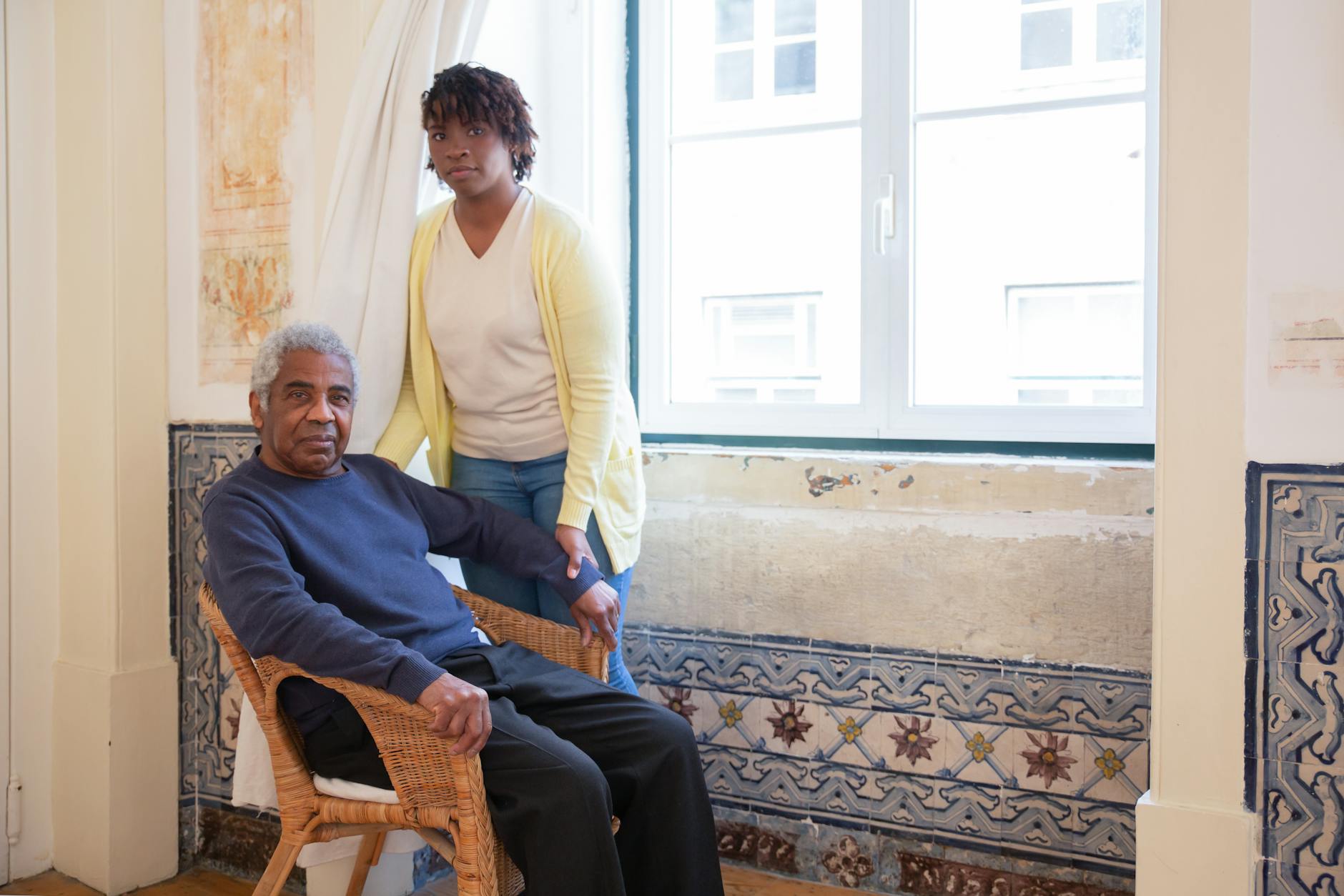
Making Spine Exercises Dementia-Friendly — Practical Adaptations
Adapting exercise for someone with dementia requires more than just simplifying the movement. The environment and approach matter as much as the exercise selection. A calm, uncluttered space with good lighting reduces confusion and anxiety. Performing exercises at the same time each day, in the same location, and in the same order leverages procedural memory — the type of memory that often remains intact longer than episodic or declarative memory in Alzheimer’s disease.
One residential care facility in Melbourne, Australia, documented their experience implementing a twice-weekly spine stabilization program for 40 residents with mild to moderate dementia over six months. They used a consistent five-exercise circuit — pelvic tilt, bridge, seated cat-cow, supported bird dog, and standing side leans — led by the same two staff members each session, with familiar music playing in the background. Falls decreased by 22 percent during the program period compared to the prior six months, and staff reported improved mood and reduced agitation among participants on exercise days. The key insight from their report was that routine and familiarity mattered as much as the exercises themselves.
When to Seek Professional Guidance and What Research Suggests Moving Forward
Not every spine stabilization program should be self-directed. If back pain persists beyond two weeks despite gentle exercise, if there is any new numbness or weakness in the legs, or if balance impairment is severe enough that standing unsupported feels unsafe, a referral to a physical therapist is warranted. For dementia patients specifically, therapists with geriatric or neurological specialization can design programs that account for both physical limitations and cognitive capacity, often involving caregiver training so the program continues at home.
The research trajectory is encouraging. Emerging studies are examining whether structured stability exercise programs can slow the rate of hippocampal volume loss in early Alzheimer’s disease, building on established evidence that physical activity increases brain-derived neurotrophic factor and promotes neuroplasticity. While no exercise program can reverse dementia, there is growing consensus that maintaining spinal health, balance, and functional mobility preserves quality of life and independence for longer — which, for many families, is the outcome that matters most.
Conclusion
The six exercises covered here — bird dog, dead bug, glute bridge, side plank, pelvic tilt, and cat-cow — form a practical, evidence-supported program for building spinal stability at any age. For older adults and those managing dementia, the benefits extend beyond the back: improved balance, reduced fall risk, greater independence in daily tasks, and possible cognitive benefits from the neuromotor demands of stability training. The key is consistency over intensity. Ten to fifteen minutes, three times per week, performed with good form, will produce meaningful results over the course of weeks and months.
Start with the simplest version of each exercise and progress only when the current level feels controlled and comfortable. Enlist a caregiver, family member, or exercise partner for safety and motivation. Keep the routine predictable. And pay attention to warning signs — pain that worsens, new neurological symptoms, or increasing difficulty with movements that were previously manageable — as signals to consult a healthcare professional. Spinal health is not a fixed state but an ongoing practice, and it is one of the most accessible ways to invest in both physical and cognitive well-being as we age.
Frequently Asked Questions
How often should older adults perform spine stabilization exercises?
Three times per week is the most commonly recommended frequency in clinical research. Allow at least one rest day between sessions to let muscles recover. Daily gentle stretching, such as the cat-cow or pelvic tilt, is generally safe and can complement the strengthening work.
Can someone with moderate to advanced dementia safely do these exercises?
With appropriate supervision and modification, yes. The exercises should be simplified — for instance, performing only the leg portion of the bird dog, or doing bridges with a caregiver’s hands gently guiding the hips. However, if the individual cannot understand or follow basic safety cues like “stop if it hurts,” one-on-one supervision is essential for every session.
Are spine stabilization exercises safe after a spinal fracture?
It depends on the type and healing stage of the fracture. Compression fractures, which are common in osteoporosis, typically require avoiding loaded spinal flexion for several weeks. A physician or physical therapist should clear the individual before starting any exercise program. Gentle pelvic tilts in a pain-free range are often among the first movements reintroduced.
Do these exercises actually help with balance, or do I need separate balance training?
Spine stabilization exercises improve the foundation that balance depends on, but they are not a complete substitute for balance-specific training such as tandem stance, single-leg stands, or weight shifting. The ideal program includes both. That said, exercises like the bird dog and side plank inherently challenge balance and serve as a bridge between pure stabilization and balance work.
What if floor exercises are not possible due to mobility limitations?
Every exercise listed here has a seated or standing alternative. Pelvic tilts can be done in a chair. The cat-cow can be performed standing with hands on a counter. Bridges can be approximated with seated hip extensions using a resistance band. A physical therapist can help design a fully chair-based or standing program that targets the same muscle groups.
You Might Also Like
- 5 Spine Stabilization Exercises Doctors Recommend for Back Pain
- 7 Exercises Used in Spine Rehab
- 7 Exercises Physical Therapists Use to Strengthen the Lumbar Spine
For more, see Alzheimer’s Association — medical tests.