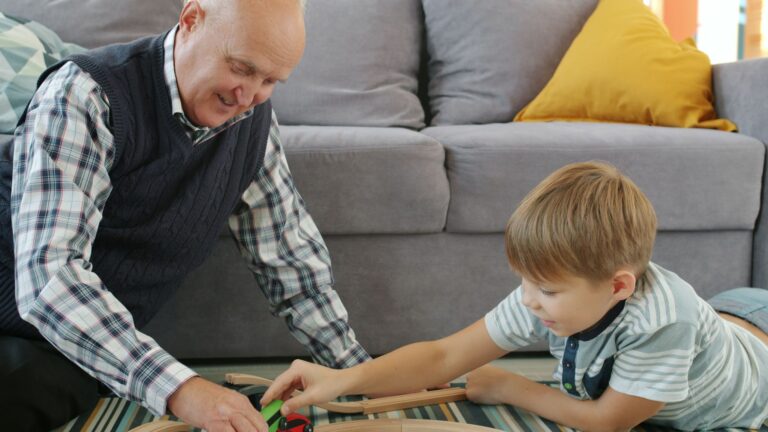
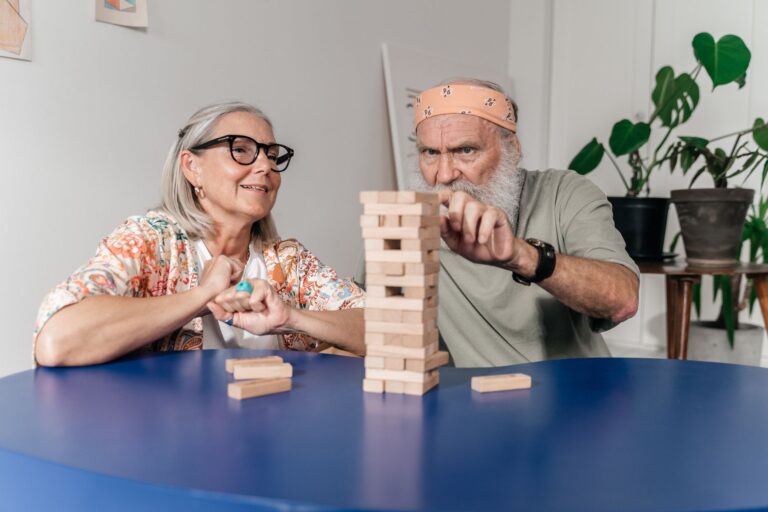
No toy treats Lewy body sleep disturbances, but a few objects help caregivers in a narrow, useful way: robotic companion pets and plush animals used in structured afternoon sessions, puzzles and fidget items that fill daytime hours, and soft dolls that lower agitation before bed. The best-supported use is daytime engagement — keeping the person awake, active and in light during the day — because that is what the evidence actually shows moves night-time behavior.
Lewy body dementia (LBD) is a progressive brain disease caused by alpha-synuclein protein deposits, and sleep trouble is nearly universal in it. A systematic review of sleep disturbances in Lewy body dementia puts sleep and circadian disturbance at roughly 90% of patients, spanning insomnia, excessive daytime sleepiness, REM sleep behavior disorder, obstructive sleep apnea and restless legs. That makes any toy an add-on to a medical workup, never a replacement for one.
Medical information disclaimer: This article is for general educational purposes only and does not provide medical advice, diagnosis, or treatment. Always consult a physician or other qualified health professional about symptoms, medications, tests, or treatment decisions.
Table of Contents
- Why daytime activity items are the ones with a real rationale
- What the robotic pet trials actually found
- Calming is the proven benefit; sleep is not
- Weighted blankets and other "sleep" products
- Picking and using an item without overpaying for a promise
- Frequently Asked Questions
Why daytime activity items are the ones with a real rationale
The National Institute on Aging says some LBD sleep problems can be managed without medication, and its guidance on treating and managing Lewy body dementia names increasing daytime exercise or activities, avoiding long or frequent naps, and avoiding alcohol, caffeine or chocolate late in the day. That is the frame every object should serve. A jigsaw puzzle, a sorting task, a fidget blanket or a companion pet earns its place if it keeps someone engaged and out of an afternoon nap, not because the item itself induces sleep.
The Lewy Body Dementia Association adds light to the picture. Its page on daytime sleepiness in Lewy body dementia recommends daytime exercise or daily walks with sunlight exposure, outdoors or through a window. So an engagement item works best used by a bright window or on a walk, not in a dim room.
What the robotic pet trials actually found
PARO, a robotic seal with sensors that responds to touch and voice, is the most-studied companion toy in dementia care, and its sleep results conflict. A cluster randomized trial across 28 Queensland long-term care facilities used 15-minute individual sessions three afternoons a week for 10 weeks, against a plush toy with the robotics switched off and against usual care. Wrist accelerometry showed the PARO group had less night-time physical activity than the plush group (p=0.019) and usual care (p=0.046), but the authors concluded there was no effect on sleep patterns. A second cluster trial reached the opposite result.
Using 30-minute *group* sessions twice weekly for 12 weeks against treatment as usual, the researchers reported increased sleep efficiency, longer total sleep time and fewer nocturnal awakenings. The design difference — group versus one-to-one — is the likeliest explanation, which points caregivers toward longer, social, shared sessions rather than handing someone a robot alone. A Danish trial puts the toy in perspective. Comparing visits with a live dog, the PARO seal and a soft toy cat, actigraphy in the third week measured 610 minutes of sleep with the dog, 498 with the seal and 540 with the toy cat (F2,37=4.99; P=0.01). The live animal, not the robot, moved sleep duration.
Calming is the proven benefit; sleep is not
The stronger and more consistent finding for companion toys is reduced agitation. A meta-analysis of pet-type robots in long-term care found a standardized mean difference of −0.37 for agitation across three trials and 214 participants, with no heterogeneity. A 2025 JMIR meta-analysis of intelligent robots likewise reported improved agitation and anxiety while explicitly noting a lack of objective data on physical activity and sleep. Baby doll therapy sits in the same place.
Cleveland Clinic's pilot in 46 hospitalized patients with dementia found an association with fewer agitation behaviors, but the investigators said the study was not designed to measure effectiveness and reported no sleep outcomes. For a caregiver, that distinction is practical rather than academic. A doll or robotic pet is a reasonable tool for the agitated hour before bed, or for a 3 a.m. waking, on the grounds that it calms — not on a promise that it will produce more sleep.
Weighted blankets and other "sleep" products
Weighted blankets are often marketed for dementia sleep, and the evidence is still being collected. An active Australian dementia-unit crossover trial caps the blanket at 12% of body weight over two weeks, uses falls as its primary outcome, and requires an occupational therapist's risk assessment before use.
A 2025 pilot in JMIR Research Protocols, in roughly 30 inpatients over three nights, excludes patients with severe pain, burns or wounds. Those design choices are the caregiver's warning label. Falls as a primary outcome means researchers consider entrapment and mobility the live risk, and in LBD — where motor symptoms, rigidity and night-time confusion are common — a person who cannot push a heavy blanket off is the scenario to avoid.
- Keep any weighted blanket at or under 12% of body weight, the trial ceiling.
- Get an occupational therapist's assessment before first use.
- Skip it entirely with severe pain, open wounds, burns, or if the person cannot remove it unaided.
- Never use one for someone who acts out dreams and may thrash during REM sleep behavior disorder.
Picking and using an item without overpaying for a promise
Match the object to the hour. Puzzles, fidget items, card sorting and photo books belong in the late morning and afternoon, ideally in daylight, where they do double duty against both napping and inactivity. Soft animals, dolls and robotic pets belong in the agitated stretches, including evening restlessness and night wakings. Cost and realism matter.
PARO is a clinical-grade device priced in the thousands, while the trials above used an ordinary plush animal and a soft toy cat as comparison conditions, and the toy cat held its own on sleep duration against the robot. A simple plush animal, or a real pet where one is practical, is a defensible first try. Run any item like a brief experiment. Use it at the same time daily for two weeks, keep a one-line nightly note on wakings and time out of bed, and keep the object only if the note changes. If the trouble is loud dream enactment, snoring with pauses, leg jerking or sleep that collapses despite a good daytime routine, those point to REM sleep behavior disorder, apnea or restless legs — conditions the review above lists in LBD, and ones a sleep assessment treats and a toy does not.
Frequently Asked Questions
Is lying in bed with a soft toy or doll a problem overnight?
Weigh it against the person's safety rather than any sleep benefit. The agitation evidence supports comfort objects, but if the person enacts dreams or has limited mobility, keep bulky or heavy items out of the bed.
Should I buy a robotic pet specifically to improve sleep?
Not on sleep grounds. One trial found no effect on sleep patterns, a group-session trial found gains, and a Danish trial found a live dog outperformed the robot on sleep duration. Buy it for calming, if at all.
Do activity toys replace medication for LBD sleep problems?
No. The National Institute on Aging frames non-drug measures as management of some sleep problems, and sleep disturbance affects roughly 90% of patients, so activity items sit alongside a medical workup.