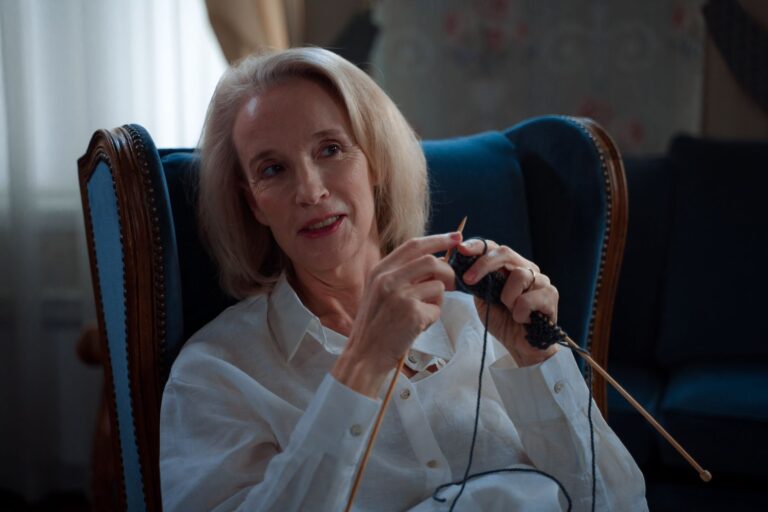
To simplify simple knitting for middle-stage dementia, keep only one repeated stitch on thick yarn with stitches already cast on. Give one short instruction at a time and allow plenty of unhurried time to finish it. Middle-stage dementia brings jumbled words, trouble dressing, and frustration with routine tasks. The Alzheimer's Association describes this as often the longest stage, with reduced ability to express thoughts and manage daily routines, in its Alzheimer's Association guide to the middle stage.
Medical information disclaimer: This article is for general educational purposes only and does not provide medical advice, diagnosis, or treatment. Always consult a physician or other qualified health professional about symptoms, medications, tests, or treatment decisions.
Table of Contents
- Match the activity to today's ability
- Set up tools that are easy to hold and see
- Guide slowly, one instruction at a time
- What are the limits and safety steps?
Match the activity to today's ability
The U.S. National Institute on Aging advises matching each activity to what the person can do now and keeping it easier and enjoyable, in its National Institute on Aging guidance on adapting activities. That means choosing a familiar task and lowering the demand before frustration starts.
A short session at the same time daily works better than a long occasional one. The National Council of Certified Dementia Practitioners recommends familiar repetitive tasks of only one or two steps for middle-stage dementia. The task needs enough structure for genuine participation rather than watching. If the person can wrap yarn but not form stitches, let them do the wrapping while you shape the loop.
Set up tools that are easy to hold and see
Keeping Busy recommends starting simplified knitting with chunky yarn and large needles because they are easier to see, hold, and manipulate while showing progress quickly, in its Keeping Busy guide to knitting activities. Bright, high-contrast yarn helps the stitches stand out.
A tiny single-stitch project keeps effort low and success near. Hovi Care, an elderly-care provider, suggests the same small setup with pre-cast stitches and a single stitch pattern. Stop with several rows left to admire, not at the point of fatigue.
- Use thick, smooth, bright yarn and large blunt needles.
- Pre-cast on 8 to 12 stitches for a garter-stitch strip or sensory muff.
- Offer a large-print pattern showing only the one stitch.
- Work on a clear, quiet table with good light.
Guide slowly, one instruction at a time
Alzheimers New Zealand advises breaking knitting into a few simple steps and asking for one thing at a time. Allow extra time so the person does as much as possible without rushing.
Demonstrate the movement hand-over-hand only when needed, then pause. Keep language short and concrete, such as "lift" and "pull through." Praise the specific action, not the finished object. End while the mood is still pleasant so tomorrow feels inviting.
What are the limits and safety steps?
A population study by Geda and colleagues followed 1,321 adults ages 70 to 89 and found craft activities such as knitting and quilting were linked with lower odds of mild cognitive impairment. Mild cognitive impairment can precede dementia, but the finding came from observation, not a treatment trial. Treat knitting as comfort, focus, and time together.
Knitting does not reverse Alzheimer's progression, so simplify, structure, and supervise each session, as noted in the Hovi Care discussion of knitting and memory in seniors with Alzheimer's. Use an uncluttered quiet surface and stay close throughout. Put needles and scissors away securely afterward.